
Canon Cameras
Canon EOS R6 Mark II Review
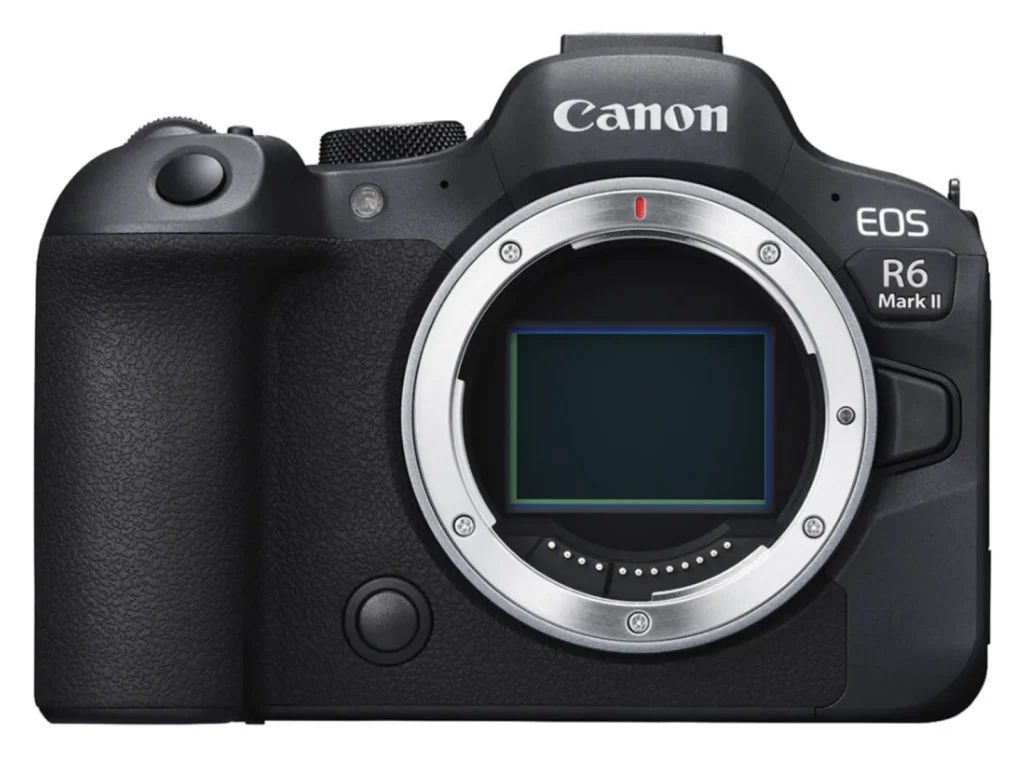
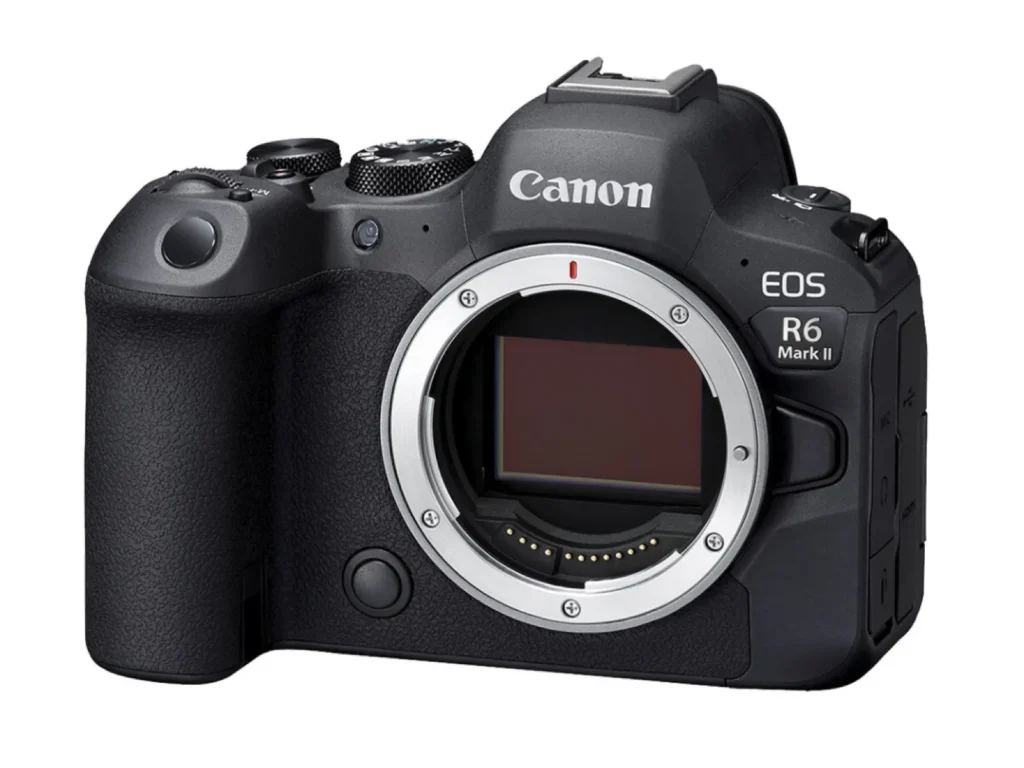
Canon EOS R6 Mark II is a direct successor to the EOS R6, refining and improving nearly every aspect of the original model. The Mark II introduces a new 24 MP sensor, improved autofocus derived from the flagship R3, enhanced video capabilities and much better heat management. It’s a versatile hybrid camera designed for photographers and videographers who need speed, reliability and strong low-light performance without stepping up to higher-resolution or stacked-sensor models.
Canon EOS R System
The release of the Canon EOS R in 2018 introduced the Canon RF-mount. With a larger mount diameter, shorter flange distance and a 12‑pin electronic interface, it allowed Canon to design faster, sharper lenses with better low-light performance. Compared to older DSLRs the system is smaller and lighter while also improving autofocus speed and overall image quality. After nearly a decade, the EOS R System now provides a wide selection of lenses. Canon EF-mount lenses (older DSLR lenses) remain fully compatible with Canon R System cameras via the EF-EOS R adapter.
Canon EOS R6 Mark II Price
Canon EOS R6 Mark II Specifications
General
Canon EOS R6 Mark II uses a new 24.2 MP full-frame CMOS sensor paired with Canon’s DIGIC X processor. This is a new Canon sensor, but it’s not partially stacked or even backside-illuminated.
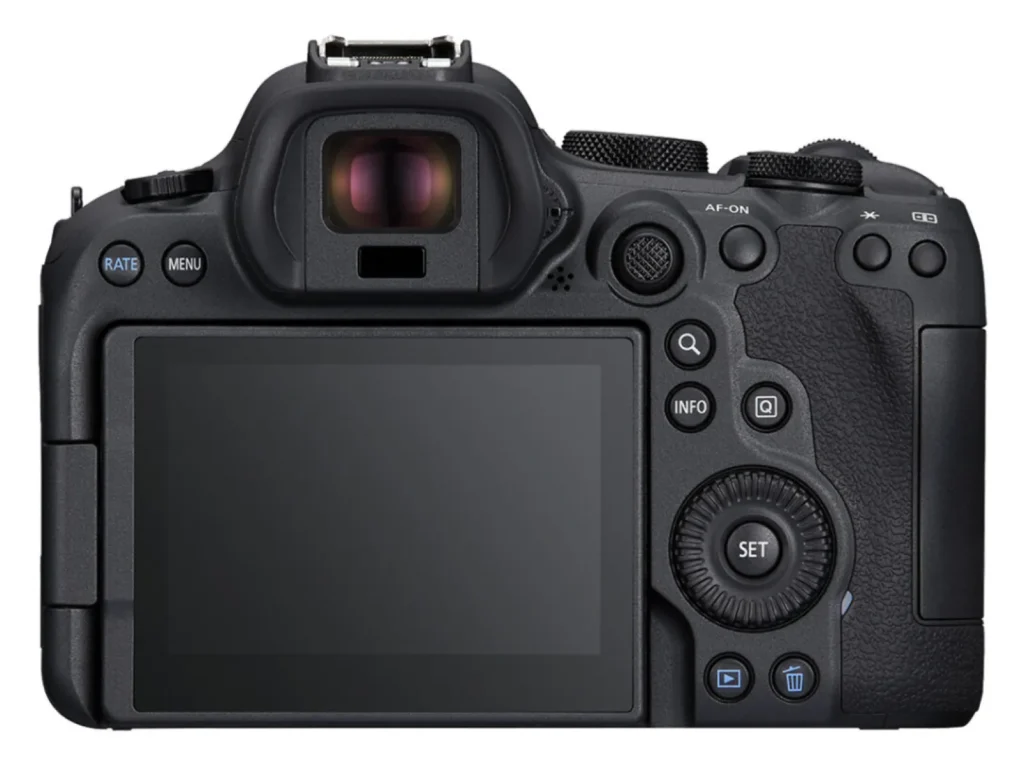
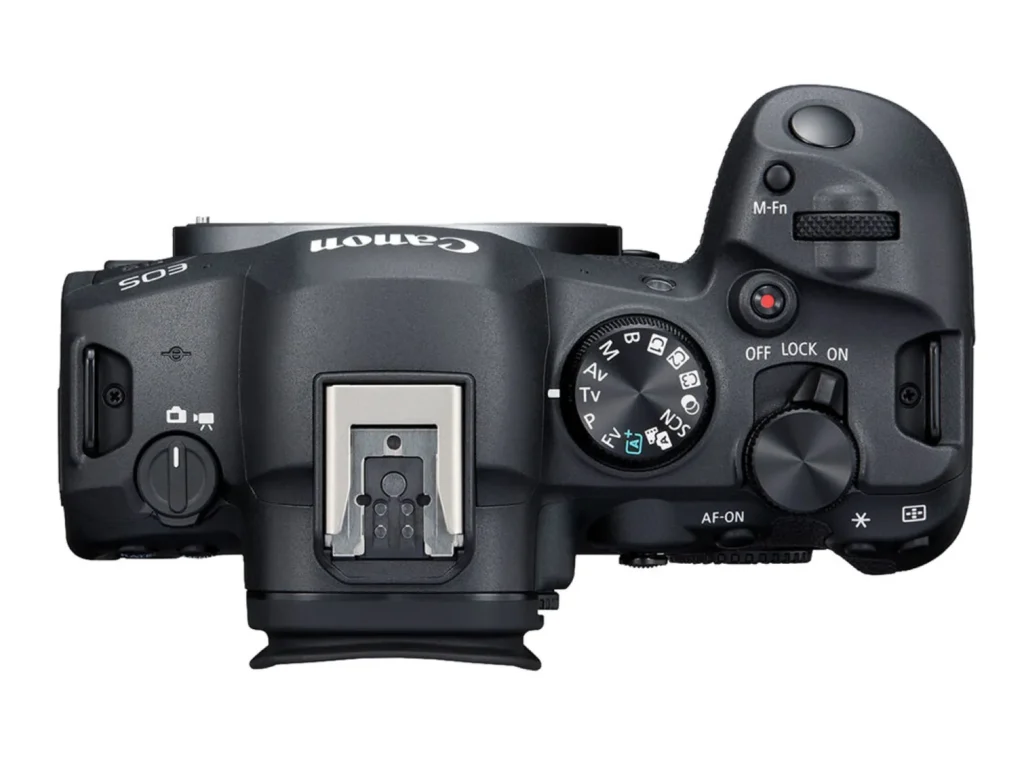
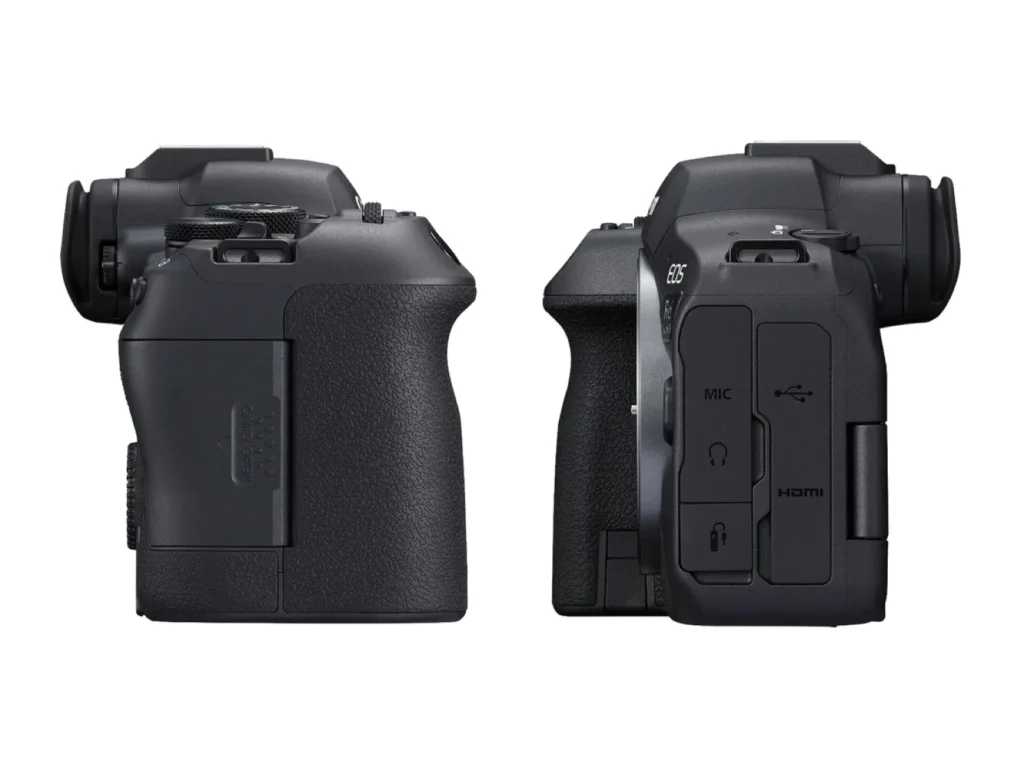
The body of the R6 Mark II is nearly identical to the original R6, with a few refinements such as a repositioned on/off switch, a dedicated photo/video switch and a redesigned AF joystick. The body remains robust, ergonomic and weather-sealed. The buttons and dials are customizable, allowing you to tailor the camera to your workflow.
In-body 5-axis image stabilization (IBIS) provides up to approximately 8 stops of shake reduction. The EOS R6 Mark II automatically closes the shutter when you turn the camera off, protecting the sensor from dust and debris.
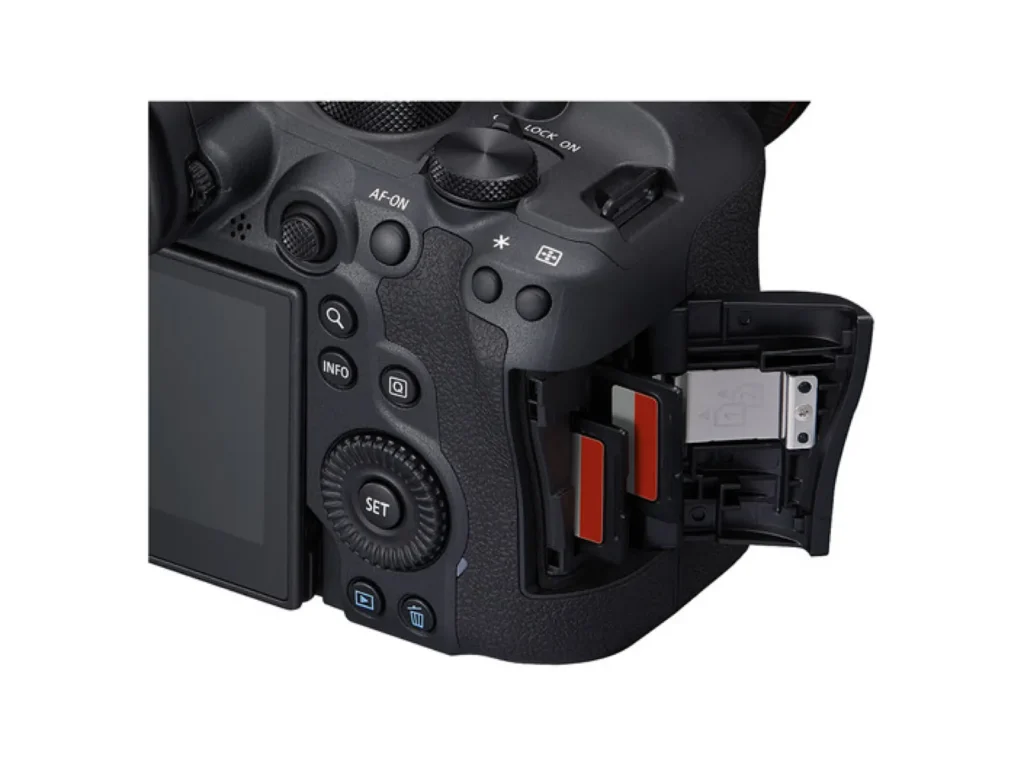
Just like the original R6, the Mark II offers dual SD card slots, the same fully articulating LCD screen and the same EVF, with selectable 60 fps and 120 fps refresh rates, although the higher setting negatively affects battery life. There is a new multi-function digital hot shoe, the same as on the R3.
With the R6, Canon introduced new LP-E6NH batteries with improved performance. Both the original R6 and the R6 Mark II are compatible with the same battery grip.
When you open the card slot door the camera automatically shuts off and charging over USB-C also instantly stops.
Autofocus
Canon’s autofocus is widely regarded as one of the best in the industry. The R6 Mark II uses Canon’s ‘Dual Pixel AF CMOS II’ system with an AI-based deep-learning engine for enhanced subject tracking with better stickiness. The same autofocus system was already used in Canon’s ‘flagship’ R3.
The camera can recognize a wide range of subjects, including people, animals (dogs, cats, birds, horses) and various vehicles (cars, motorcycles, bicycles, trains and airplanes).
Eye-Detection is available for humans and animals and the camera maintains focus well even in low-light conditions. You can even manually select the preferred right or left eye, switch focus points using the joystick or allow the camera to choose automatically.
Autofocus performance is extremely reliable in virtually all situations.
Photography
Image quality is excellent, with solid dynamic range, natural color rendering and clean high-ISO performance (though not quite as clean as that of cameras with BSI sensors from Nikon and Sony).
Shutter options include mechanical, electronic front-curtain (EFCS) and fully electronic (silent) modes.
The mechanical shutter allows continuous shooting at up to 12 fps in 14-bit RAW. In this mode, the buffer supports approximately 110 consecutive shots (up to about 10 seconds of interrupted shooting), but that number can be much larger if you use the compressed RAW option. If you don’t mind shooting JPEGs then the buffer is essentially unlimited (1000).
The R6 II can shoot at up to 40 fps in 12-bit RAW with the electronic shutter. In this mode, the buffer fills in about 2-3 seconds (around 80-100 frames). After that, shooting pauses for approximately 5 seconds while the buffer clears. Slower or lower-quality SD cards can negatively affect buffer performance and especially clearing times. It is recommended to use V90-rated SD cards purchased from reputable retailers.
Information about when the camera still captures 14-bit RAW images is hard to find, since several reviewers and social media influencers initially repeated launch-event claims suggesting that the R6 Mark II retains 14-bit RAW at up to 20 fps. However, Canon’s official specifications contradict those claims. Canon Europe website states that Canon R6 Mark II uses 12-bit A/D conversion with Electronic shutter. They do not specify whether this applies only to the highest burst rates (40 fps) or to electronic shutter in general, but most sources interpret it as applying to all electronic shutter modes.
There is also a small drop in dynamic range when shooting with the electronic shutter and rolling shutter distortion occurs when photographing fast-moving subjects. This is not an issue when using the mechanical shutter or EFCS.
Pre-Capture mode can record 0.3 or 0.5 seconds of RAW images before the shutter button is fully pressed. After releasing the shutter, you can select which images to export as either RAW or JPEG files. The process is slow and somewhat complicated, so most users probably won’t find it very useful.
| Feature | Canon EOS R6 II |
|---|---|
| Release Date | November 2022 |
| Megapixels | 24.2 MP |
| Image Resolution | 6000 × 4000 |
| Sensor Size | Full Frame |
| Sensor Type | CMOS |
| Image Processor | DIGIC X |
| IBIS | 5-axis, 8 stops |
| Weather Sealing | Yes |
| Lens Mount | Canon RF |
| Body Type | Mirrorless |
| PHOTO | |
| Native ISO | 100 – 102,400 |
| Expandable ISO | 50 – 204,800 |
| Shutter Speed | 1/16000 – 30s |
| Burst Rate (Mechanical) | 12 fps RAW |
| Burst Rate (Electronic) | 40 fps RAW (12-bit) |
| Buffer | 80 - 110 RAW |
| Shutter Types | Mechanical, Electronic, EFCS |
| Silent Shooting | Yes (Electronic Shutter) |
| Exposure Compensation | ±3 EV |
| High-Res (Sensor Shift) | No |
| Pre-Capture Mode | Yes |
| VIDEO | |
| 4K Video | 4K 60fps (oversampled from 6K) |
| Max Frame Rate | 6K 60fps (external only) / 4K 60fps / 1080p 180fps |
| Bit Depth | 10-bit Internal / 12-bit External |
| Recording Limit | 6 hours |
| Timelapse Recording | Yes |
| AUTOFOCUS | |
| AF System | 'Dual Pixel CMOS AF II' + AI-based deep-learning engine for enhanced subject tracking |
| AF Points | 1053 |
| AF Coverage | 100% Frame Coverage |
| AF Joystick | Yes |
| DISPLAY / VIEWFINDER | |
| Articulated Screen | Fully Articulating |
| Touch Screen | Yes |
| LCD Size | 3" |
| LCD Resolution | 1,620,000 |
| EVF Resolution | 3,690,000 |
| EVF Refresh Rate | 120 fps |
| EVF Coverage | 100% |
| EVF Magnification | 0.76× |
| MORE INFO | |
| Card Slot 1 | SD (UHS-II) |
| Card Slot 2 | SD (UHS-II) |
| Sensor Protection System | Yes |
| USB | Type C 3.2 Gen 2 |
| USB Charging | Yes |
| HDMI | Type D (Micro HDMI) |
| Microphone Port | 3.5 mm |
| Headphone Port | 3.5 mm |
| Built-in Flash | No |
| Built-in Microphone | Yes |
| Battery | LP-E6NH |
| Battery Life | 400 ~ 800 frames |
| Wi-Fi / Bluetooth | Yes |
| Dimensions | 138 × 98 × 88 mm |
| Weight | 670 g |
Video
Canon EOS R6 Mark II can record oversampled 4K 60 fps video internally without a crop. 4K footage is oversampled from 6K, delivering excellent detail, strong dynamic range and natural colors. Rolling shutter is noticeable when tracking fast-moving subjects.
Full HD (1080p) recording is available at up to 180 fps.
Internal video is limited to 10-bit and there are no internal RAW recording modes (only external RAW video is available).
The use of the C-Log 3 profile allows you to set the color space to “Cinema Gamut,” enabling the use of Canon’s official C-Log 3 LUTs for excellent color reproduction.
The R6 Mark II supports simultaneous recording to both SD cards for backup.
Internal 6K recording is not supported. External 6K 60 fps recording over HDMI is available with selected Atomos devices, using a 16:9 aspect ratio (6000 × 3374). The external recorder allows you to choose between several codecs, including 10-bit ProRes RAW (HQ or standard), ProRes, DNxHD and H.265. External 12-bit ProRes RAW is currently available only in APS-C mode (1.5x crop). With this setup, you can also record a 1080p C-Log 3 backup file internally to the second SD card slot. Other than that, you cannot record internally and externally at the same time.
Heat Management and Recording Limit
The original R6 had issues with overheating when recording in 4K. With the R6 Mark II, heat management is significantly improved and a new highly detailed temperature display with 10 bars shows how close the camera is to overheating.
Canon states that the R6 Mark II can record for up to 40 minutes in 4K at 60 fps before overheating. After reaching this limit, you can switch to 4K 24 fps, allowing the camera to gradually cool down while continuing to record. There are reportedly no overheating issues when recording in 4K 24 fps.
The R6 Mark II removes the strict 30-minute recording limit, increasing the maximum clip length to six hours for most modes, 90 minutes for 100 fps and 120 fps and 1 hour for 150 fps and 180 fps. Battery life allows for approximately two hours of 4K 30 fps recording and up to 90 minutes of 4K 60 fps recording (however, individual clips in 4K 60 fps are still limited to around 40 minutes due to overheating).
Canon EOS R6 II Alternatives
Canon R8
Canon R6 III
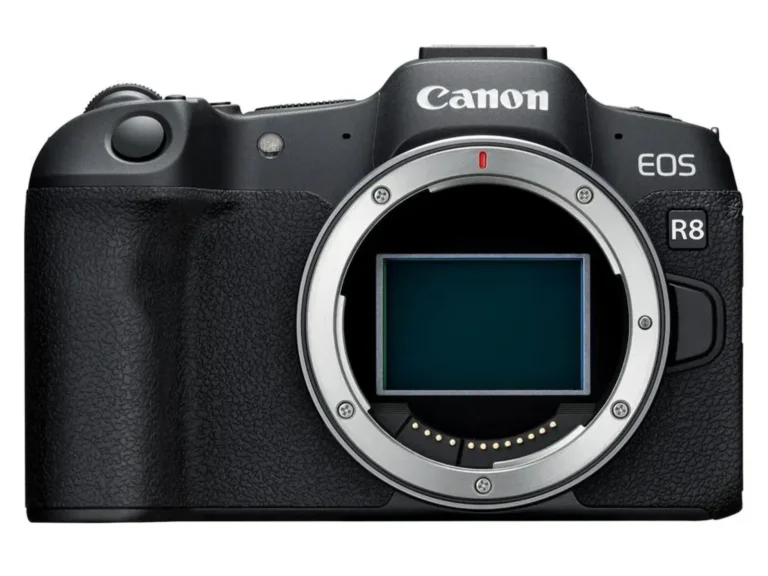
Canon EOS R8 (2023) is Canon’s modern entry-level full-frame model. It is essentially a more compact and more affordable version of the R6 Mark II, sharing the same 24 MP sensor and highly advanced autofocus system. The R8 offers oversampled 4K 60 fps recording in 10-bit without a crop. To lower the cost it has no IBIS, has no full mechanical shutter and has only one SD card slot. It can still shoot at up to 40 fps in 12-bit RAW with the electronic shutter (with noticeable rolling shutter distortion).
The R8 is offers good value, making it an excellent entry point into Canon’s full-frame R system for any beginner interested in photography or video.
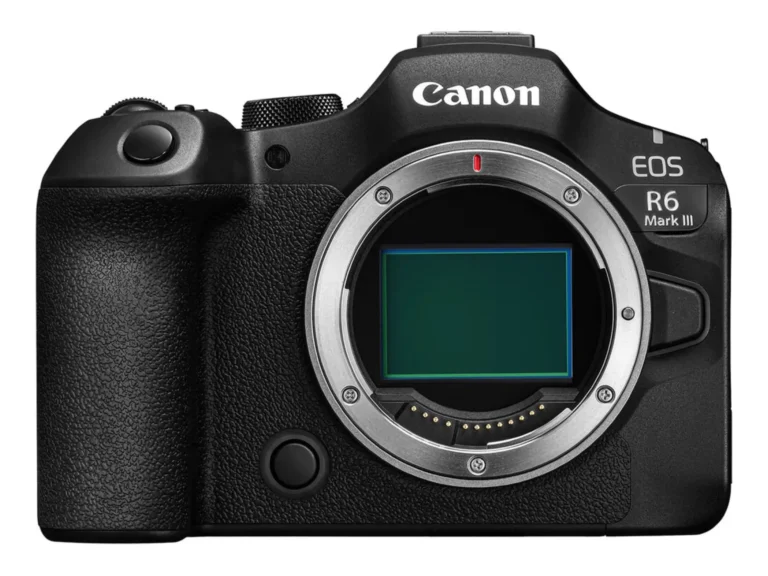
Canon EOS R6 Mark III (2025) is Canon’s most advanced camera in the R6 series. It’s not necessarily a direct successor to the R6 Mark II, instead, it can be seen as an alternative version built around a higher-resolution 32 MP sensor derived from Canon’s C50 Cinema camera. It retains the speed (up to 40 fps 12-bit RAW), extremely reliable autofocus performance and compact design that made the R6 Mark II so popular, while introducing far more high-quality video recording options such as 7K RAW, 4K 120 fps and Open Gate recording.
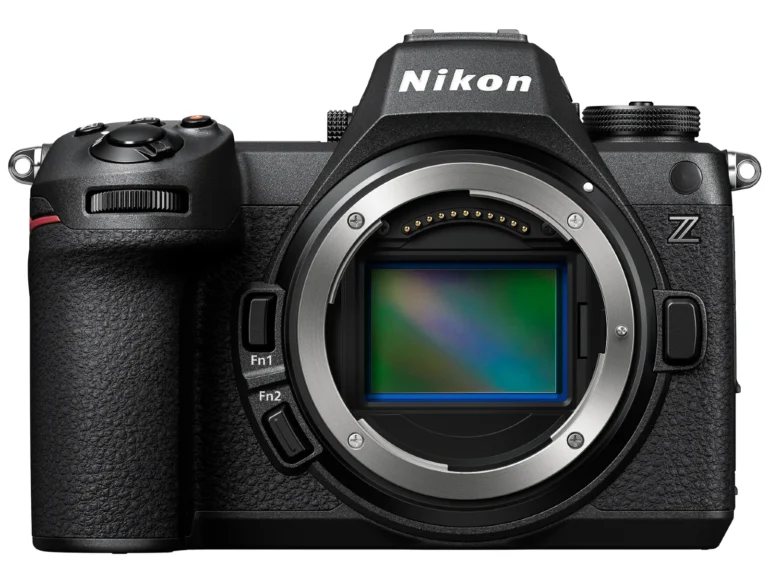
Nikon Z6 III
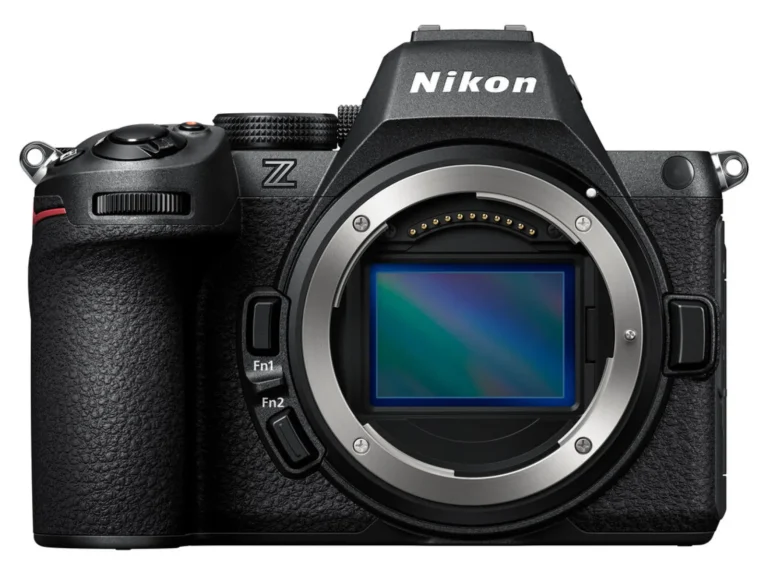
Nikon Z5 II
Nikon Z6 III (2024) is Nikon’s most advanced 24 MP camera, featuring a partially stacked 24 MP BSI sensor, an EXPEED 7 processor and class-leading autofocus and video capabilities including internal 6K 60 fps 12-bit N-RAW recording, oversampled 4K 60 fps recording and 4K 120 fps with a 1.5x crop. It can shoot at 14 fps RAW with a mechanical shutter and 20 fps in RAW with the electronic shutter (60 fps in full-res JPEG and 120 fps in 11 MP JPEG).
The Z6 III currently costs about the same as the Canon R6 Mark II while clearly offering much more in the video department along with a faster partially-stacked BSI sensor with faster readout (resulting in much less rolling shutter distortion).
Nikon Z5 II (2025) is Nikon’s more affordable option and it’s a competitor to the Canon R8 and even the R6 II. It uses a 24 MP BSI sensor (the same as the Nikon Z6 and Z6 II) paired Nikon’s EXPEED 7 processor, delivering excellent image quality along with solid autofocus performance. It can shoot at up to 11 fps in RAW with the mechanical shutter (14 fps JPEG), up to 14 fps in RAW with the electronic shutter (30 fps JPEG) and it can record 4K video at 30 fps oversampled from 6K (internally in 12-bit RAW) and 4K 60 fps with a 1.5x crop.
As of now, the Z5 II is likely the best entry point into Nikon’s full-frame Z system for anyone interested in photography or video.
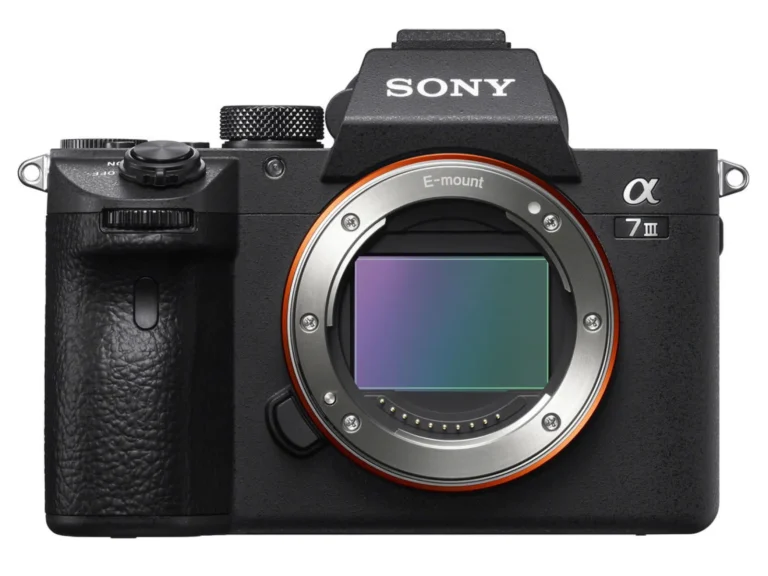
Sony A7 III
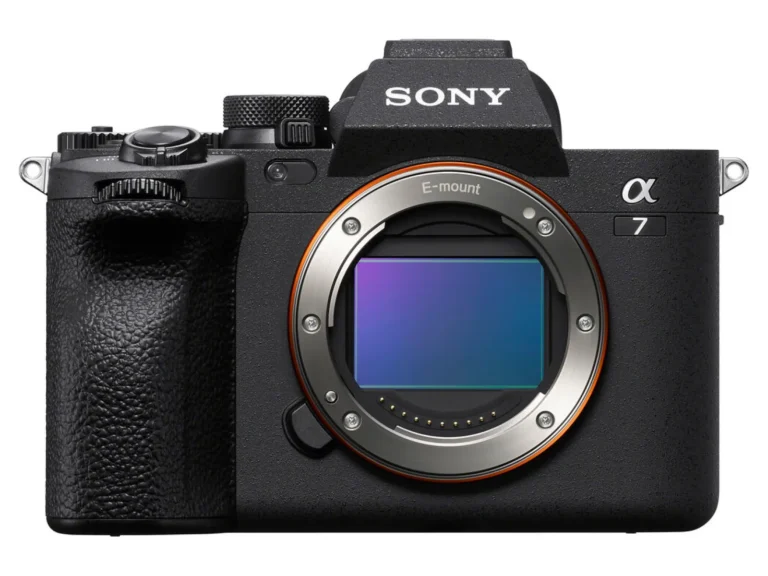
Sony A7 IV
Sony A7 V
Sony A7 III (2018) is a strong competitor to and it is still one of the most popular full-frame cameras. It offers a 24 MP BSI sensor, IBIS, dual card slots, 10 fps shooting and good autofocus. It benefits from Sony’s long-standing E-mount ecosystem and there are plenty of affordable used options available since its more popular and has been around for longer.
Sony A7 IV (2021) marked a significant step up in Sony’s full-frame lineup. It features a new 33 MP BSI sensor and advanced autofocus, making it a powerful hybrid option for both still photographers and video creators. However, the camera does have some drawbacks. High-speed shooting is limited to just 6 fps in RAW (10 fps compressed RAW) and while video capabilities include 4K 60 fps, rolling shutter can be a serious issue due to the high-megapixel sensor (though dynamic range remains excellent).
The price of the Sony A7 IV is high – it’s usually slightly more expensive than the Canon R6 Mark II.
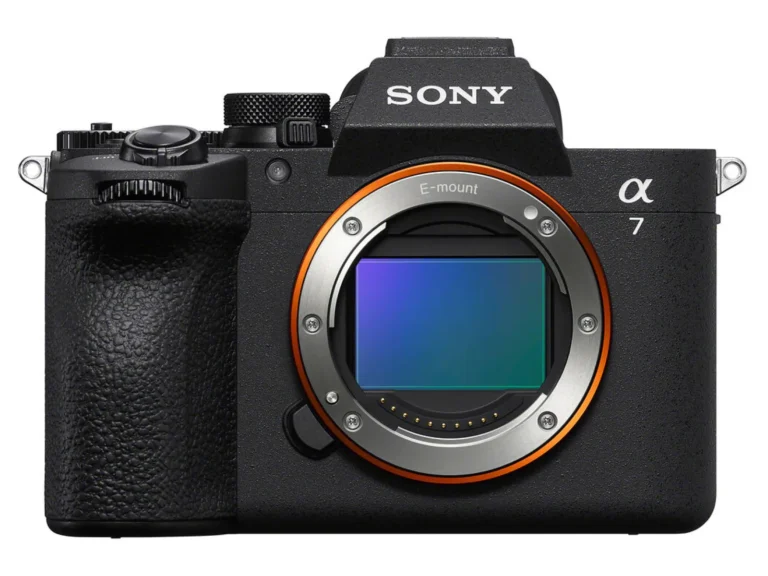
Sony A7 V (2025) replaces the classic 33 MP BSI sensor with a faster partially-stacked 33 MP BSI sensor with faster readout resulting in even better autofocus performance, much less rolling shutter distortion and better high-speed shooting performance (up to 20 fps with the electronic shutter and up to 30 fps with Sony-branded lenses). It also introduces a new BIONZ XR2 processor with a built-in AI processing unit and a new hybrid screen design (tilting and fully articulating). Video recording is limited to 4K and to 10-bit (there is no internal or external 12-bit RAW recording option).
Sony A7 V currently represents great value, especially compared to the Sony A7 IV, but it’s significantly more expensive than the Canon EOS R6 Mark II. Pricing in this segment fluctuates over time, but it currently costs about $800 more.
Canon EOS R6 Mark II Price
Final Verdict
Canon R6 Mark II is Canon’s most advanced 24 MP mirrorless camera (excluding the stacked-sensor flagship models). Extremely reliable autofocus, fast continuous shooting and high-quality video features make it a strong contender in the mirrorless market.
If you are looking for something more affordable and beginner-friendly, while staying in the Canon EOS R system, then to the Canon EOS R8 is still a very capable camera and essentially the R6 Mark II in a more affordable body and with less features to lower the price.
In case you are not yet committed to the Canon EOS R System, the Nikon Z6 III currently costs about the same as the Canon R6 Mark II while clearly offering much more in the video department along with a faster partially-stacked BSI sensor with faster readout (resulting in much less rolling shutter distortion).
If you are looking for something in the price range of the Canon R8, alternatives such as the Nikon Z5 II and Sony A7 III may offer a more well-rounded feature set – both have a mechanical shutter making them better suited for photographers. The Z5 II also offers a lot of high-quality video recording option (internal 12-bit RAW recording).