
Canon Cameras
Canon EOS R5 Mark II Review
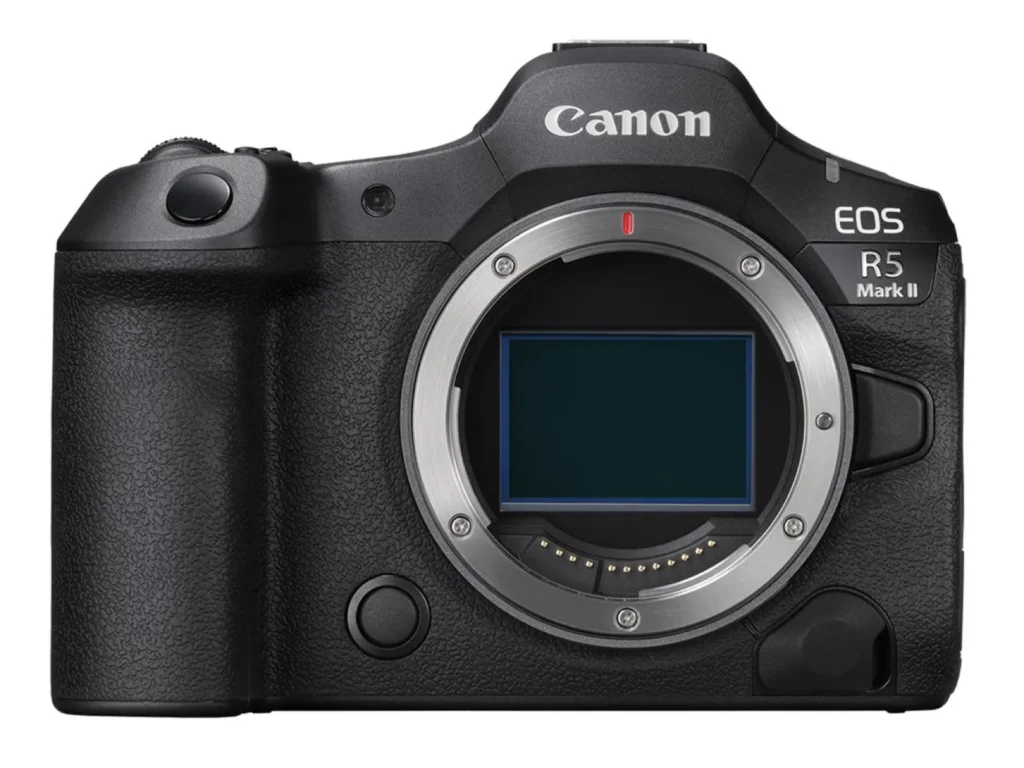
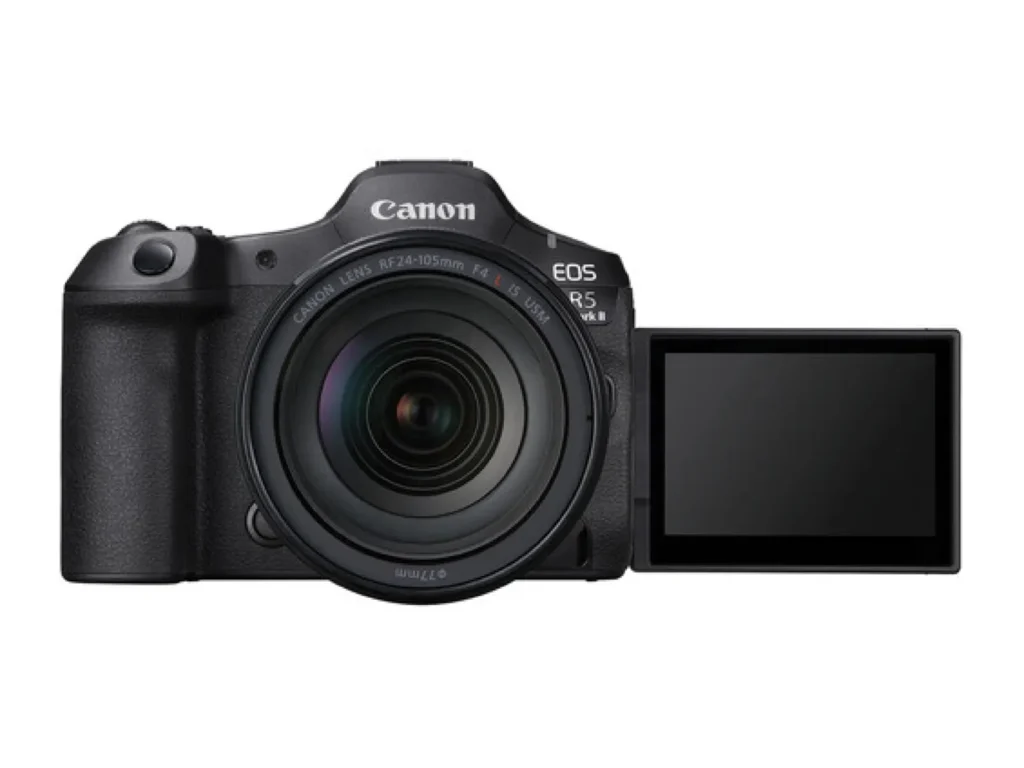
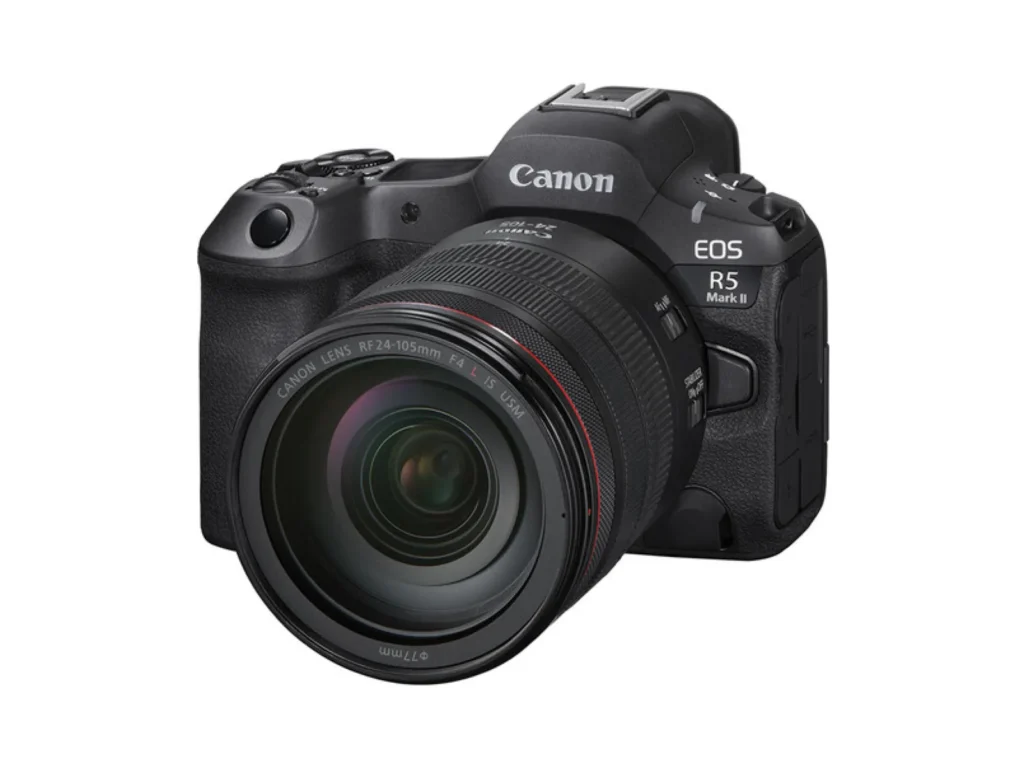
Canon EOS R5 Mark II fully replaces the original R5 by introducing a new 45 MP fully-stacked sensor with fast readout and a DIGIC Accelerator for enhanced processing. Both cameras produce excellent stills, but the R5 Mark II adds 30 fps continuous shooting with the electronic shutter, along with reduced rolling shutter distortion thanks faster readout. Video features are also significantly improved, with better heat management, the removal of recording limits and the addition of internal 8K 60 fps 12-bit RAW recording.
Canon EOS R System
The release of the Canon EOS R in 2018 introduced the Canon RF-mount. With a larger mount diameter, shorter flange distance and a 12‑pin electronic interface, it allowed Canon to design faster, sharper lenses with better low-light performance. Compared to older DSLRs the system is smaller and lighter while also improving autofocus speed and overall image quality. After nearly a decade, the EOS R System now provides a wide selection of lenses. Canon EF-mount lenses (older DSLR lenses) remain fully compatible with Canon R System cameras via the EF-EOS R adapter.
Canon EOS R5 Mark II Price
Canon EOS R5 Mark II Specifications
General
Canon EOS R5 Mark II features a new 45.0 MP stacked sensor paired with Canon’s DIGIC X processor and DIGIC Accelerator for enhanced processing power when it comes to AI-driven tasks and autofocus tracking.
In-body 5-axis image stabilization (IBIS) provides up to approximately 8.5 stops of shake reduction. Unfortunately, there is still some of Canon’s signature “wobble” visible in the corners, especially when recording video while walking, but much less than with the original R5.
The R5 Mark II automatically closes the shutter when you turn the camera off, protecting the sensor from dust and debris.
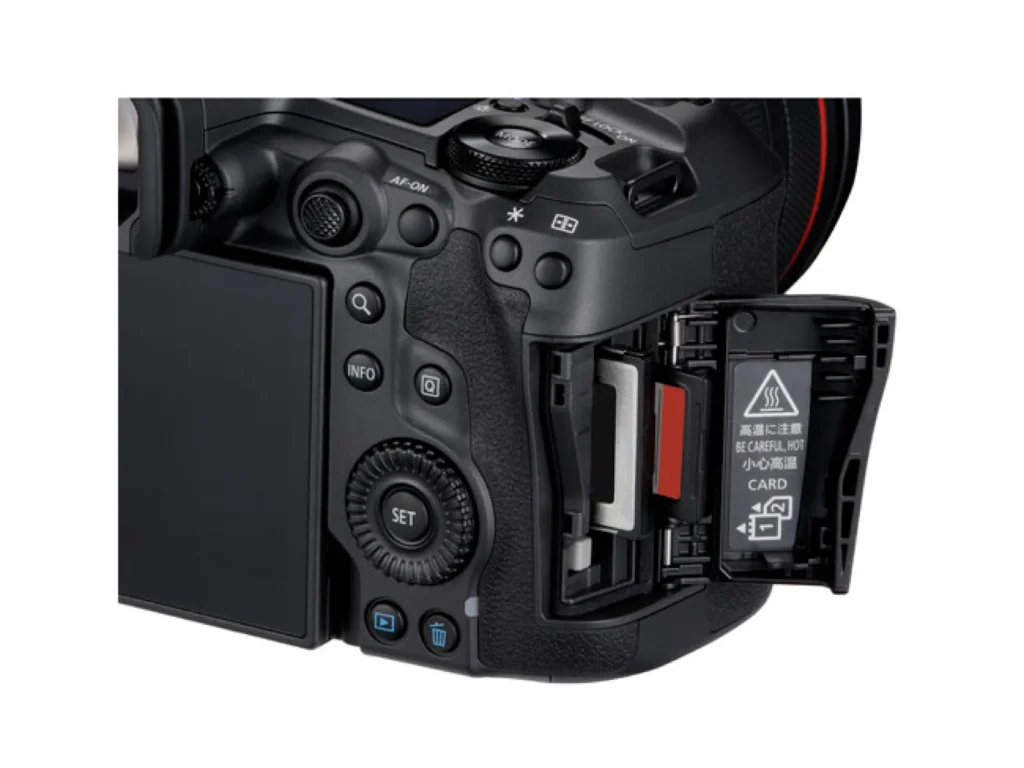
The camera features dual card slots: one SD and one CFexpress Type B. When the card door is opened, the R5 automatically shuts off and stops charging via USB-C.
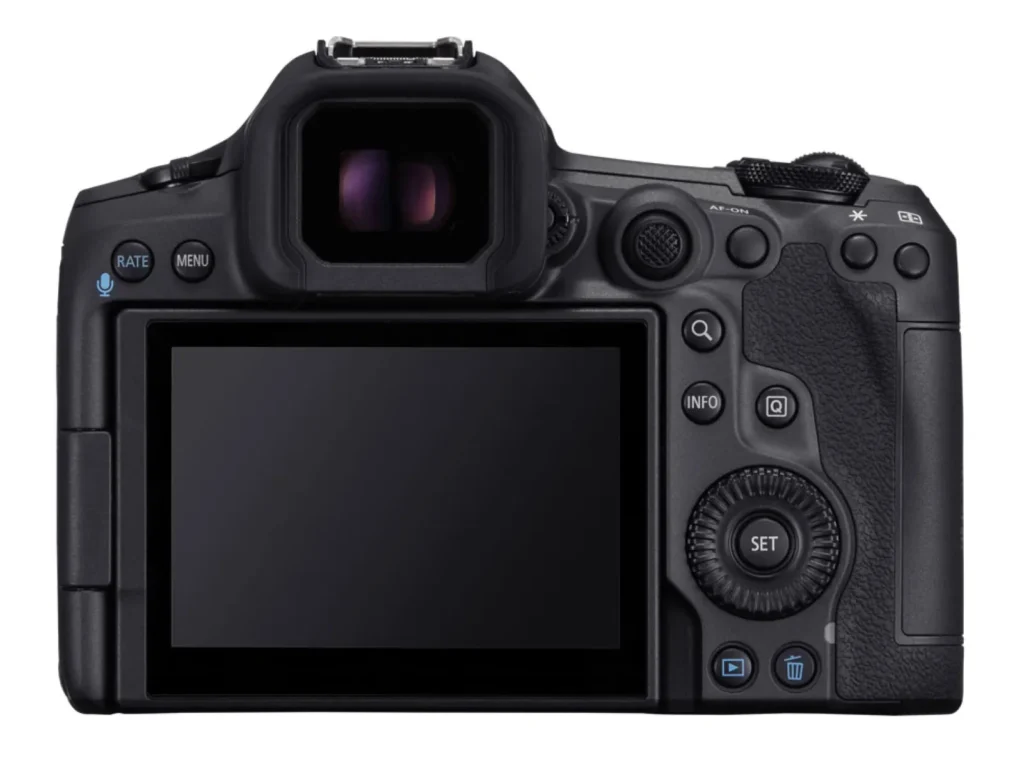
Just like the original R5 it features the same fully articulating LCD screen. The EVF is large and bright and allows you to choose between 60 fps and 120 fps, with the latter negatively affecting battery life.
The R5 Mark II uses bigger LP-E6P batteries with slightly improved performance, but overall battery life is still not impressive. Purchasing an additional battery is highly recommended, especially if you frequently use the higher EVF refresh rate.
Body and Ergonomics
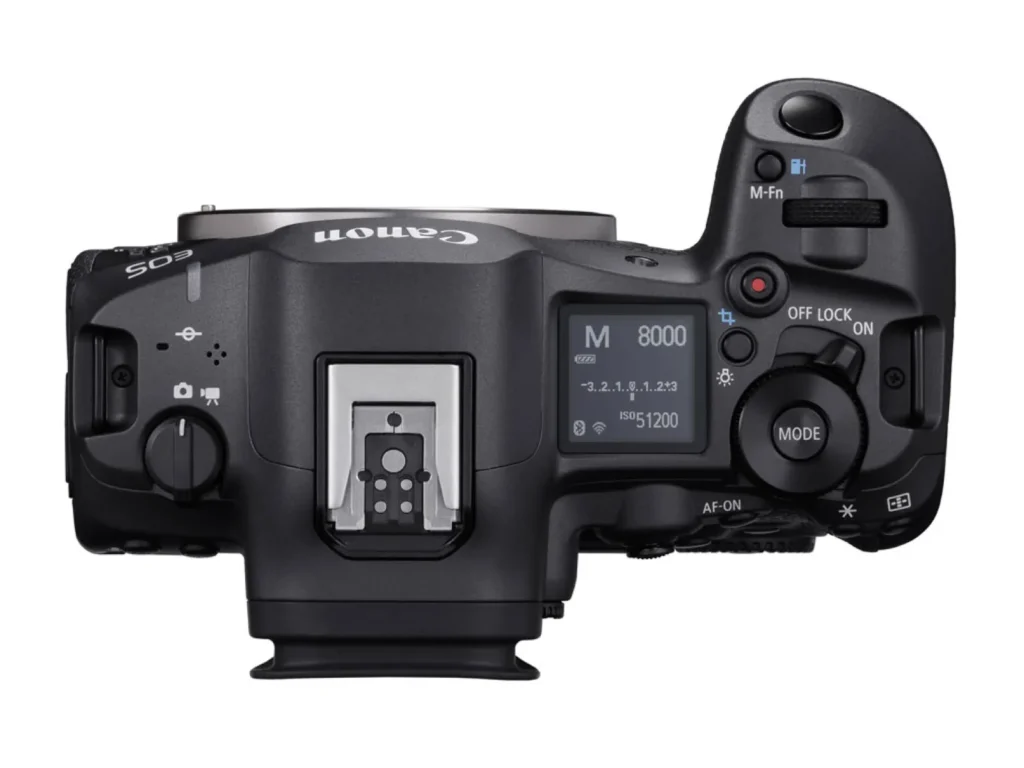
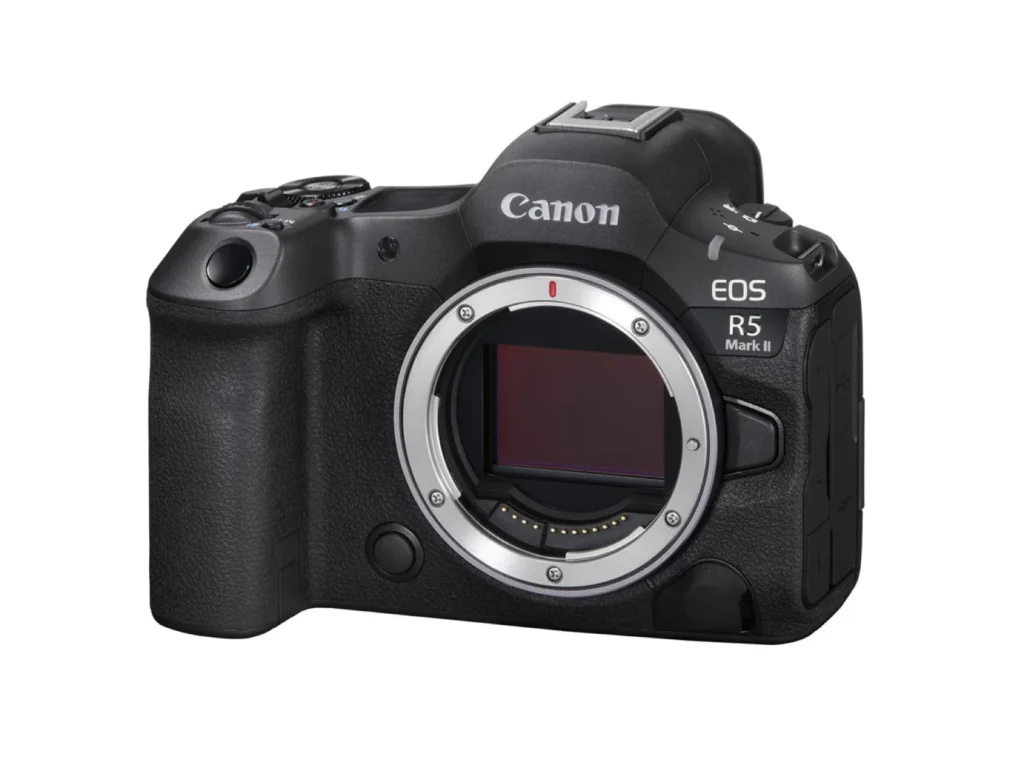
The body design and button layout is similar to that of the original R5, but the Mark II is thicker and has a larger grip. A few refinements include a repositioned on/off switch and a new dedicated photo/video switch on the top left. The body remains robust, ergonomic and very well weather-sealed.
Some buttons and dials are customizable, allowing you to tailor the camera to your workflow. A top LCD screen displays the current settings. There is no dedicated mode dial with labeled shooting modes; instead, mode selection is controlled via the customizable dial on the top right, with the selected mode visible on the top screen.
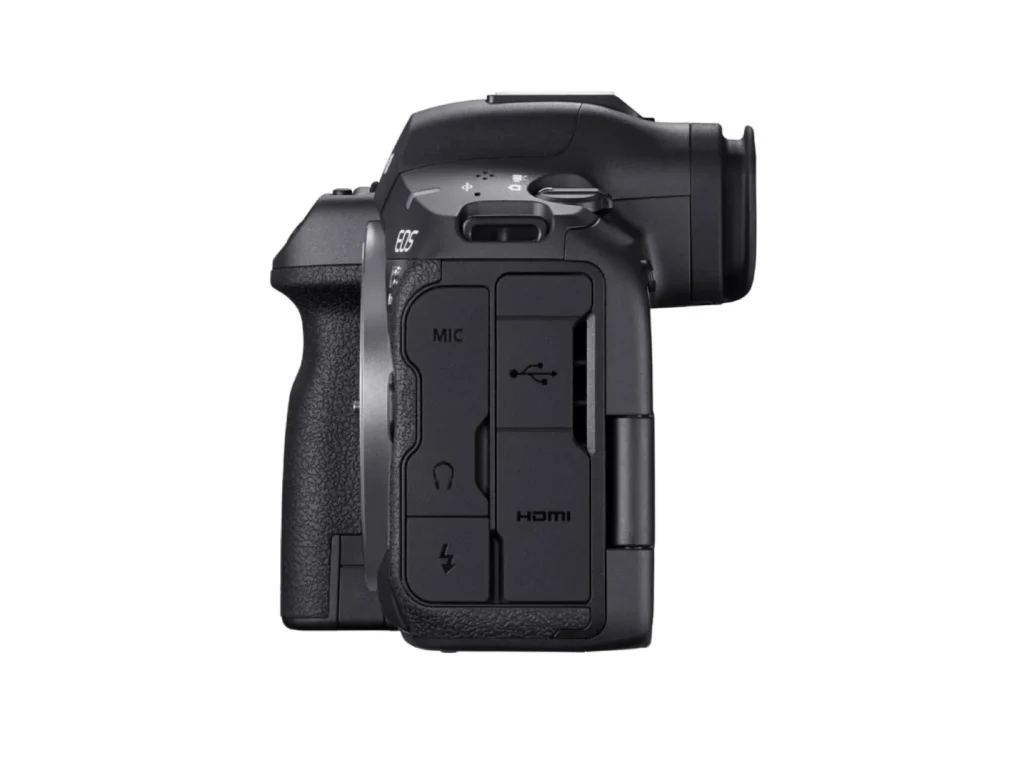
The R5 features a full-size HDMI port, meaning Canon is finally moving away from the outdated micro HDMI. Additionally, it includes a newer digital hot shoe, the same as the R3, but the hot shoe cover is reportedly extremely hard to take off.
There are 3 Canon battery grips available: a regular battery grip with vertical shooting functionality (BG-R20), a grip with a cooling fan and an Ethernet Port, but without vertical shooting functionality (CF-R20EP) and a slightly more expensive battery grip with an Ethernet port and vertical shooting functionality (BG-R20EP).
Autofocus
Canon’s autofocus is widely regarded as one of the strongest systems in the industry. The R5 Mark II uses Canon’s most recent and most advanced AF system – the ‘Dual Pixel Intelligent AF’ system with an improved AI-based deep-learning engine for enhanced subject tracking. At the moment, this AF system is shared exclusively with the flagship Canon EOS R1.
The camera can recognize a wide range of subjects, including humans (eyes, face, head, upper body, full body), animals (dogs, cats, birds, horses), vehicles (racing cars, motor bikes, airplanes, trains) and more.
You can also enable the optional “Action Priority” mode and select one of three sports: soccer, basketball or volleyball. The camera can recognize footballs, basketballs and volleyballs and this mode instructs the camera to track where the action is (specifically the ball) and prioritize focusing on a person near it.
Still, leaving the feature disabled, even when shooting one of these sports, is not necessarily a bad choice, as the standard autofocus system is already extremely capable. Users will have to test the feature in real-world situations before deciding whether it suits their shooting style.
In conclusion autofocus performance is extremely reliable in virtually all situations and this is easily one of the best autofocus systems in the industry.
| Feature | Canon EOS R5 II |
|---|---|
| Release Date | July 2024 |
| Megapixels | 45.0 MP |
| Image Resolution | 8192 × 5464 |
| Sensor Size | Full Frame |
| Sensor Type | Stacked CMOS |
| Image Processor | DIGIC X + DIGIC Accelerator |
| IBIS | 5-axis, 8.5 stops |
| Weather Sealing | Yes |
| Lens Mount | Canon RF |
| Body Type | Mirrorless |
| PHOTO | |
| Native ISO | 100 – 51,200 |
| Expandable ISO | 50 – 102,400 |
| Shutter Speed | 1/32,000 – 30s |
| Burst Rate (Mechanical) | 12 fps RAW |
| Burst Rate (Electronic) | 30 fps RAW |
| Buffer | 90 - 250 RAW |
| Shutter Types | Mechanical, Electronic, EFCS |
| Silent Shooting | Yes (Electronic Shutter) |
| Exposure Compensation | ±3 EV |
| High-Res (Sensor Shift) | No |
| Pre-Capture Mode | Yes |
| VIDEO | |
| 4K Video | 4K 30fps (oversampled from 8K) |
| Max Frame Rate | 8K 60 fps / 4K 120fps / 1080p 240fps |
| Bit Depth | 12-bit |
| Recording Limit | 6 hours |
| Timelapse Recording | Yes |
| AUTOFOCUS | |
| AF System | 'Dual Pixel Intelligent AF' |
| AF Points | 1053 |
| AF Coverage | 100% Frame Coverage |
| AF Joystick | Yes |
| DISPLAY / VIEWFINDER | |
| Articulated Screen | Fully Articulating |
| Touch Screen | Yes |
| LCD Size | 3.2" |
| LCD Resolution | 2,100,000 |
| EVF Resolution | 5,760,000 |
| EVF Refresh Rate | 120 fps |
| EVF Coverage | 100% |
| EVF Magnification | 0.76× |
| MORE INFO | |
| Card Slot 1 | CFexpress Type B |
| Card Slot 2 | SD (UHS-II) |
| Sensor Protection System | Yes |
| USB | Type C 3.2 Gen 2 |
| USB Charging | Yes |
| HDMI | Type A (Full Size HDMI) |
| Microphone Port | 3.5 mm |
| Headphone Port | 3.5 mm |
| Built-in Flash | No |
| Built-in Microphone | Yes |
| Battery | LP-E6P |
| Battery Life | 340 ~ 700 frames |
| Wi-Fi / Bluetooth | Yes |
| Dimensions | 139 × 101 × 94 mm |
| Weight | 746 g |
Photography
Image quality is excellent with Canon’s natural color rendering. The level of detail is great thanks to the high-megapixel sensor, though the large file sizes demand a lot of storage and processing power.
Shutter options include mechanical, electronic front-curtain (EFCS) and fully electronic (silent) modes.
The R5 Mark II allows continuous shooting at up to 12 fps in 14-bit RAW when using the mechanical shutter. In this mode the buffer allows around 10-20 seconds of uninterrupted shooting.
Using the electronic shutter, the R5 Mark II can shoot at up to 30 fps in lossless compressed 14-bit RAW, but in this mode, the buffer fills in about 3 seconds (around 90 frames). After that, shooting pauses for at least 5 seconds while the camera saves the files to the CFexpress card. If you are saving files to an SD card or to both cards, the time for the buffer to clear increases to up to 20 seconds.
Pre-Capture mode can record approximately half a second of RAW images (15 images) before the shutter button is fully pressed.
The camera also includes a unique upscaling mode to produce high-resolution images of up to 179 MP. The Mark II does not support the classic ‘Pixel Shift’ feature that was available in the original R5.
There is still a noticeable drop in dynamic range when you switch from the mechanical shutter to the electronic shutter. Rolling shutter distortion is also visible when photographing very fast-moving subjects with the electronic shutter, but this is much less noticeable than with the original R5 thanks to the stacked sensor with fast readout.
As already stated, the R5 Mark II has a fully-stacked BSI sensor, in contrast to the original R5, which featured a traditional non-stacked BSI sensor. When it comes to dynamic range, it’s important to understand that images taken with the R5 Mark II offer just slightly less dynamic range at lower ISO values compared to the original R5. (This applies to when you are using the mechanical shutter).
On the other hand, when you compare images taken with the electronic shutter, images from the R5 Mark II offer more dynamic range and more detail than those from the original R5. The original R5 used 12-bit A/D conversion when you switched from mechanical to the electronic shutter and therefore it had a bigger drop in dynamic range.
Video
Canon EOS R5 Mark II can record extremely sharp 8K 60 fps video internally in 12-bit RAW without a crop.
It can also record oversampled 4K video at up to 30 fps without a crop. Footage is oversampled from 8K, delivering excellent detail, strong dynamic range and natural colors. Rolling shutter distortion is noticeable in these modes due to the high-resolution sensor.
You have the option to select either 4K ‘Fine’ recording or ‘Standard’, with ‘Standard’ offering less detail since the footage is not oversampled (but there is less rolling shutter distortion).
4K 60 fps and 4K up to 120 fps footage is not oversampled and only available in ‘Standard’ mode, resulting in less detail and more noise in the shadows (but less rolling shutter distortion).
Full HD (1080p) recording is available in up to 240 fps.
The R5 Mark II allows the use of Canon’s C-Log 3 and even C-Log 2. C-Log 2 footage preserves even more dynamic range and is a feature that was previously reserved for Canon’s Cinema cameras (the original R5 had only C-Log 3).
The R5 Mark II supports simultaneous recording to both SD cards but not for all modes since anything over 600 Mbps can only be saved to a faster CFexpress card (certain RAW recording modes, some 8K modes and some 4K modes).
Heat Management and Recording Limit
The original R5 had more issues with overheating than essentially any camera ever, but with the R5 Mark II, heat management is significantly improved.
The R5 Mark II provides settings to adjust overheating sensitivity: Standard or High. There is also a new highly detailed temperature display with 10 bars shows how close the camera is to overheating.
Canon also sells an additional CF-R20EP battery grip with a built-in fan. Fan rotation speed can be set in an in-camera menu to 1 of 3 speeds: Low, Medium or High, with medium being most recommended since the High setting will be to loud in case you are also recording audio with a microphone near the camera.
Even when using the most demanding internal recording mode – internal 8K 60 fps RAW recording – the camera can record for up to around 1 hour (with a battery grip with a built-in fan). In practice it’s very likely that your memory card will fill up before overheating can become an issue. Even a huge 1 TB CFexpress card can fill up in less than 1 hour if you’re recording in 8K.
The only mode that seems to have a serious overheating issue is 4K 120 fps (the camera only records for about 10 minutes before shutting down), but you likely won’t use the 120 fps mode for prolonged shooting.
The R5 Mark II removes the strict 30-minute recording limit, increasing the maximum clip length to six hours, for most modes and 2 hours for high-framerate modes.
Battery life allows for approximately 1-2 hours of recording, even in modes such as 8K or oversampled 4K. Battery life can be doubled by using a battery grip (with 2 batteries placed inside) or with USB-C power delivery.
Canon EOS R5 II Alternatives
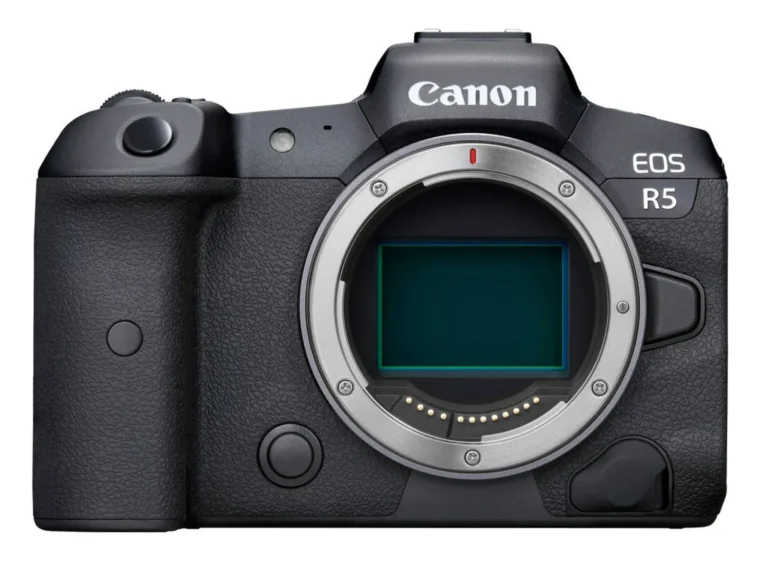
Canon R5
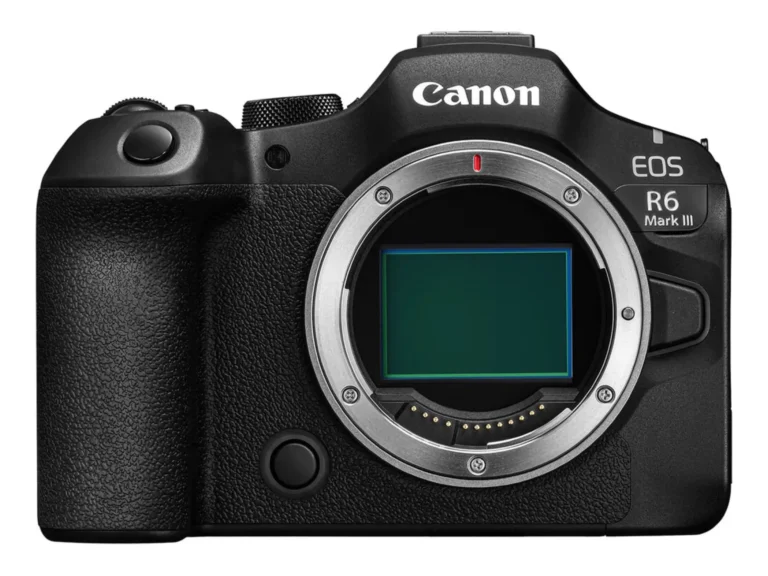
Canon R6 III
Canon EOS R5 (2020) was Canon’s original high-resolution mirrorless option. It used a 45 MP sensor (not a stacked sensor) and offered dual card slots, 12 fps continuous shooting (20 fps with the electronic shutter), oversampled 4K 30 fps recording and even 8K recording, but the camera overheated very quickly and it took forever to cool down.
The R5 is no longer in production, but it will still be offered as a new product for a while. It’s currently more than $1000 cheaper than the R5 Mark II.
Canon EOS R6 Mark III (2025) is Canon’s newest and most advanced camera in the R6 series. It’s not necessarily a direct successor to the R6 Mark II, instead, it can be seen as an alternative version built around a higher-resolution 32 MP sensor. It retains the speed (up to 40 fps high-speed shooting), extremely reliable autofocus performance and compact design that made the R6 Mark II so popular, while introducing far more high-quality video features like 7K RAW, 4K 120 fps and Open Gate recording.
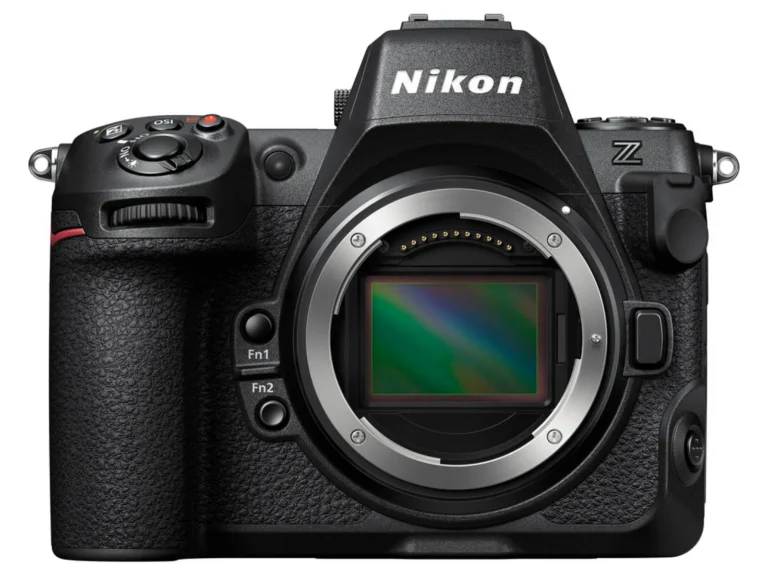
Nikon Z8
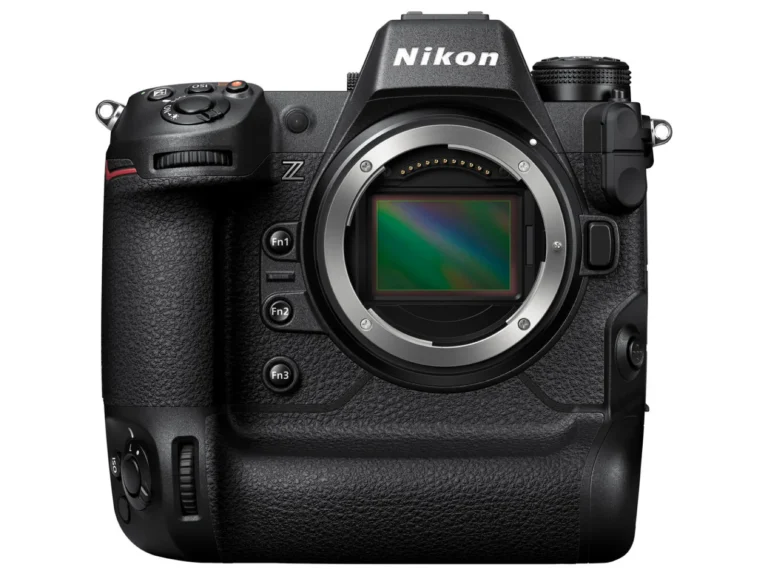
Nikon Z9
Nikon Z8 (2023) uses a 45.7 MP stacked sensor (making it a direct competitor to the R5 Mark II) paired with Nikon’s EXPEED 7 processor, delivering class-leading autofocus performance with advanced subject detection, blackout-free 20 fps shooting and extremely fast sensor readout, effectively eliminating the need for a mechanical shutter. It can record 8K at 60 fps in 12-bit N-RAW, 4K up to 120 fps and oversampled 4K 60 fps. It can shoot at up to 20 fps in RAW, 30 fps in full-resolution JPEG and up to 120 fps in 11 MP JPEG. Buffer performance is extremely strong and the Z8 can shoot at 20 fps for approximately 1,000 frames (50 seconds) without viewfinder blackout.
Nikon Z9 (2021) is Nikon’s larger flagship camera with all specs exactly the same as with the Z8.
The Z9 was the original flagship and the Z8 was later released as a more affordable option in smaller, lighter body that’s easier to carry and better suited to a wide range of shooting scenarios.
Nikon Z8 is slightly cheaper than the Canon R5 Mark II (about $500 cheaper), while the larger Z9 is about $1000 more expensive than the Canon R5 II.
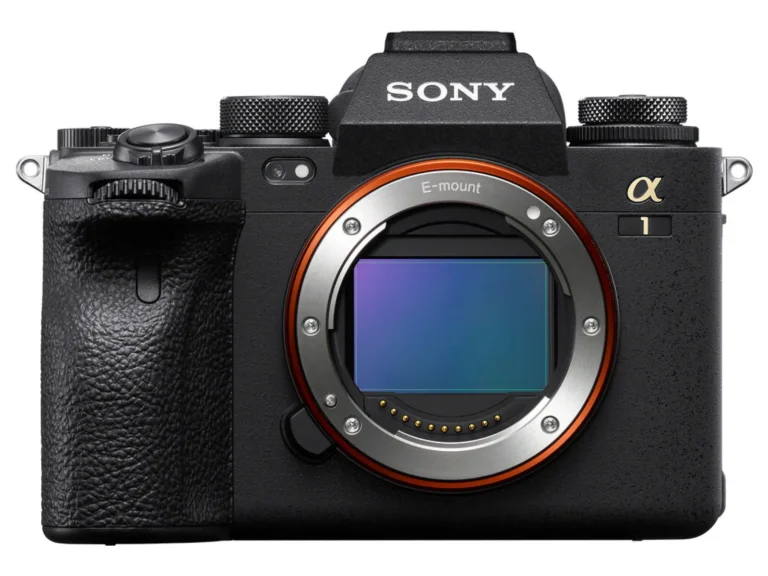
Sony A1
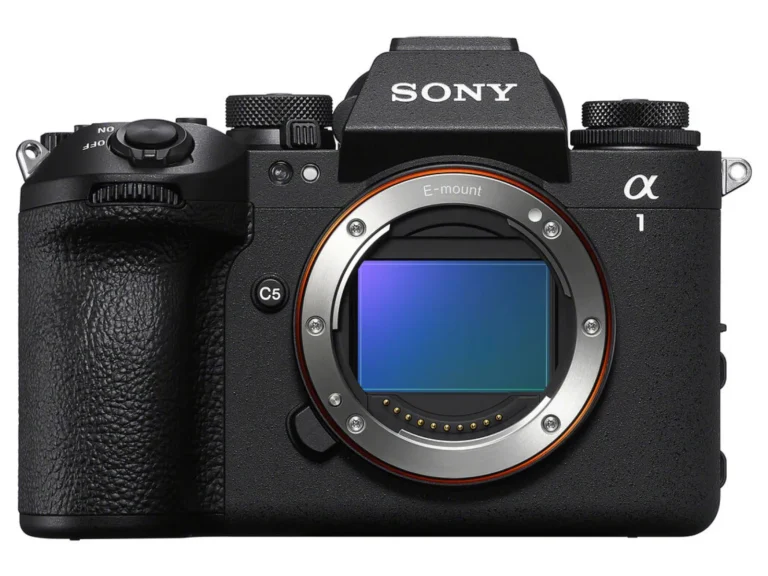
Sony A1 II
Sony A1 (2021) is Sony’s high-resolution flagship featuring a 50 MP stacked sensor. At the time of it’s release it offered the best AF system in the industry. It can shoot at up to 10 fps in RAW with the mechanical shutter and up to 30 fps in RAW with the electronic shutter. It offers 8K video recording at 30 fps and 4K at up to 120 fps, but oversampled 4K recording is available only at 30 fps and only with a 1.5x crop. Internal recording is limited to 10-bit with the option for 16-bit external recording via HDMI.
Sony A1 II (2024) keeps the same 50 MP stacked sensor, but it utilizes a new AI processing unit for enhanced subject recognition and tracking. It also upgrades to a new rugged and more ergonomic body and it introduces a new extremely practical high-resolution LCD screen (tilting and fully articulating). Most other specifications remain the same as on the original A1.
Compared to the Canon EOS R5 Mark II, Sony A1 and A1 II offer slightly better autofocus performance, but cannot quite match the video performance of the Canon.
Sony A1 is also about $2000 more expensive than the Canon and Sony A1 II is roughly $3000 more expensive.
Canon EOS R5 Mark II Price
Final Verdict
Canon EOS R5 Mark II is Canon’s most advanced high-resolution camera and it’s in a completely different class than the original R5. Both cameras produce excellent still, but the Mark II has less rolling shutter distortion when you use the electronic shutter, faster high-speed shooting and a deeper buffer thanks to faster processing.
Video features are also significantly improved, with better heat management, the removal of recording limits, the addition of 8K 60 fps RAW video recording and the introduction of C-Log 2.
If you are looking for a high-resolution camera but are not yet committed to the Canon EOS R system, alternatives such as the Nikon Z8 also deliver flagship-level performance at a slightly lower price while offering a couple more video-recording options.