
Canon Cameras
Canon EOS R8 Review
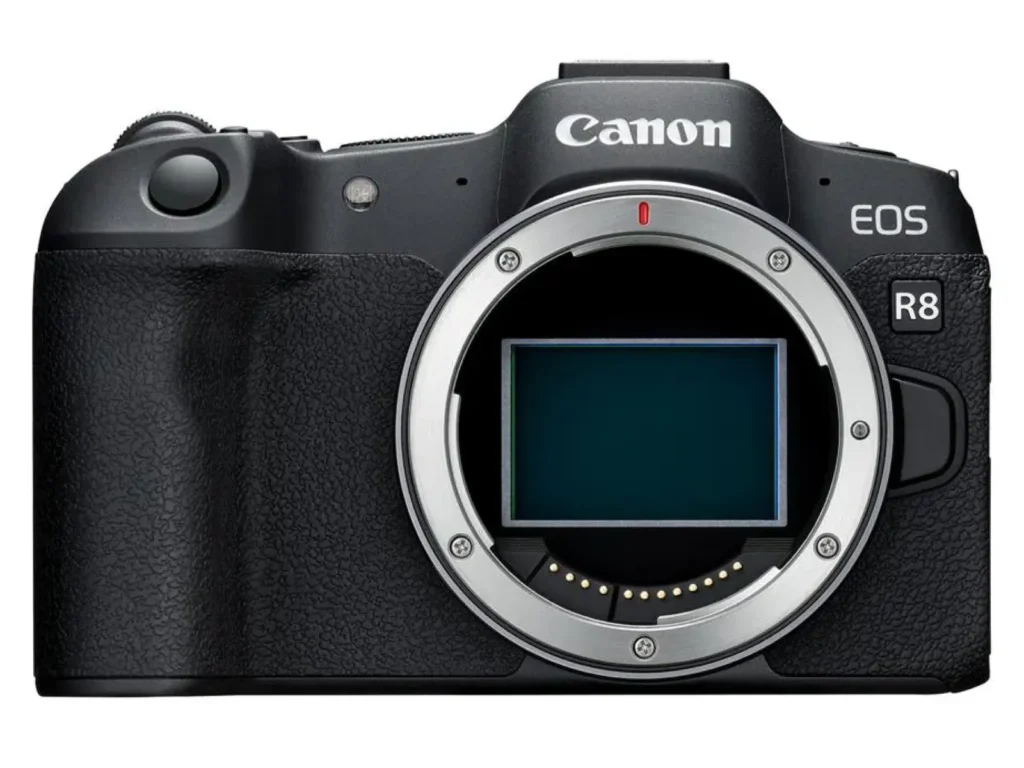
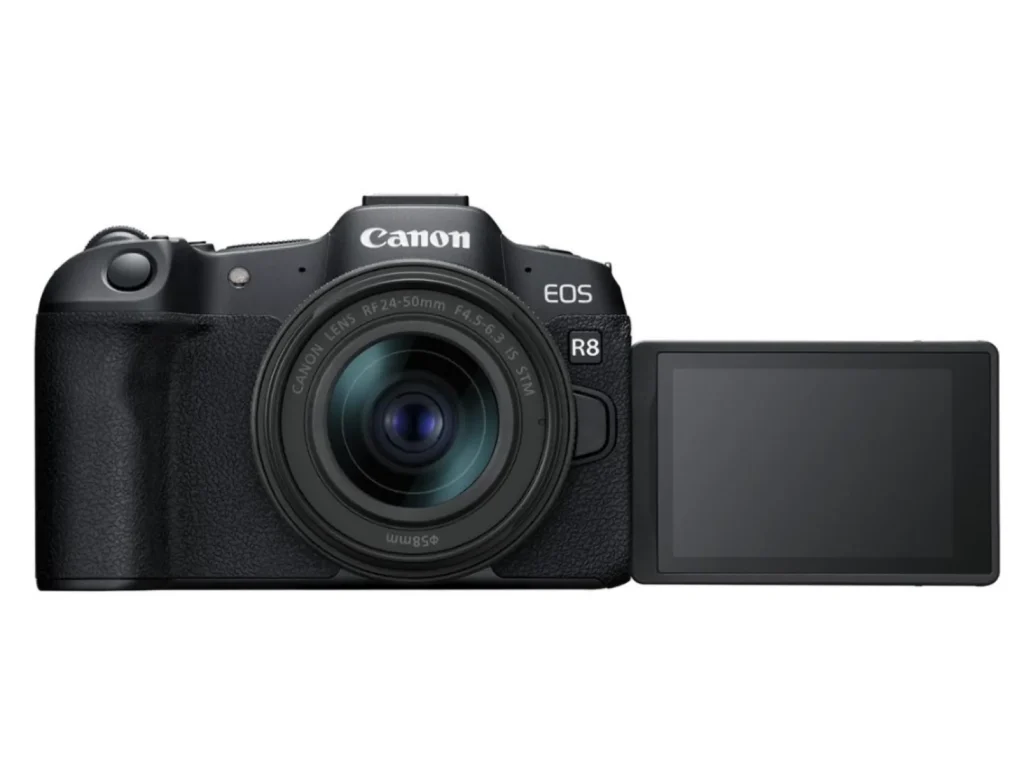
Canon EOS R8 is Canon’s newest entry-level full-frame mirrorless camera. It is essentially a smaller, more affordable version of the extremely popular Canon EOS R6 Mark II. It uses the same 24 MP sensor, the same DIGIC X processor and has the same extremely reliable autofocus system.
To keep the price down, Canon simplified the body design and removed several features, including a full mechanical shutter, IBIS, dual card slots and the 6K RAW external recording option. The R8 also uses smaller batteries and has lower-resolution LCD and EVF panels. Even with these compromises, photography and video performance remain nearly on the same level as the R6 Mark II.
The R8 is offers good value, making it an excellent entry point into Canon’s full-frame R system for anyone interested in photography or video.
Canon EOS R System
The release of the Canon EOS R in 2018 introduced the Canon RF-mount. With a larger mount diameter, shorter flange distance and a 12‑pin electronic interface, it allowed Canon to design faster, sharper lenses with better low-light performance. Compared to older DSLRs the system is smaller and lighter while also improving autofocus speed and overall image quality. After nearly a decade, the EOS R System now provides a wide selection of lenses. Canon EF-mount lenses (older DSLR lenses) remain fully compatible with Canon R System cameras via the EF-EOS R adapter.
Canon EOS R8 Price
Canon EOS R8 Specifications
General
Canon EOS R8 features the same 24.2 MP full-frame CMOS sensor and DIGIC X processor previously used in the EOS R6 Mark II.
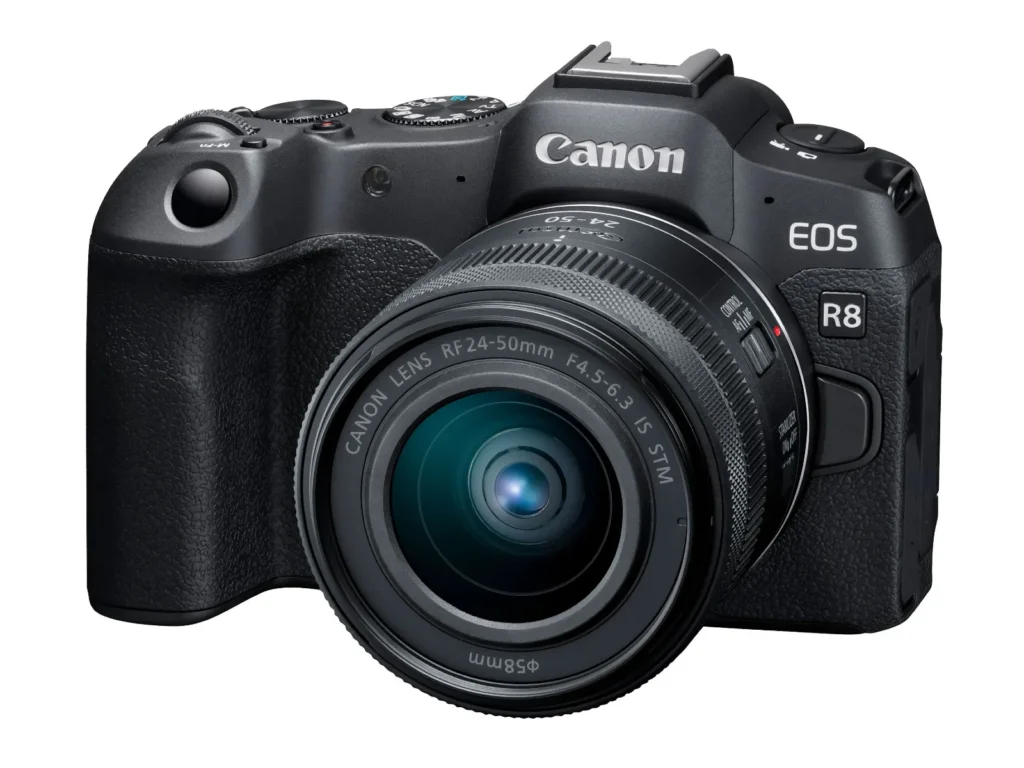
Body design is very similar to the older Canon EOS RP. It’s compact and easy to handle, making it a great choice if portability is important. If the grip feels too small, Canon sells an optional screw-on grip.
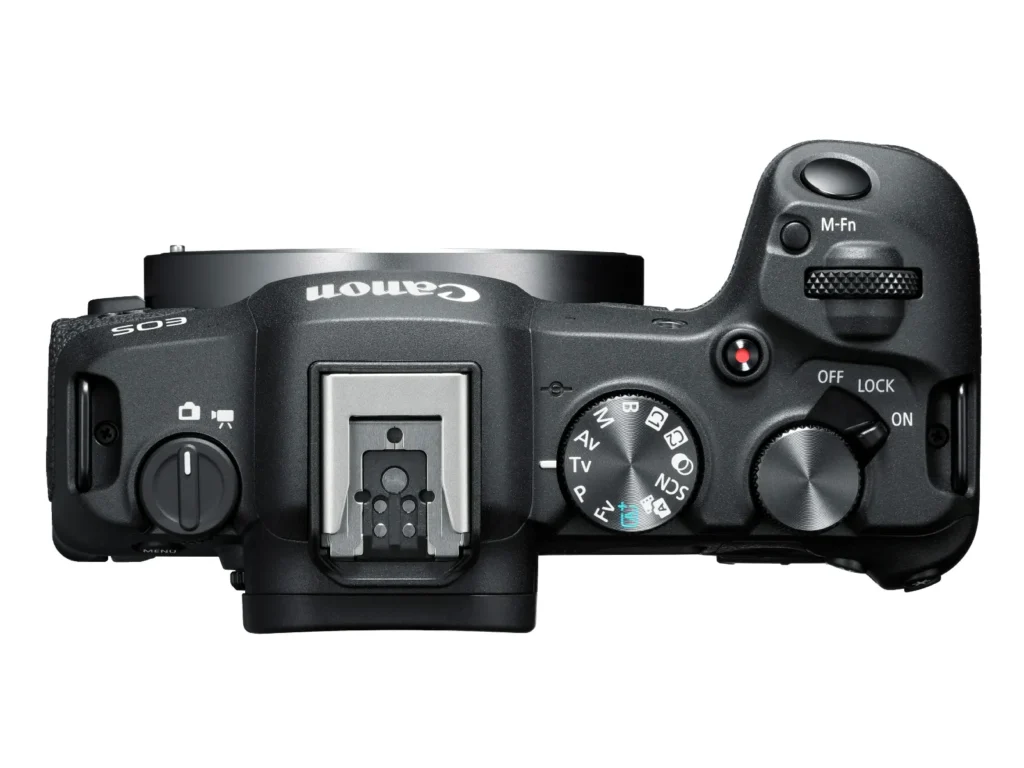
The body is solid and well built, but it isn’t fully weather-sealed – only dust and moisture resistant. The dials are made of metal and feel high quality. Like most buttons, they are customizable.
There is no built-in image stabilization (IBIS). Electronic stabilization is available for video, but it applies a slight crop.
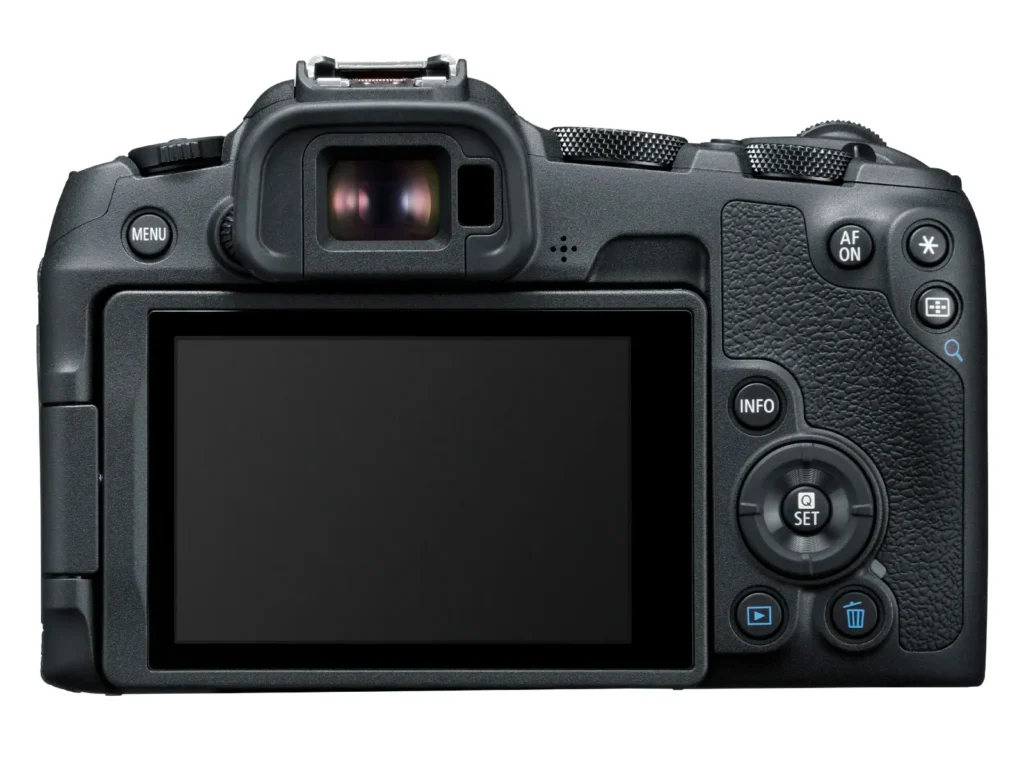
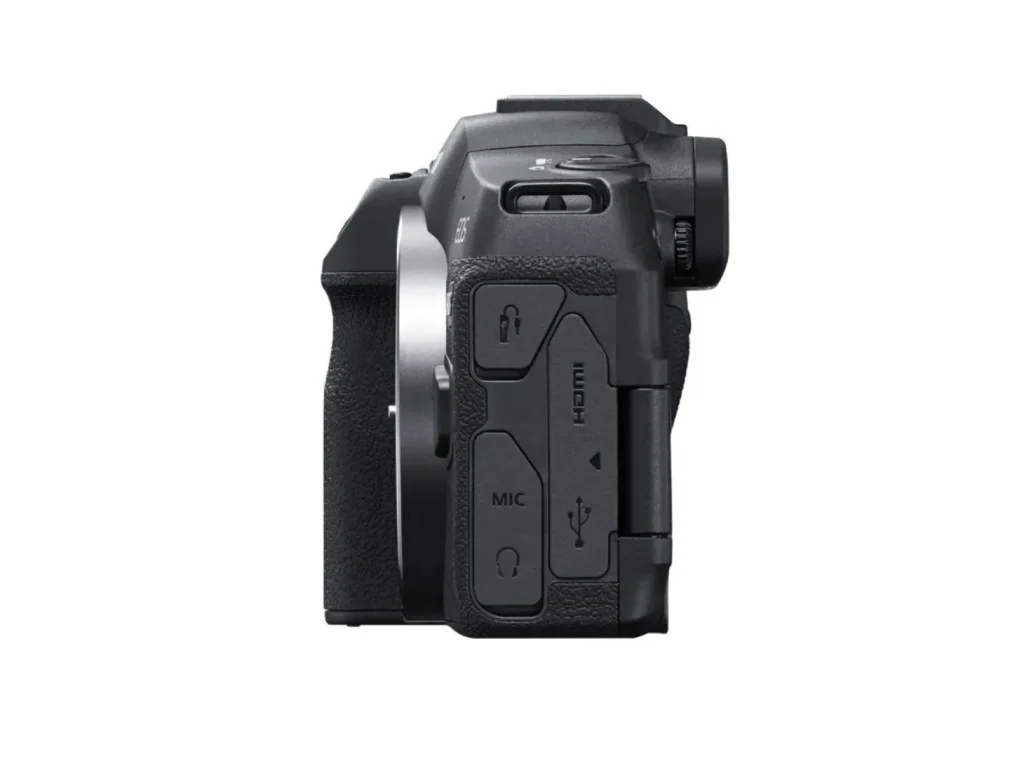
The R8 has a fully articulating LCD screen. There’s only one card slot and the camera still uses an outdated micro HDMI port.
The EVF is large and bright and you can choose between 60 fps and 120 fps refresh rates – though 120 fps negatively impacts battery life.
Because of the compact design, the R8 uses smaller batteries than most other full-frame R-series cameras. Getting an extra battery is definitely recommended.
Autofocus
Autofocus has long been one of Canon’s strengths and the R8 benefits from the same autofocus system as the R6 Mark II. It also gets the same AI-based deep-learning engine for better subject tracking with better stickiness. A similar autofocus system was also previously used in Canon’s ‘flagship’ R3.
The camera can recognize a wide range of subjects, including people, animals (dogs, cats, birds, horses) and various vehicles (cars, motorcycles, bicycles, trains, aircraft).
Eye-detection AF works for both humans and animals and stays reliable even in low-light conditions and when the subject in moving. Overall, autofocus performance is extremely good and dependable in almost every situation – on par with many flagship cameras.
The only limitation is the lack of an AF joystick. If you’re used to one, switching focus between subjects might feel slower. To make up for it, the R8 lets you use the touchscreen while looking through the viewfinder: slide your finger across the screen to move the focus point or tap it to select a different subject (all without leaving the EVF view).
Photography
Image quality on the Canon EOS R8 is excellent, with strong dynamic range, natural color rendering and clean high-ISO performance.
The R8 does not have a full mechanical shutter. The electronic front-curtain shutter (EFCS) allows continuous shooting at up to 6 fps in 14-bit RAW. In this mode, the buffer is effectively unlimited (1000 shots according to official figures), though real-world performance can be lower if using slower SD cards.
Just like the R6 Mark II, the R8 can also shoot at up to 40 fps in 12-bit RAW with the electronic shutter, but the buffer fills quickly – in about 1-2 seconds (50+ shots) or in about three seconds (120 shots) when shooting just JPEGs. After that, shooting is temporarily disabled for 4-6 seconds while the buffer clears. Slower or lower-quality SD cards can further impact the buffer and clearing times, so using V90-rated cards from reputable brands is recommended.
Several reviewers and initially repeated launch-event claims suggesting that the R8 might retain 14-bit RAW at lower frame rates (such as 10 fps or 20 fps). However, experienced users and technical forum members later pointed out that Canon’s official specifications contradict those claims and the R8 uses 12-bit A/D conversion automatically when you switch to the electronic shutter, just like the R6 Mark II.
When photographing fast-moving subjects with the electronic shutter, rolling shutter distortion is clearly visible. This is not an issue when using EFCS.
The R8 also features Pre-Capture, which records up to half a second of RAW images before the shutter button is fully pressed.
| Feature | Canon EOS R8 |
|---|---|
| Release Date | February 2023 |
| Megapixels | 24.2 MP |
| Image Resolution | 6000 × 4000 |
| Sensor Size | Full Frame |
| Sensor Type | CMOS |
| Image Processor | DIGIC X |
| IBIS | No |
| Weather Sealing | Dust & Moisture Resistant |
| Lens Mount | Canon RF |
| Body Type | Mirrorless |
| PHOTO | |
| Native ISO | 100 – 102,400 |
| Expandable ISO | 50 – 204,800 |
| Shutter Speed | 1/16000 – 30s |
| Burst Rate (Mechanical) | 6 fps RAW (EFCS) |
| Burst Rate (Electronic) | 40 fps RAW (12-bit) |
| Buffer | 50 - 1000 RAW |
| Shutter Types | Electronic, EFCS |
| Silent Shooting | Yes (Electronic Shutter) |
| Exposure Compensation | ±3 EV |
| High-Res (Sensor Shift) | No |
| Pre-Capture Mode | Yes |
| VIDEO | |
| 4K Video | 4K 60fps (oversampled from 6K) |
| Max Frame Rate | 4K 60fps / 1080p 180fps |
| Bit Depth | 10-bit |
| Recording Limit | 2 hours |
| Timelapse Recording | Yes |
| AUTOFOCUS | |
| AF System | 'Dual Pixel CMOS AF II' + AI-based deep-learning engine for enhanced subject tracking |
| AF Points | 1053 |
| AF Coverage | 100% Frame Coverage |
| AF Joystick | No |
| DISPLAY / VIEWFINDER | |
| Articulated Screen | Fully Articulating |
| Touch Screen | Yes |
| LCD Size | 3" |
| LCD Resolution | 1,620,000 |
| EVF Resolution | 2,360,000 |
| EVF Refresh Rate | 120 fps |
| EVF Coverage | 100% |
| EVF Magnification | 0.70× |
| MORE INFO | |
| Card Slot 1 | SD (UHS-II) |
| Card Slot 2 | / |
| Sensor Protection System | No |
| USB | Type C 3.2 Gen 2 |
| USB Charging | Yes |
| HDMI | Type D (Micro HDMI) |
| Microphone Port | 3.5 mm |
| Headphone Port | 3.5 mm |
| Built-in Flash | No |
| Built-in Microphone | Yes |
| Battery | LP-E17 |
| Battery Life | 300 ~ 500 frames |
| Wi-Fi / Bluetooth | Yes |
| Dimensions | 133 × 86 × 70 mm |
| Weight | 461 g |
Video
The R8 has most of the same underlying video features as the R6 Mark II with the exception of external 6K recording and external 12-bit recording.
Canon EOS R8 can record oversampled 4K 60 fps video internally without a crop. This 4K mode is oversampled from 6K delivering clean, detailed footage with excellent dynamic range, but rolling shutter distortion is noticeable.
Full HD (1080p) recording is available at up to 180 fps.
Internal and external video is limited to 10-bit and there are no internal or external RAW recording modes.
Just like the R6 Mark II, the R8 also includes Canon’s C-Log 3. The use of the C-Log 3 profile allows you to set the color space to ‘Cinema Gamut’ that enables the use of Canon’s official C-Log 3 LUTs for excellent color reproduction.
Recording is limited to 2 hours (excluding some high-framerate modes) with reportedly no overheating issues when recording in 4K at 30 fps. 4K at 60 fps is limited to 30 minutes due to potential overheating.
It’s important to note that the single card slot reduces redundancy and is a drawback for professional work where backup recording is critical. The second limitation is the lack of IBIS. Electronic stabilization is available, with “Enhanced” mode providing more stable results than “Standard” mode, but with a slightly heavier crop.
Canon EOS R8 Alternatives
Canon R6 II
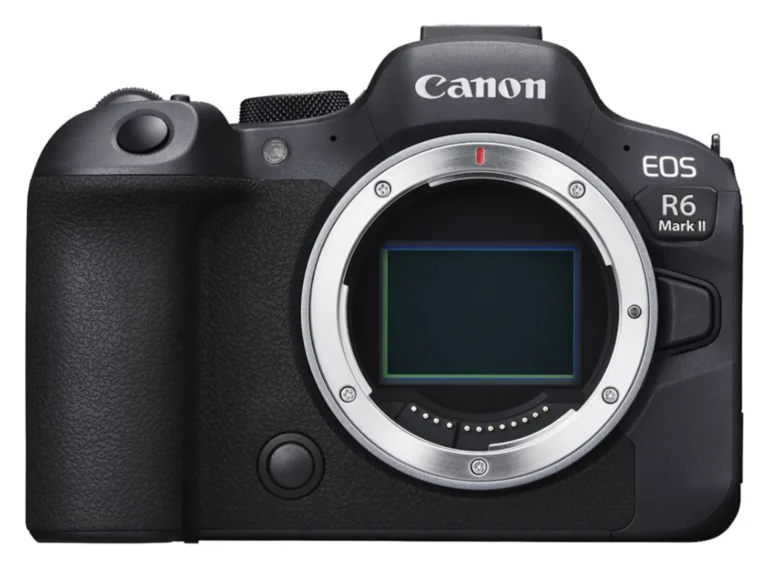
Canon EOS R6 Mark II (2022) was a significant upgrade to its outdated predecessor, the original R6. As already stated the R8 is essentially a smaller, more affordable version of the R6 Mark II with the same 24 MP sensor, the same processor, the same AF system and most of the same video features. Additionally the R6 Mark II offers weather sealing, IBIS, 12-bit RAW external recording, a 6K external recording option and a mechanical shutter that allows continuous shooting at up to 12 fps.
Canon EOS R (2018, 30 MP) and EOS RP (2019, 26 MP) are Canon’s older entry-level full-frame mirrorless cameras with older sensors, outdated autofocus performance and almost no high-speed shooting capability. They offer only low-quality heavily cropped 4K video recording, making either of them a poor alternative to the R8 or any other camera on this list.
Nikon Z5 II
Nikon Z6, Z6 II and Z5 II all use the same 24 MP BSI sensor. Nikon Z5 II is the most recent model and the only one that uses a faster EXPEED 7 processor.
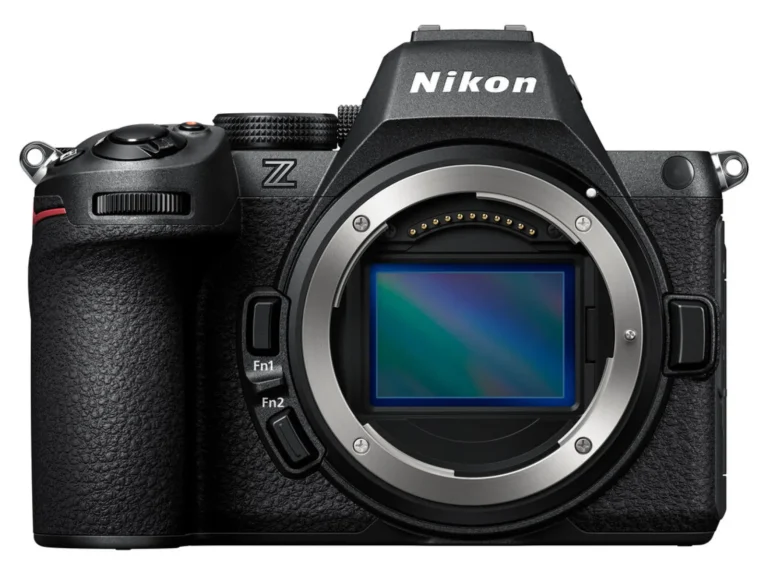
Nikon Z5 II (2025) uses a 24 MP BSI sensor and Nikon’s new EXPEED 7 processor resulting in great autofocus performance. It features weather sealing, IBIS and duals SD card slots. It can shoot at up to 11 fps in RAW with the mechanical shutter (14 fps JPEG), up to 14 fps RAW with the electronic shutter (30 fps JPEG) and it can record oversampled 4K 30 fps video (internally in 12-bit RAW) and 4K at up to 60 fps with a 1.5x crop.
As of now, the Z5 II is definitely the best entry point into Nikon’s full-frame Z system for anyone interested in photography or video and it currently costs about the same as the Canon EOS R8.
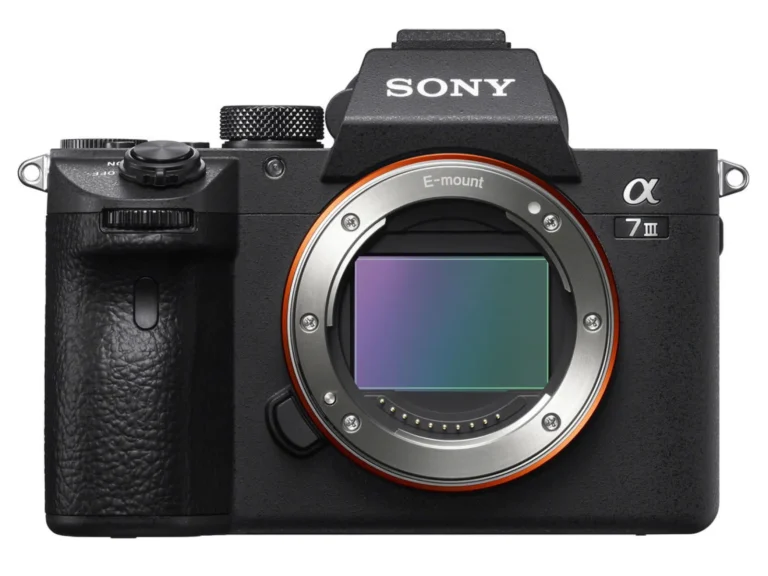
SONY A7 III
Sony A7 III (2018) is a strong competitor to the Canon R8 and is still one of the most popular full-frame cameras today. It offers a 24 MP BSI sensor, IBIS, dual card slots, good autofocus and 10 fps continuous shooting with the mechanical shutter. It can record oversampled 4K at 30 fps with a slight crop, but recording is limited to 8-bit.
It costs about the same as the R8. It benefits from Sony’s long-standing E-mount ecosystem and there are plenty of used options available since its more popular and has been around for longer.
Canon EOS R8 Price
Final Verdict
Canon R8 is a very capable entry-level camera. It represents good value, making it an excellent entry point into Canon’s full-frame R system for beginners interested in photography or video.
That said, there is a lot of competition when it comes to 24 MP cameras. Similarly priced alternatives such as the Nikon Z5 II and Sony A7 III may offer a more well-rounded feature set, especially for photographers. Their autofocus might not be quite on the level of the R8, but both use a BSI sensor and both have a mechanical shutter that offers great high-speed continuous shooting performance. Additionally Nikon Z5 II offers more high-quality video recording options (internal 12-bit RAW).
More Affordable APS-C Alternatives
If you are a beginner and don’t feel the need for full-frame, there are also several excellent more affordable APS-C options on the market. Canon only offers the R10, with the R7 available at a much higher price, but APS-C models from other brands are often a better choice.
Sony offers excellent cameras in its APS-C lineup (the a6000 series), particularly the a6100 and a6400, with the a6700 available at a higher price point. Sony has used the same E-mount since 2010, which means there are over 200 lenses available and a massive second-hand market. For beginners entering the Sony system, that means more options and much better prices.
Nikon Z50 and Z50 II are also excellent, more affordable APS-C alternatives. Pairing them with the two kit lenses – the 16-50mm and the 50-250mm – gives you a high-quality Nikon setup for a fraction of the price of any full-frame kit.