
Nikon Cameras Explained
Nikon
Nikon is one of the oldest and most respected camera manufacturers in the world with a history that stretches back to 1917. Over the decades, Nikon built its reputation through film cameras such as the Nikon F, F2 and FM/FE series and later through iconic DSLRs like the D850. Known for their reliability and outstanding image quality, these cameras were trusted by professionals, photojournalists and enthusiasts alike. For generations of photographers, Nikon wasn’t just a camera brand – it was the standard.
In 2018, Nikon entered the mirrorless market with the introduction of the Z System. Today, the Nikon Z lineup includes both APS-C and full-frame mirrorless cameras, catering to everyone from beginners and enthusiasts to professional photographers and filmmakers.
This page offers a overview of all Nikon Z system cameras.
Z - System
As mirrorless technology improved, Nikon eventually reached the limits of its long-running F-mount DSLR system. In 2018, Nikon made the biggest transition in its history by introducing the Nikon Z-mount and its first full-frame mirrorless cameras, the Z6 and Z7. With a larger mount diameter and shorter flange distance, the Z system allowed Nikon to design faster, sharper lenses with better low-light performance. Because mirrorless cameras don’t need a mirror mechanism, lenses can sit much closer to the sensor, making the whole system smaller and lighter while also improving autofocus speed and overall image quality. After almost a decade, the Z system now has an extensive range of lenses available.
Nikon F-mount lenses (older DSLR lenses) remain compatible with Nikon Z System mirrorless cameras via the FTZ adapter.
Nikon APS-C Cameras
Nikon’s APS-C mirrorless cameras, also called Nikon DX Z-series, are perfect for beginners, content creators and anyone looking for a compact, lightweight camera without sacrificing performance. As of 2026 all Nikon Z APS-C cameras use the same 21 MP BSI sensor.
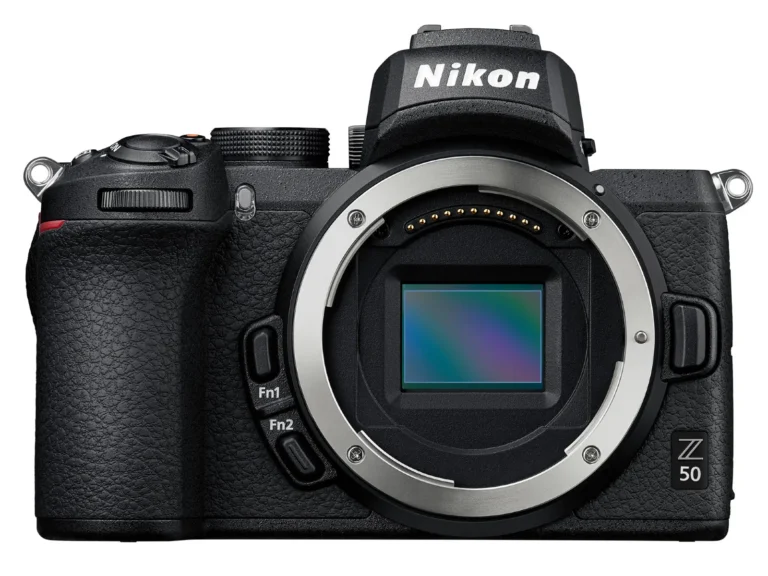
Z50
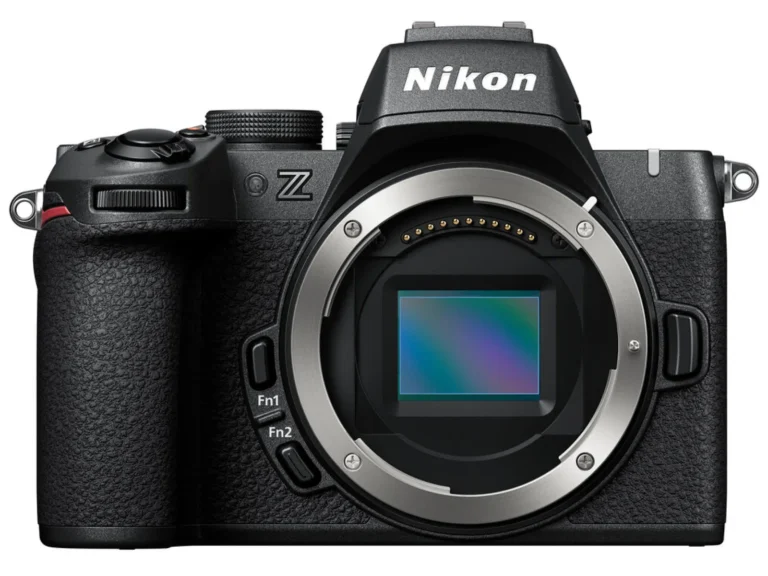
Z50 II
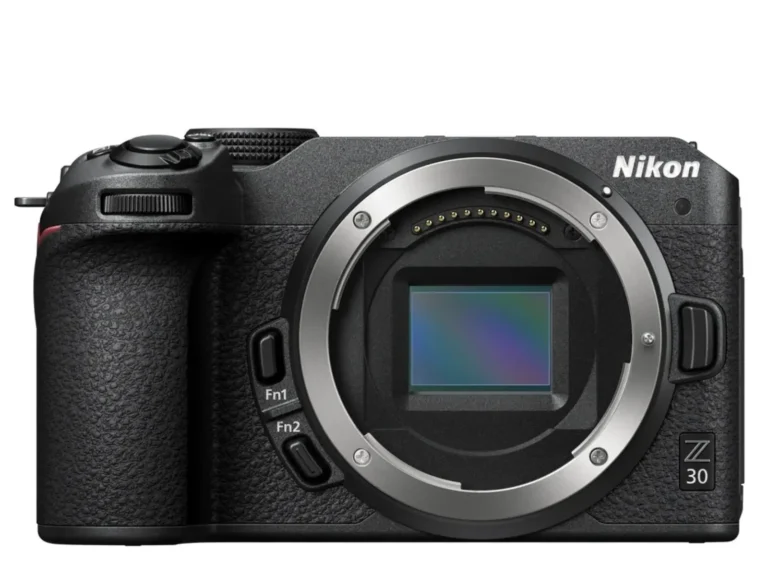
Z30
Nikon Z50 (2019) was Nikon’s first APS-C mirrorless camera for the new Z-mount. It features fast hybrid autofocus, 4K video recording, a tilting flip-down screen and continuous shooting at up to 11 fps, all in a compact, easy-to-carry body. It quickly became popular for its balance of performance and price. It’s also very affordable on the used market, making it an attractive option for beginners and hobbyists.
Nikon Z50 II (2024) keeps the same 21 MP BSI sensor, but builds on the original with a new processor, improved autofocus, better color rendering, a higher buffer, a fully articulating screen and additional higher-quality video recording options.
Nikon Z30 (2022) is essentially a simplified, more affordable version of the Z50 designed for content creators and vloggers. The Z30 shares many strengths with the Z50 – a 21 MP sensor, 4K 30 fps video recording, continuous shooting at up to 11 fps and solid autofocus performance – but removes a few features, such as the electronic viewfinder (EVF), to streamline the experience and lower the price. With a fully articulating screen, no recording limit and simplified controls, it’s perfect for handheld shooting, vlogging, streaming and social media content creation.
Nikon Full-Frame Cameras
Nikon’s full-frame mirrorless lineup began in 2018 with the launch of the Z6 and Z7, signaling the company’s commitment to a mirrorless future. Both models share the same body design but have different sensor resolutions and intended use. The Z6, with a 24 MP sensor, is a fast, versatile all-rounder for everyday and hybrid shooting, while the Z7, with a 45 MP sensor, is aimed at photographers seeking maximum resolution and detail.
Since then, Nikon expanded the lineup in every direction, offering options from affordable entry-level full-frame bodies to high-resolution studio tools and pro-level flagships, all delivering excellent image quality, impressive low-light performance and advanced autofocus in compact mirrorless bodies.
Z8 & Z9 - Flagship
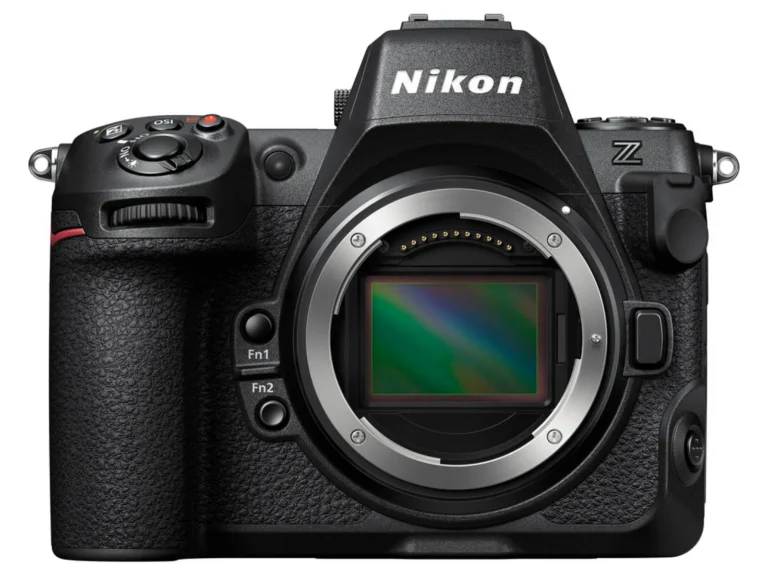
Z8
Z9
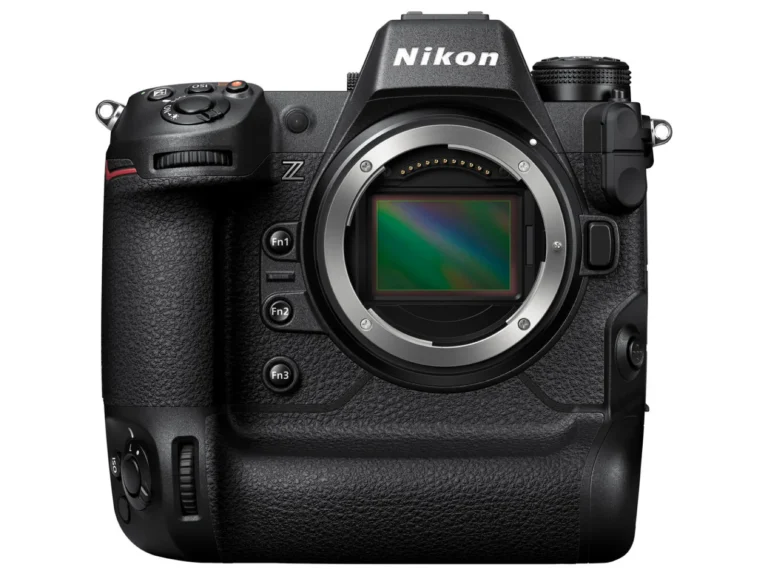
At the top of Nikon Z-series mirrorless lineup sit the Z8 and Z9, two cameras built for professionals and serious creators who demand speed, resolution and industry-leading video performance.
Nikon Z9 (2021)is Nikon’s flagship camera. It features a 45.7 MP stacked sensor paired with Nikon’s EXPEED 7 processor, delivering class-leading autofocus performance with advanced subject detection, blackout-free 20 fps shooting and extremely fast sensor readout, effectively eliminating the need for a mechanical shutter. It can record in 8K at 60 fps in 12-bit N-RAW, 4K at up to 120 fps and oversampled 4K at up to 60 fps. It can shoot at up to 20 fps in RAW, 30 fps in full-resolution JPEG and up to 120 fps in 11 MP JPEG. Buffer performance is extremely strong and the Z9 can shoot 20 fps for approximately 1,000 frames (50 seconds) without viewfinder blackout. A built-in vertical grip, a large battery and rugged weather sealing make it a professional powerhouse.
Nikon Z8 (2022) is essentially a “mini Z9” with the same 45.7 MP stacked sensor and the same processor, the same AF system and video capabilities. It offers nearly identical core performance, but in a more compact and lighter body without the built in battery grip, sacrificing a bit of battery life and using a mixed dual card slot setup (instead of double CFexpress Tybe B).
Z7 - High Resolution
Z7 II
Z7
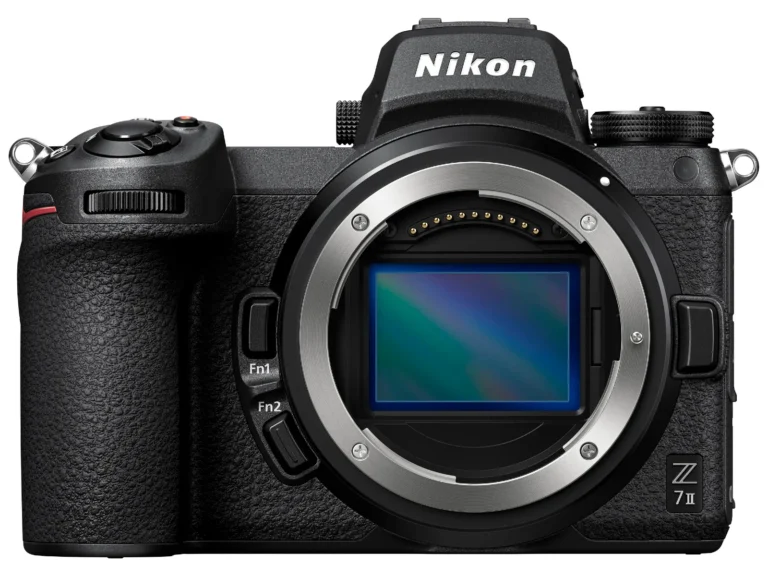
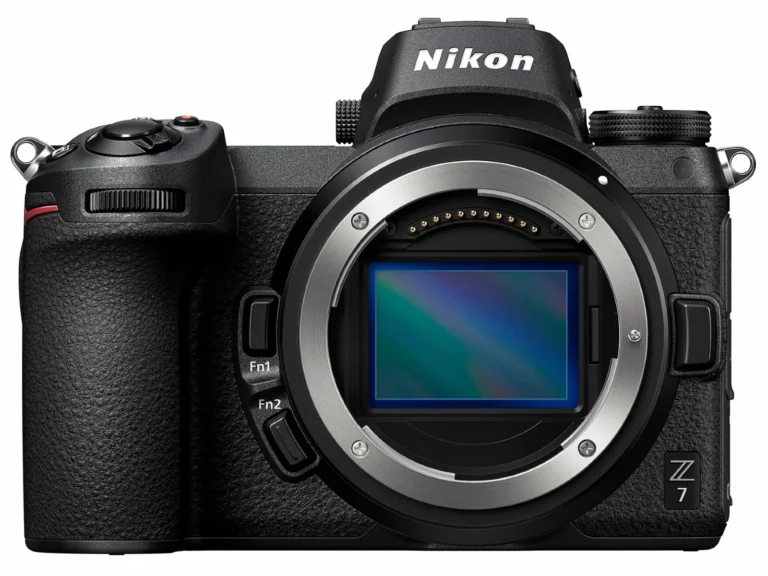
The Z7 series is Nikon’s high-resolution full-frame option, designed for photographers who need maximum detail and image quality, making it ideal for landscapes, studio work and any type of high-resolution photography.
Nikon Z7 (2018) features a 45 MP BSI sensor, delivering outstanding resolution and great dynamic range and low-light performance. It offers weather sealing, continuous shooting at up to 9 fps, 4K 30 fps video recording and oversampled 4K 30 fps recording with a 1.5x crop. Its autofocus performance is noticeably weaker than that of newer models.
Nikon Z7 II (2020) features the same 45 MP BSI sensor, but Nikon significantly refined the camera by introducing dual EXPEED 6 processors. This upgrade delivers faster overall performance, improved autofocus tracking, higher continuous shooting speeds, a deeper buffer and expanded video capabilities. By also adding dual card slots (one SD and one XQD), the Z7 II addresses one of the main criticisms of the original Z7 and positions itself as a more versatile and professional-ready high-resolution mirrorless camera.
24 MP Full-Frame
Z6 III
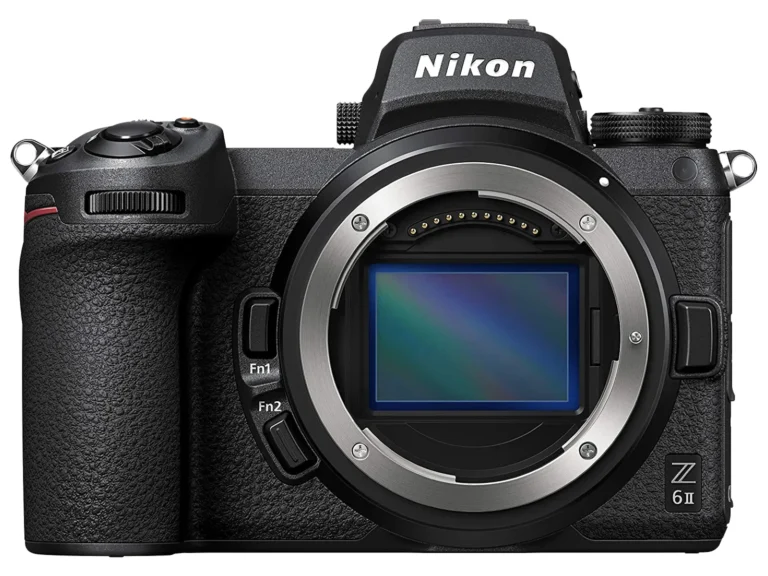
Z6 II
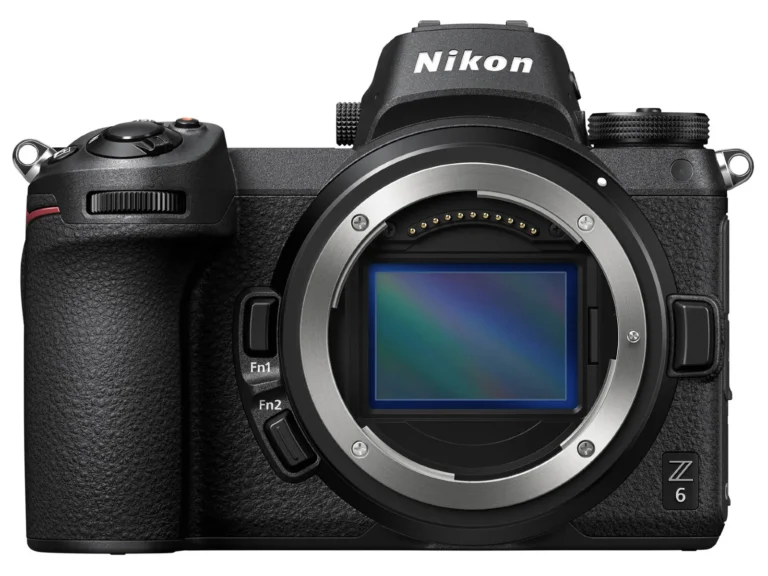
Z6
Nikon Z6 (2018) features a 24 MP BSI sensor, excellent low-light performance, solid autofocus, oversampled 4K 30 fps video recording, 5-axis IBIS and continuous shooting at up to 12 fps, all in a compact, weather-sealed body.
Nikon Z6 II (2020) keeps the same 24 MP BSI sensor, but adds dual processors, dual card slots (one SD and one CFexpress Type B), improved autofocus tracking, more video recording options (including cropped 4K 60 fps), a higher burst rate and a larger buffer. It’s an improvement in every way.
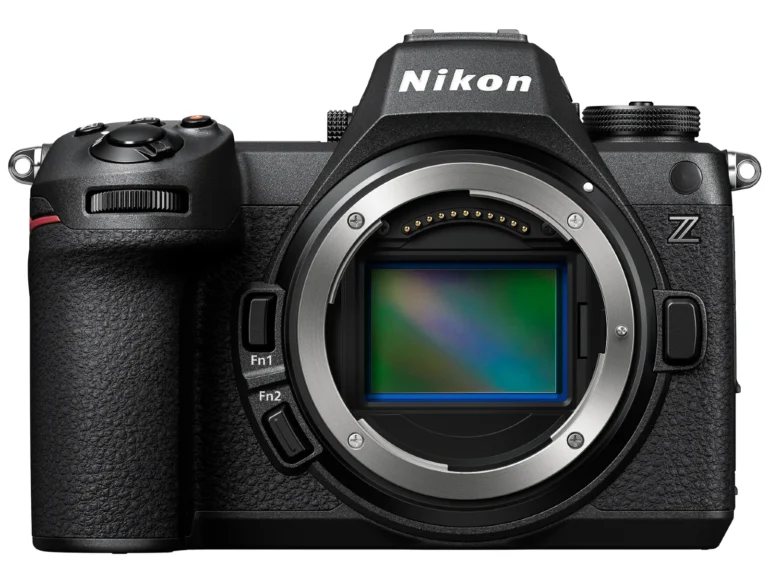
Nikon Z6 III (2024) is Nikon’s most advanced 24 MP full-frame camera, featuring a newer partially stacked 24 MP sensor, EXPEED 7 processor and class-leading autofocus and video capabilities including internal 6K recording at up to 60 fps in 12-bit N-RAW. It can shoot at 14 fps in RAW with the mechanical shutter and 20 fps in RAW with an electronic shutter (up to 120 fps in JPEG). The Z6 III is an extremely advanced camera, but it’s slightly more expensive and aimed at a higher-end audience.
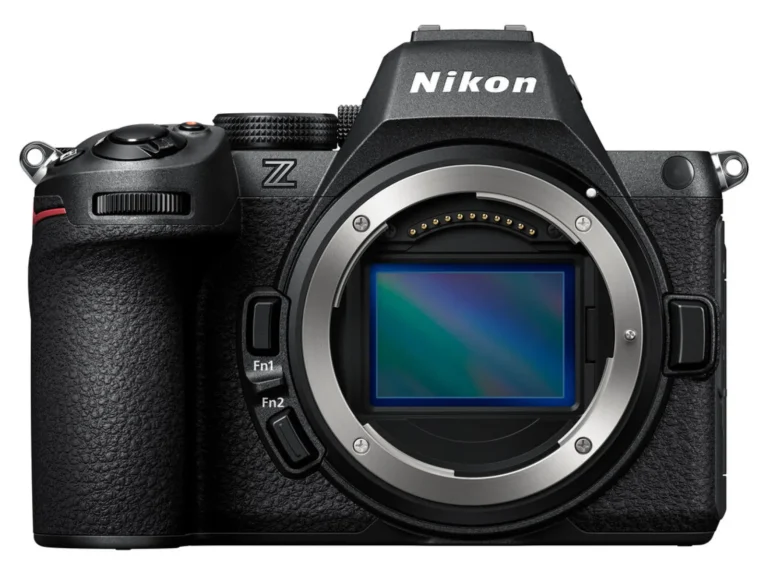
Z5 II
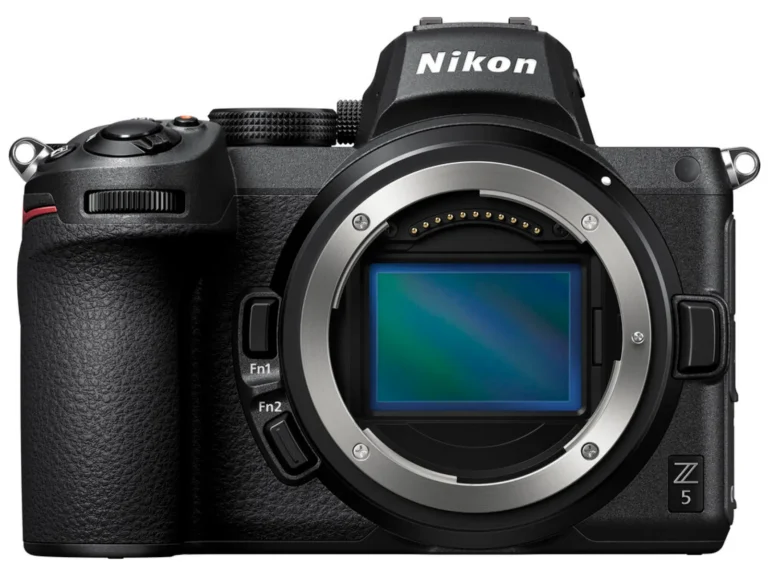
Z5
Nikon Z5 (2020) was Nikon’s first entry-level mirrorless full-frame option – a more affordable alternative to the Z6 thanks to its 24 MP non-BSI sensor. It features weather sealing, dual SD card slots, IBIS and 4K video recording with a 1.7x crop. Because the sensor is not back-side illuminated, it collects light less efficiently, resulting in weaker low-light performance, more noise at higher ISO values and slower readout compared to BSI sensors used in all other Nikon mirrorless camera models. It is not a recommended purchase compared to any other Nikon model.
Nikon Z5 II (2025) uses the same 24 MP BSI sensor as the Z6 and Z6 II, but it upgrades to a faster EXPEED 7 processor, delivering excellent image quality along with great autofocus and video performance. It can shoot at up to 11 fps in RAW with the mechanical shutter (14 fps JPEG), up to 14 fps RAW with the electronic shutter (30 fps JPEG) and it can record in 4K at 30 fps oversampled from 6K (internally in 12-bit N-RAW) and 4K to 60 fps with a 1.5x crop.
As of now, the Z5 II is definitely the best entry point into Nikon’s full-frame Z system for anyone interested in photography or video.
Nikon Zf and Zfc
Nikon Zf and Zfc cameras combine retro styling with modern mirrorless performance. Put simply, they are essentially modern Z-series mirrorless cameras wrapped in retro, film-inspired bodies with manual dials and metal accents. They’re ideal for enthusiasts and creators who want a stylish, fun camera, though they are not a good choice as a primary professional body.
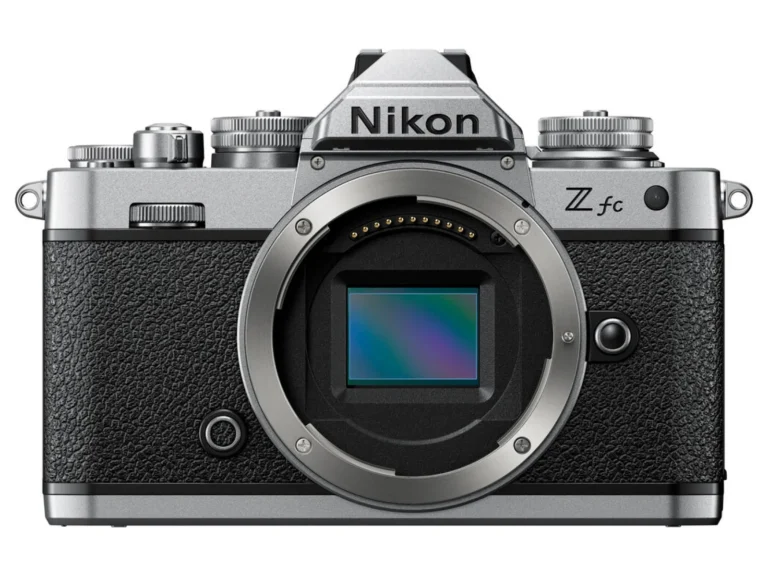
Zfc
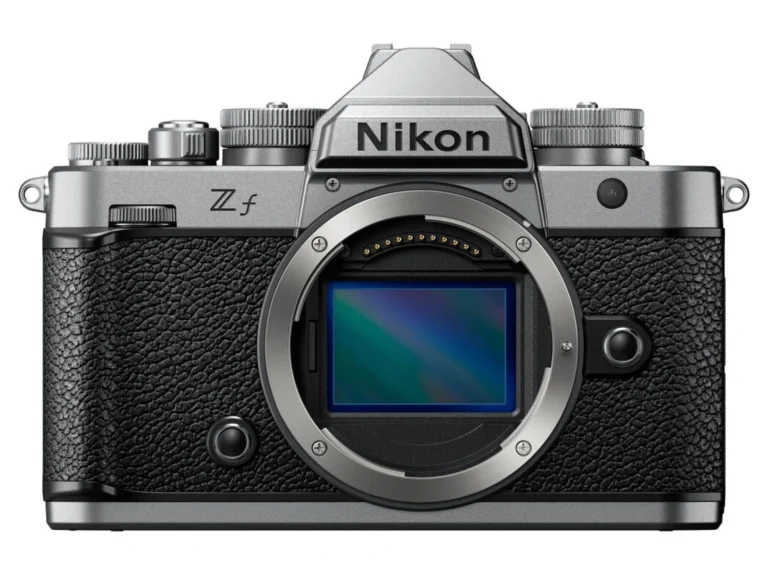
Zf
Nikon Zfc (2021) is essentially a Nikon Z50 in a retro, film-camera-inspired body. It uses the same 21 MP BSI APS-C sensor, with similar image quality and performance, but adds dedicated metal manual dials and a fully articulating screen.
Nikon Zf (2023) could be considered a Z5 II in a retro, film-camera-inspired body. It uses the same 24 MP BSI sensor as the Z6, Z6 II and Z5 II, delivering outstanding dynamic range, sharp detail and strong low-light performance. The addition of the EXPEED 7 processor, makes it a capable modern mirrorless camera. It features a mixed dual card slot setup (one SD, one microSD).
Nikon ZR
RED Digital Cinema, a pioneer in high-end cinema cameras, has long been renowned for producing professional cameras capable of delivering stunning image quality for film and television. In 2024, Nikon acquired RED Digital Cinema, allowing the company to expand into the professional digital cinema market and leverage RED’s expertise in cinema cameras.
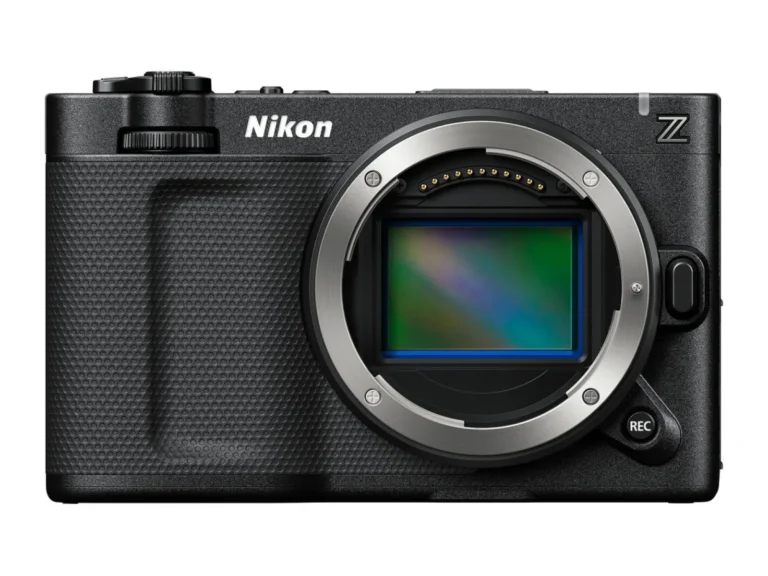
ZR
Nikon ZR (2025) represents the first collaboration between the two companies, combining the strengths of both brands into a unique product. The ZR features the same 24 MP partially stacked sensor and EXPEED 7 processor found in the Z6 III but removes the mechanical shutter and electronic viewfinder, packing everything into a small, lightweight and portable body with a simple, video-focused design. Nikon ZR is the smallest Nikon full-frame camera and the smallest camera capable of RED RAW recording.