
Canon Cameras
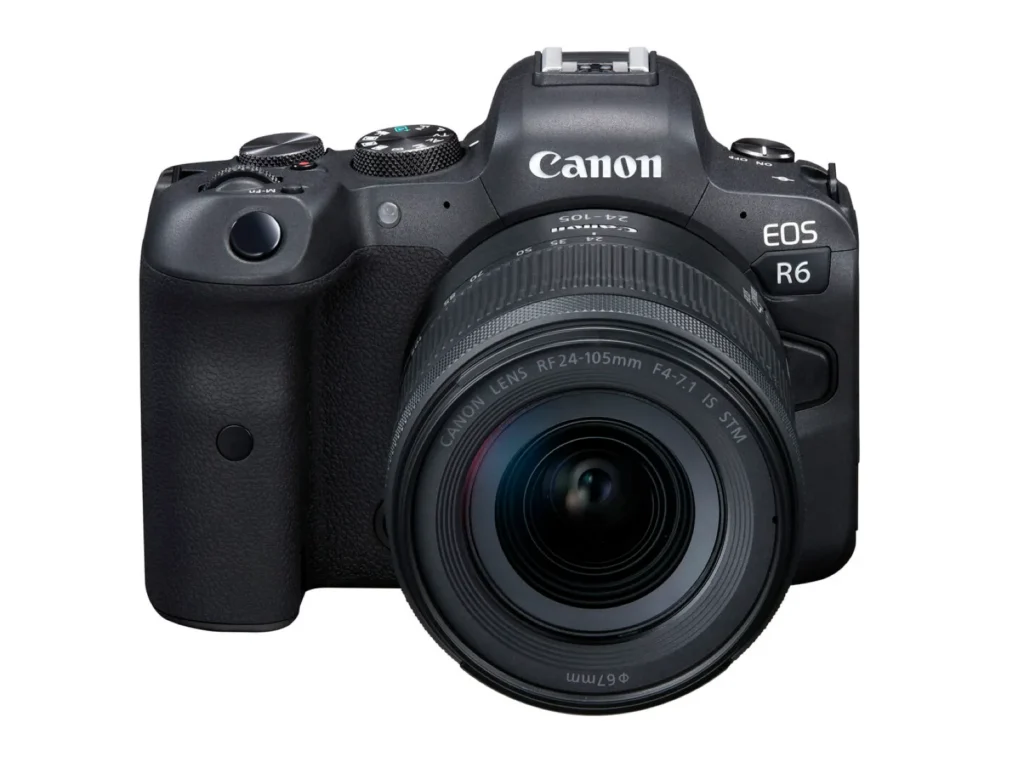
Canon EOS R6 Review
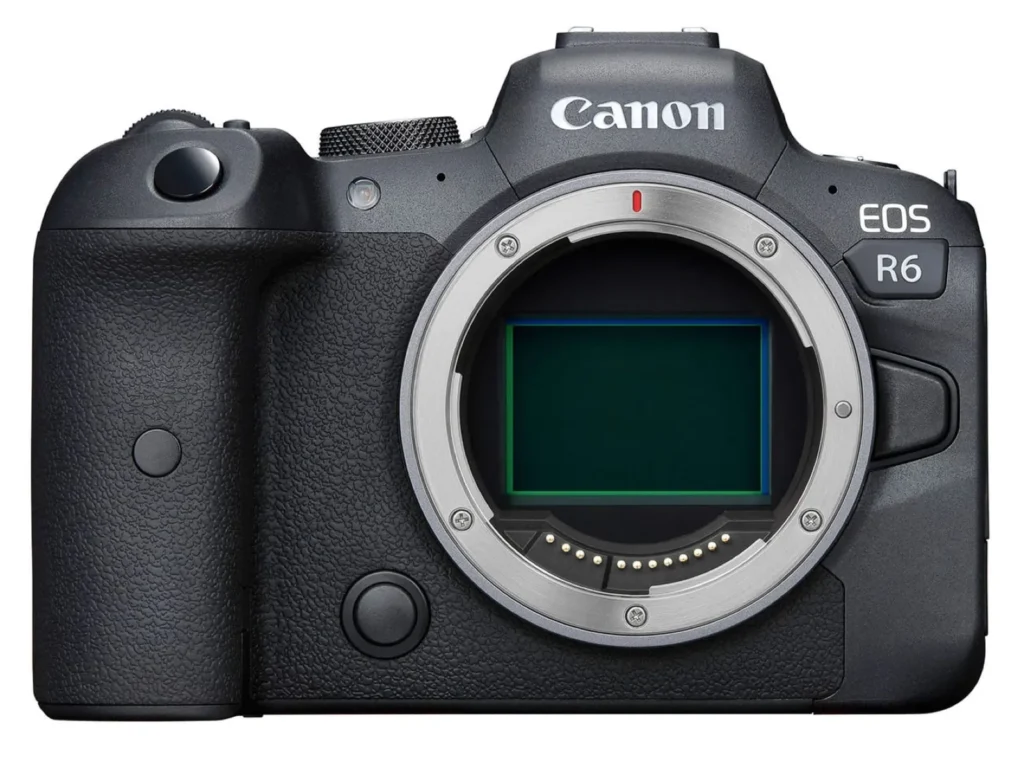
In July 2019, Canon released the EOS R6 and EOS R5. The two models differed in sensor resolution and intended use. The R6, with its 20 MP sensor, was designed as a fast, versatile all-rounder for everyday and hybrid shooting, while the R5, featuring a 45 MP sensor, targeted photographers who required maximum resolution and detail.
The lower resolution and overheating issues limited the R6’s appeal for some users, but it quickly became popular among event and sports photographers thanks to its high-speed shooting capabilities and reliable autofocus performance.
It has since been discontinued and replaced by the EOS R6 Mark II, which features a new 24 MP sensor, an updated autofocus system and vastly improved video capabilities.
Canon EOS R System
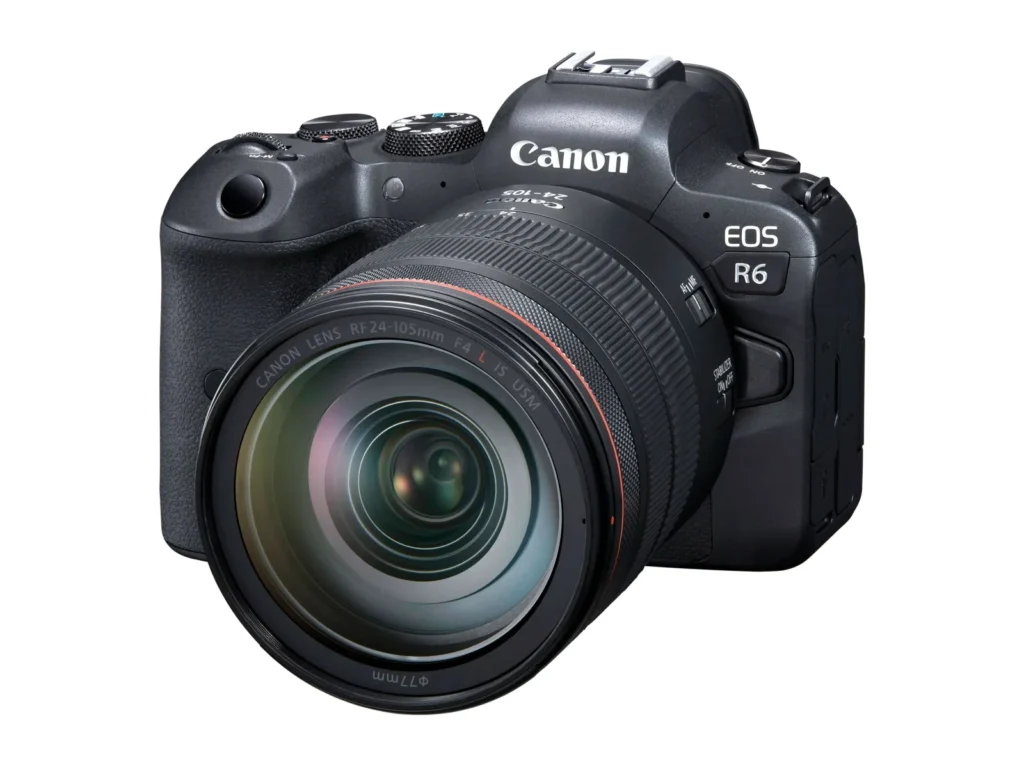
The release of the Canon EOS R in 2018 introduced the Canon RF-mount. With a larger mount diameter, shorter flange distance and a 12‑pin electronic interface, it allowed Canon to design faster, sharper lenses with better low-light performance. Compared to older DSLRs the system is smaller and lighter while also improving autofocus speed and overall image quality. After nearly a decade, the EOS R System now provides a wide selection of lenses. Canon EF-mount lenses (older DSLR lenses) remain fully compatible with Canon R System cameras via the EF-EOS R adapter.
Canon EOS R6 Price
Canon EOS R6 Specifications
General
Canon EOS R6 features a 20.1 MP full-frame CMOS sensor paired with Canon’s DIGIC X processor. Resolution is noticeably lower than that of many competitors, although Canon’s flagship DSLR, the 1DX Mark III, also used the same sensor.
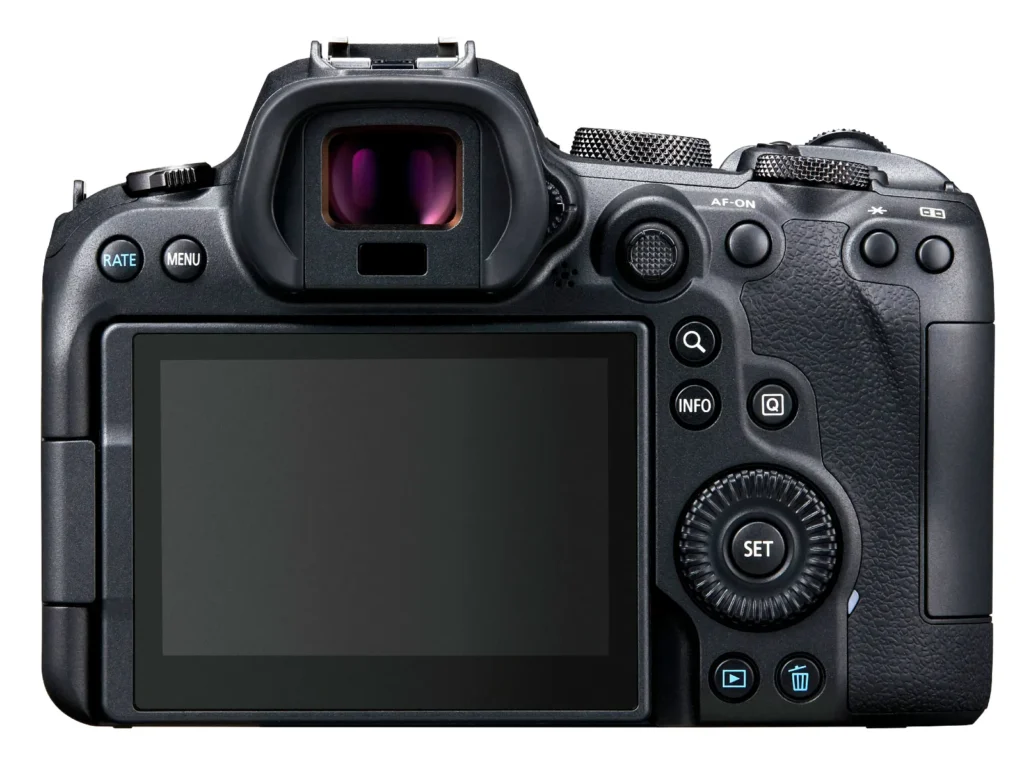
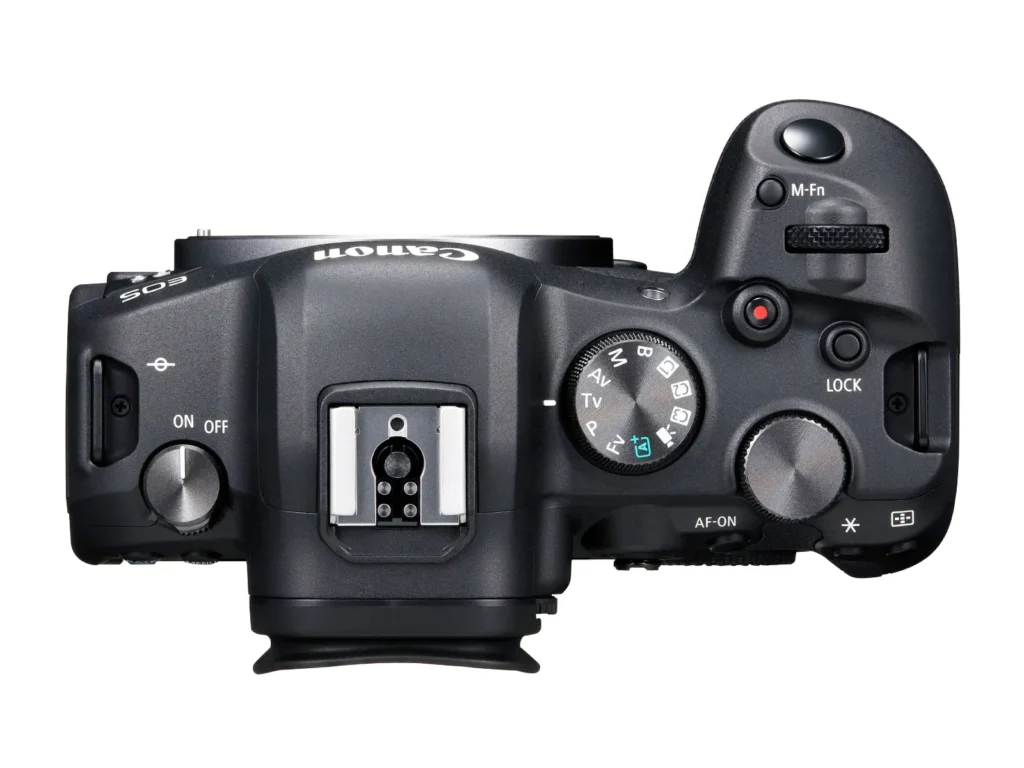
The body is robust, ergonomic and weather-sealed, with customizable buttons and dials that allow you to tailor the shooting experience to your workflow. The R6 automatically closes the shutter when you turn the camera off, protecting the sensor from dust and debris.
In-body 5-axis image stabilization (IBIS) provides up to approximately 8 stops of shake reduction, benefiting both handheld photography and video recording. There is some of Canon’s signature “wobble” visible in the corners, especially when recording video while walking.
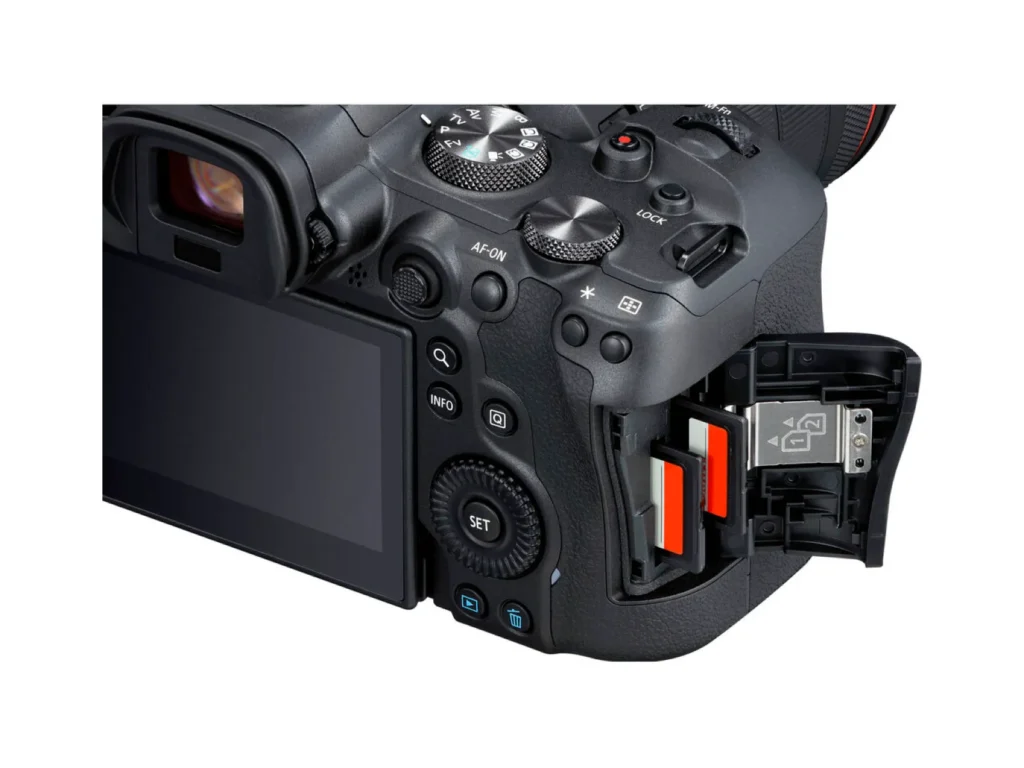
The R6 includes dual SD card slots. Photos and videos can be recorded to both simultaneously for backup.
The camera features a fully articulating LCD screen. The EVF is large and bright and allows you to choose between 60 fps and 120 fps, with the latter negatively affecting battery life.
With the R6, Canon also introduced new LP-E6NH batteries with improved performance, although the camera remains compatible with older LP-E6N batteries.
Autofocus
Canon’s autofocus is generally known to be a strong point in most of its cameras. The EOS R6 uses Canon’s new ‘Dual Pixel CMOS AF II’ system and autofocus performance is significantly improved compared to the older EOS R and EOS RP.
The camera can recognize and track a wide range of subjects, including people, animals (dogs, cats and birds) and even some vehicles (cars and motorcycles). Eye-detection AF and tracking is available for both humans and animals and it performs well even when the subject is moving.
Autofocus performs very well for photography, but in video mode, the camera may occasionally shift focus to the background instead of the intended subject. Adjusting autofocus settings is often necessary to achieve consistent results.
Autofocus performance is further improved in the R6 Mark II.
Photography
Image quality is good, with natural colors Canon is known for. Newer models like the R6 Mark II, with its 24 MP sensor, offer slightly higher image quality, as do competitors from Sony and Nikon that use 24 MP BSI sensors with better dynamic range and better low-light performance.
Shutter options include mechanical, electronic front-curtain (EFCS) and fully electronic (silent) modes.
The EOS R6 can shoot at up to 12 fps in 14-bit RAW with full autofocus using the mechanical shutter and up to 20 fps in 12-bit RAW when using the electronic shutter. When using the electronic shutter, rolling shutter distortion is visible when photographing fast-moving subjects.
The buffer allows for approximately 120 RAW images taken at 20 fps and 240 RAW images taken at 12 fps. When shooting JPGs there is essentially no buffer (1000 in JPG).
Video
Canon EOS R6 can record oversampled 4K 60 fps video with a 1.07x crop. 4K footage is oversampled from 5.1K, delivering clean, detailed results with solid dynamic range. Rolling shutter is not a major issue thanks to the lower-resolution sensor.
Full HD (1080p) recording is available at up to 180 fps.
The camera supports internal 10-bit recording. Originally only Canon Log 1 was included, but C-Log 3 was added in a firmware update in 2021. There is no 12-bit RAW recording option.
The R6 has a maximum clip length of 30 minutes. The battery allows for up to two hours of continuous 4K recording. Using USB-C for power delivery extends the battery life, however, the battery will still eventually run out.
Overheating can be an issue when recording in 4K, especially when using C-Log 3 and the camera may shut down before even reaching the 30 minute recording limit, often with minimal warning. After shutdown, the camera must cool down for several minutes before recording can resume. There are no issues when recording oversampled 4k 24 fps externally.
| Feature | Canon EOS R6 |
|---|---|
| Release Date | July 2020 |
| Megapixels | 20.1 MP |
| Image Resolution | 5472 × 3648 |
| Sensor Size | Full Frame |
| Sensor Type | CMOS |
| Image Processor | DIGIC X |
| IBIS | 5-axis, 8 stops |
| Weather Sealing | Yes |
| Lens Mount | Canon RF |
| Body Type | Mirrorless |
| PHOTO | |
| Native ISO | 100 – 102,400 |
| Expandable ISO | 50 – 204,800 |
| Shutter Speed | 1/8000 – 30s |
| Burst Rate (Mechanical) | 12 fps RAW |
| Burst Rate (Electronic) | 20 fps RAW (12-bit) |
| Buffer | 120 - 240 RAW |
| Shutter Types | Mechanical, Electronic, EFCS |
| Silent Shooting | Yes (Electronic Shutter) |
| Exposure Compensation | ±3 EV |
| High-Res (Sensor Shift) | No |
| Pre-Capture Mode | No |
| VIDEO | |
| 4K Video | 4K 60fps (oversampled from 5K, 1.07x crop) |
| Max Frame Rate | 4K 60fps (1.07x crop) / 1080p 120fps |
| Bit Depth | 10-bit |
| Recording Limit | 29m 59s |
| Timelapse Recording | Yes |
| AUTOFOCUS | |
| AF System | 'Dual Pixel CMOS AF II' |
| AF Points | 1053 |
| AF Coverage | 100% Frame Coverage |
| AF Joystick | Yes |
| DISPLAY / VIEWFINDER | |
| Articulated Screen | Fully Articulating |
| Touch Screen | Yes |
| LCD Size | 3" |
| LCD Resolution | 1,620,000 |
| EVF Resolution | 3,690,000 |
| EVF Refresh Rate | 120 fps |
| EVF Coverage | 100% |
| EVF Magnification | 0.76× |
| MORE INFO | |
| Card Slot 1 | SD (UHS-II) |
| Card Slot 2 | SD (UHS-II) |
| Sensor Protection System | Yes |
| USB | Type C 3.1 Gen 2 |
| USB Charging | Yes |
| HDMI | Type D (Micro HDMI) |
| Microphone Port | 3.5 mm |
| Headphone Port | 3.5 mm |
| Built-in Flash | No |
| Built-in Microphone | Yes |
| Battery | LP-E6NH |
| Battery Life | ~ 500 frames |
| Wi-Fi / Bluetooth | Yes |
| Dimensions | 138 × 98 × 88 mm |
| Weight | 680 g |
Canon EOS R6 Alternatives
Canon R6 II
Canon R8
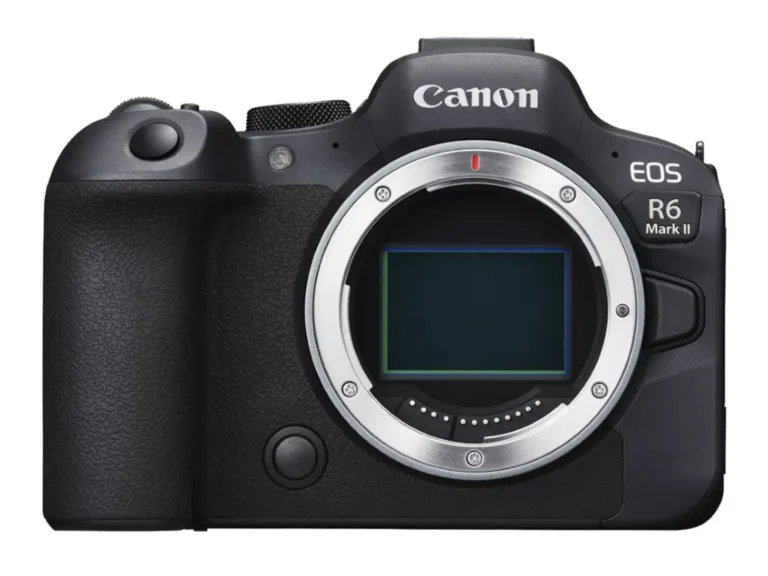
Canon EOS R6 Mark II (2022) is a significant upgrade over the R6. It brings a newer 24 MP sensor with better detail, less rolling shutter distortion and improved dynamic range. It offers amazing autofocus, 40 fps RAW continuous shooting (12 fps mechanical), oversampled 4K 60 fps recording and even 6K 12-bit RAW external recording.
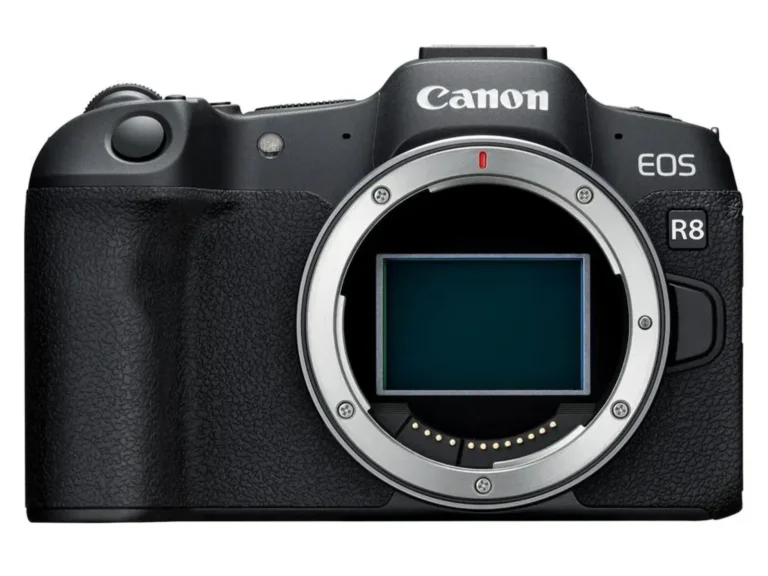
Canon EOS R8 (2023) is Canon’s modern entry-level full-frame model. It is essentially a more compact and more affordable version of the Canon EOS R6 Mark II, sharing the same 24 MP sensor and highly advanced autofocus system. The R8 offers oversampled 4K 60 fps recording in 10-bit with no crop. To lower the cost it lacks IBIS, has no full mechanical shutter and has only one card slot. It can shoot at up to 40 fps in 12-bit RAW with the electronic shutter (with noticeable rolling shutter distortion).
The R8 is one of Canon’s most well-balanced cameras and offers good value, making it an excellent entry point into Canon’s full-frame R system for any beginner interested in photography or video.
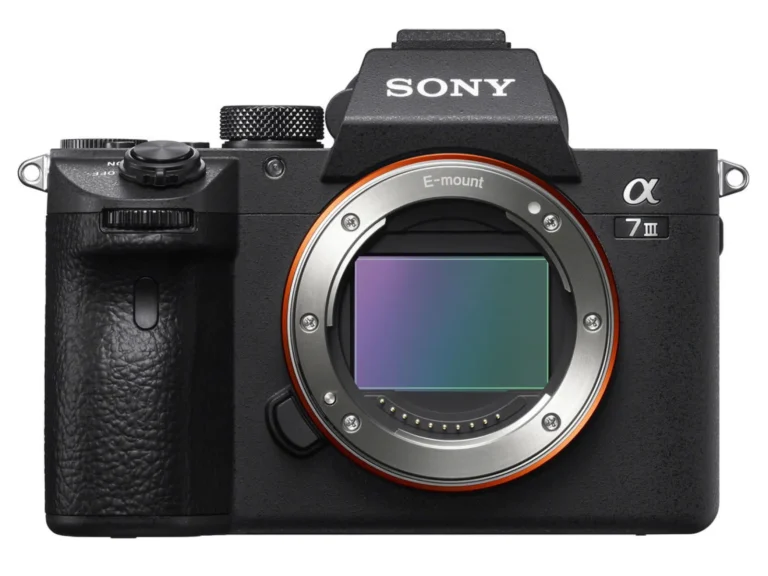
Sony A7 III
Sony A7 and Sony A7 II could be considered alternatives, as they are slightly cheaper on the used market compared to the EOS R6 (the A7 II is still offered as a new product in some regions). However, both are clearly inferior to all cameras on this list since both use older sensors and lack many modern features, as they were released back in 2013 and 2014.
Sony A7 III (2018) was a major upgrade and remains one of the most popular full-frame cameras today. It features weather sealing, IBIS, dual SD card slots, 10 fps continuous shooting, oversampled 4K video recording and it uses a 24 MP BSI sensor, enabling excellent low-light performance and strong dynamic range.
Sony A7 III is priced similarly to the Canon R8 with many cheaper used options available, since it’s more popular and has been around for longer.
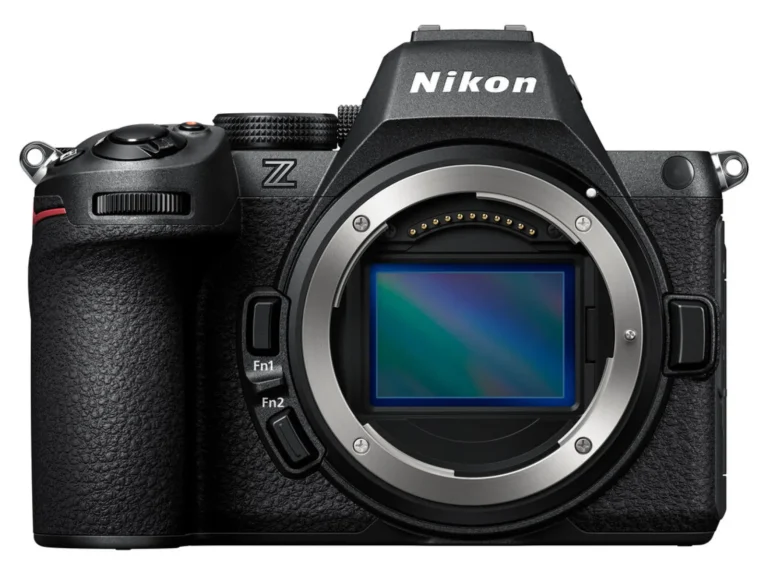
Nikon Z5 II
Nikon Z6, Z6 II and Z5 II all use the same 24 MP BSI sensor. Nikon Z5 II is the most recent model and the only one that uses a faster EXPEED 7 processor.
Nikon Z5 II (2025) uses a 24 MP BSI sensor and Nikon’s new EXPEED 7 processor resulting in great autofocus performance. It features weather sealing, IBIS and duals SD card slots. It can shoot at up to 11 fps in RAW with the mechanical shutter (14 fps JPEG), up to 14 fps RAW with the electronic shutter (30 fps JPEG) and it can record oversampled 4K 30 fps video (internally in 12-bit RAW) and 4K at up to 60 fps with a 1.5x crop.
As of now, the Z5 II is definitely the best entry point into Nikon’s full-frame Z system for anyone interested in photography or video.
Canon EOS R6 Price
Final Verdict
The original Canon EOS R6 was a solid camera for its time, but it was quickly replaced by the newer R6 Mark II. The R6 is definitely not nearly as outdated as the older entry-level EOS R and EOS RP, but if you are considering getting into Canon’s full-frame mirrorless system, the much newer and extremely capable Canon EOS R8 is a far better option.
If you are not specifically looking for a Canon camera, similarly priced alternatives such as the Nikon Z5 II and Sony A7 III may offer a more well-rounded feature set, especially for photographers.