
Canon Cameras
Canon EOS R50 V Review
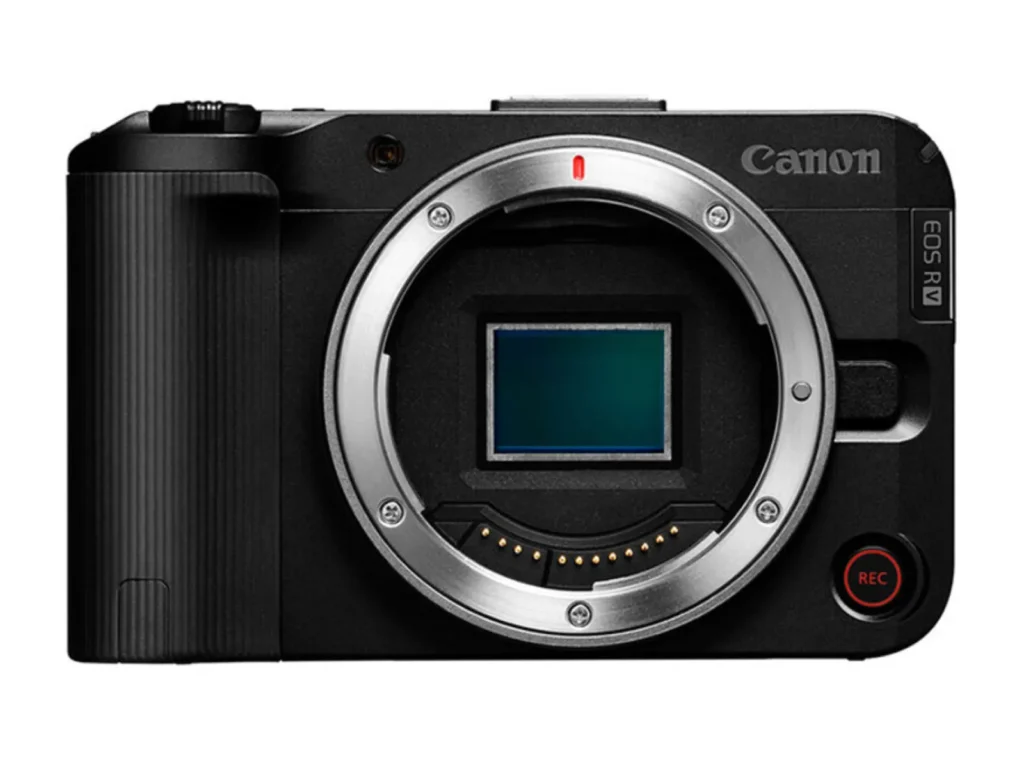
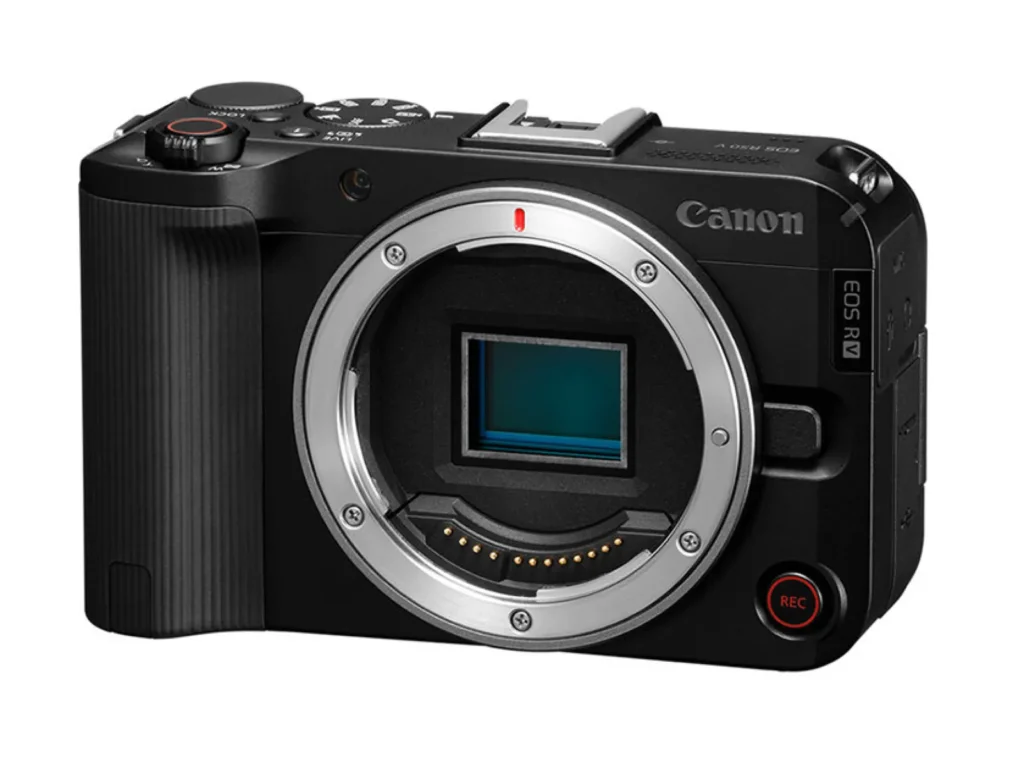
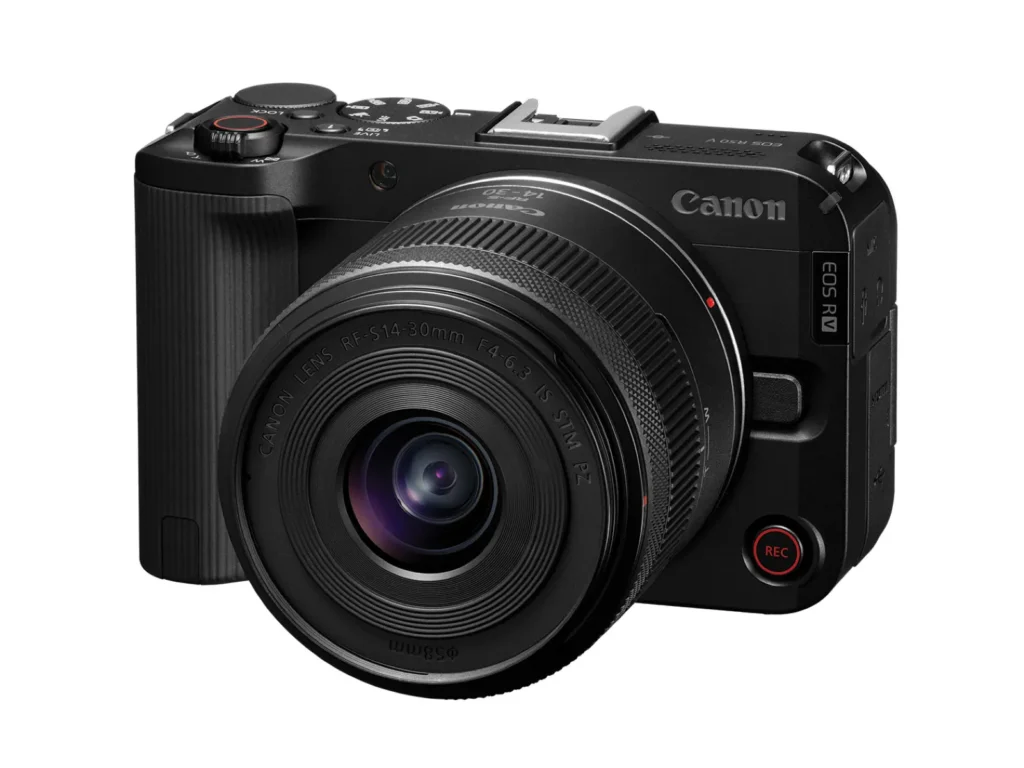
Canon EOS R50 V is a compact and affordable mirrorless camera designed specifically for video-first creators. Aimed at vloggers, streamers and solo content creators, the R50 V strips away traditional photography-oriented features in favor of a simpler, creator-focused design.
It can be seen as a more minimalist and affordable alternative to the EOS R50. It retains the same sensor, processor and autofocus system, but removes the EVF and adopts a more compact design to streamline the content creation process and reduce the price.
Canon EOS R System
The release Canon EOS R in 2018 introduced the Canon RF-mount. With a larger mount diameter, shorter flange distance and a 12‑pin electronic interface, it allowed Canon to design faster, sharper lenses with better low-light performance. Compared to older DSLRs the system is smaller and lighter while also improving autofocus speed and overall image quality. After nearly a decade, the EOS R System now provides a wide selection of lenses. Canon EF-mount lenses (older DSLR lenses) remain fully compatible with Canon R System cameras via the EF-EOS R adapter.
Canon EOS R50 V Price
Canon EOS R50 V Specifications
General
Canon EOS R50 V features a 24.2 MP APS-C sensor (already found in the R50 and the more expensive R10) paired with Canon’s DIGIC X processor.
Canon’s APS-C sensors are slightly smaller than those used by competitors, effectively providing a 1.6x crop factor compared to the 1.5x crop found in many other camera brands.
The R50 V is significantly smaller than Canon’s other APS-C cameras. While Canon is typically known for producing the largest camera bodies in both the full-frame and APS-C segments, the R50 V focuses on portability with its compact and lightweight design.
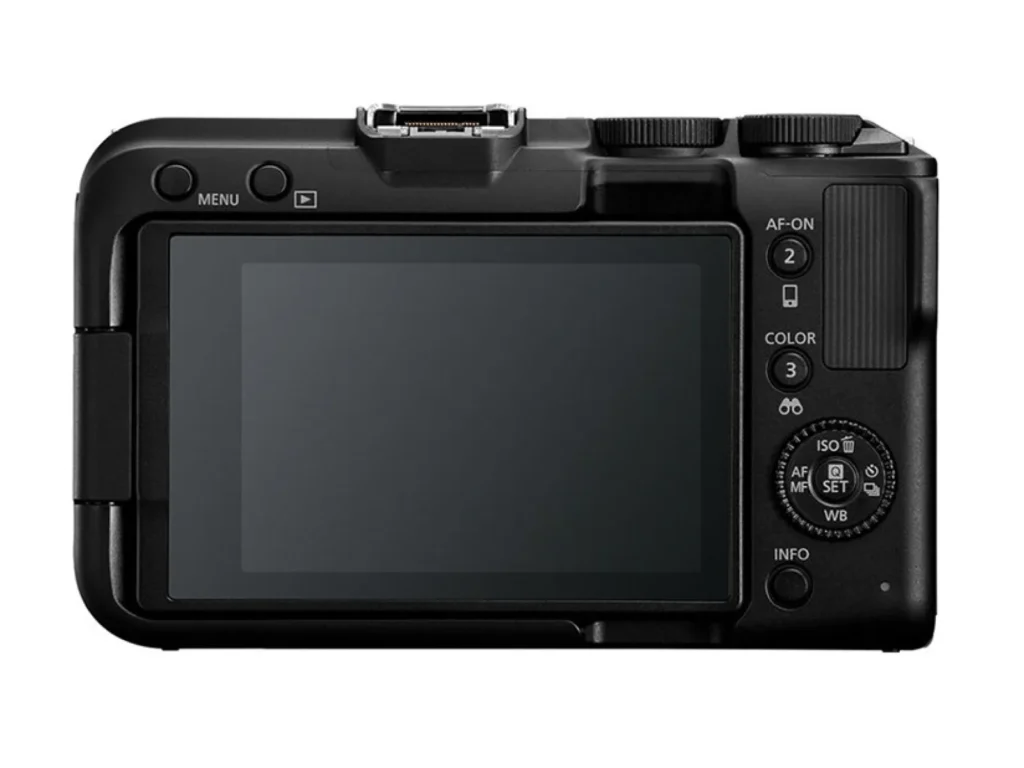
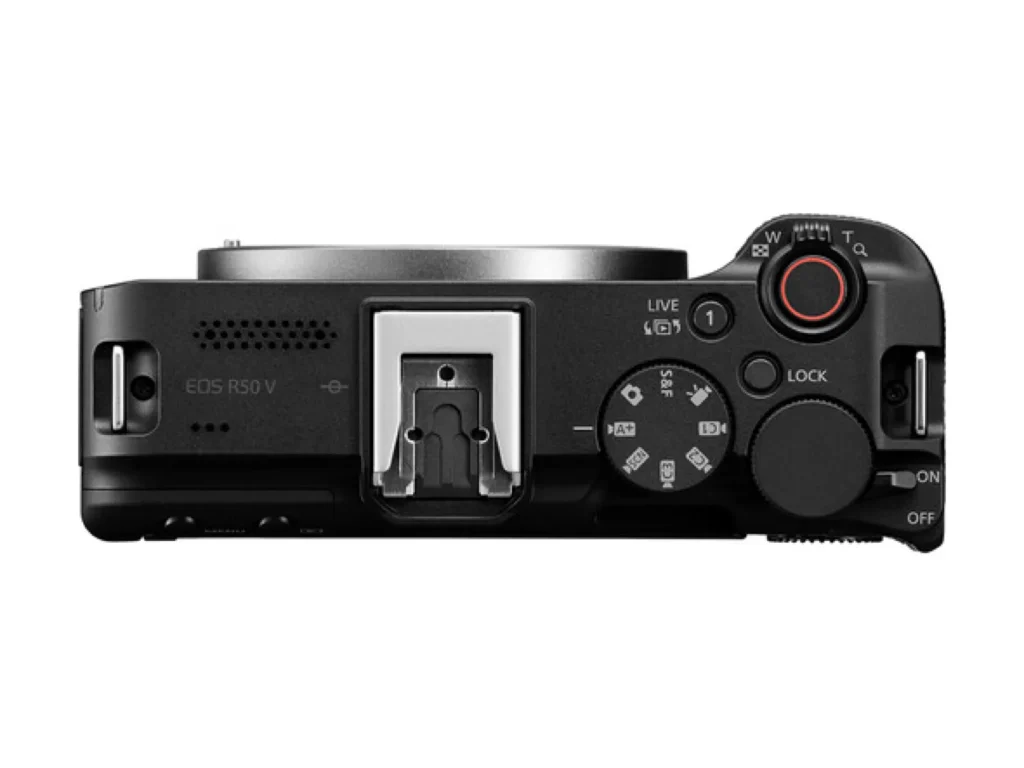
There is no electronic viewfinder (EVF), helping reduce both size and cost while simplifying the camera for content creation. The camera still offers two control dials and a few customizable buttons.
The R50 V does not offer weather sealing or in-body image stabilization (IBIS). There is only one SD card slot, but unlike the R50, the camera now supports faster UHS-II SD cards. The original R50 was limited to older and slower UHS-I cards, resulting in a much smaller buffer and slower write speeds.
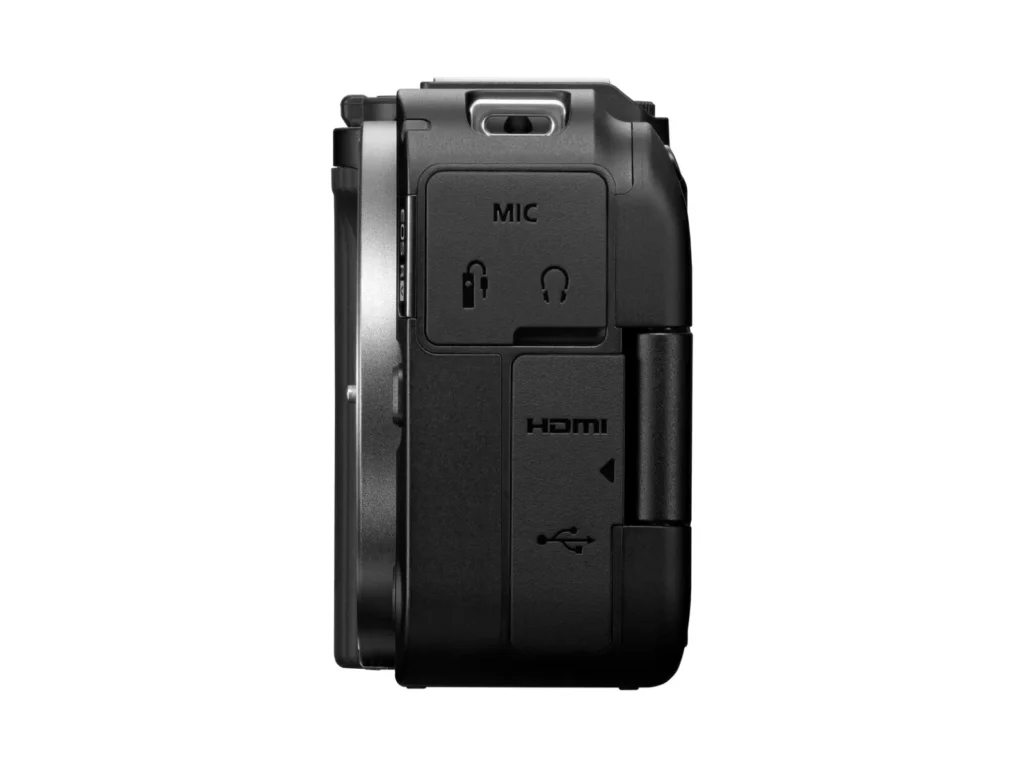
On the original R50, the HDMI and USB-C ports were positioned on the right side of the camera, making it awkward to grip while cables were connected. With the redesigned R50 V, Canon has thankfully moved all ports to the left side and added a dedicated headphone jack.
This new layout also allows the LCD screen to rotate freely without interfering with connected cables. The fully articulating LCD screen is less sharp and not as bright as the one found on the R50.
Canon has included a second tripod mount on the side of the camera, making it easier to record vertical video content.
Like other Canon APS-C cameras, the R50 V uses a smaller battery than Canon’s full-frame models, so purchasing at least one spare battery is highly recommended.
Autofocus
Canon’s autofocus system is generally considered one of the strongest aspects of its cameras. The R50 V uses Canon’s Dual Pixel CMOS AF II system, the same technology found in other APS-C models such as the R50, R7, and R10. However, in the R50 V, the system benefits from newer firmware refinements, as it is a more recent release.
The camera can recognize and track a wide range of subjects, including humans (eyes, face, head, body) animals (dogs, cats, birds, horses) and vehicles (racing cars, motor bikes, airplanes, trains). Eye-detection AF is available for both humans and animals and it performs well even when the subject is moving, though performance can decrease when there are distractions in the foreground.
The camera may still occasionally shift focus to the background or foreground instead of the intended subject. Adjusting autofocus settings is often necessary to achieve more consistent results in different situations.
Autofocus performance of the R50 V is likely better than that of the original R50. However, as expected, it does not reach the level of Canon’s full-frame cameras or more advanced APS-C models such as the R7.
Photography
Image quality is impressive for an APS-C sensor, with solid dynamic range and the natural color science Canon is known for. Colors appear slightly less saturated than on the original R50, which shares the same sensor, although any difference is negligible when shooting in RAW.
Just like the Canon R50, the R50 also doesn’t have a mechanical shutter. You can only select between electronic front-curtain (EFCS) or fully electronic (silent) shutter modes.
The R50 V can shoot at up to 12 fps in 14-bit RAW with the EFCS and 15 fps in RAW with the electronic shutter. Using the electronic shutter also results in noticeable rolling shutter distortion when photographing fast-moving subjects.
Both the R50 and the R50 V likely reduce RAW capture to 12-bit A/D conversion when using the electronic shutter, just like most Canon EOS R-series cameras without stacked sensors. However, Canon does not document this behavior in the official Canon EOS R50 V specifications.
According to Canon’s product manual, the buffer allows only 7 RAW images, but in practice it reportedly allows around 50 RAW images. This is likely due to the faster UHS-II SD card (compared to the slower UHS-I card used in the original R50).
| Feature | Canon EOS R50 V |
|---|---|
| Release Date | March 2025 |
| Megapixels | 24.2 MP |
| Image Resolution | 6000 × 4000 |
| Sensor Size | APS-C |
| Sensor Type | CMOS |
| Image Processor | DIGIC X |
| IBIS | No |
| Weather Sealing | No |
| Lens Mount | Canon RF |
| Body Type | Mirrorless |
| PHOTO | |
| Native ISO | 100 – 32,000 |
| Expandable ISO | 100 – 51,200 |
| Shutter Speed | 1/8000 – 30s |
| Burst Rate (Mechanical) | 12 fps RAW (EFCS) |
| Burst Rate (Electronic) | 15 fps RAW (12-bit) |
| Buffer | ~ 50 RAW |
| Shutter Types | Electronic, EFCS |
| Silent Shooting | Yes (Electronic Shutter) |
| Exposure Compensation | ±3 EV |
| High-Res (Sensor Shift) | No |
| Pre-Capture Mode | No |
| VIDEO | |
| 4K Video | 4K 30fps (oversampled from 6K) |
| Max Frame Rate | 4K 60fps (1.56x crop) / 1080p 120fps |
| Bit Depth | 10-bit |
| Recording Limit | 2 hours |
| Timelapse Recording | Yes |
| AUTOFOCUS | |
| AF System | 'Dual Pixel CMOS AF II' |
| AF Points | 651 |
| AF Coverage | 100% Frame Coverage |
| AF Joystick | No |
| DISPLAY / VIEWFINDER | |
| Articulated Screen | Fully Articulating |
| Touch Screen | Yes |
| LCD Size | 3" |
| LCD Resolution | 1,040,000 |
| EVF Resolution | / |
| EVF Refresh Rate | / |
| EVF Coverage | / |
| EVF Magnification | / |
| MORE INFO | |
| Card Slot 1 | SD (UHS-II) |
| Card Slot 2 | / |
| Sensor Protection System | No |
| USB | Type C 3.2 |
| USB Charging | Yes |
| HDMI | Type D (Micro HDMI) |
| Microphone Port | 3.5 mm |
| Headphone Port | 3.5 mm |
| Built-in Flash | No |
| Built-in Microphone | Yes |
| Battery | LP-E17 |
| Battery Life | ~ 500 frames |
| Wi-Fi / Bluetooth | Yes |
| Dimensions | 119 × 74 × 45 mm |
| Weight | 370 g |
Video
Canon EOS R50 can record oversampled 4K video at up to 30 fps using the full width of the sensor, producing fairly detailed footage considering its APS-C sensor size, though rolling shutter can still be an issue. Footage is oversampled from 6K and there is also an optional non oversampled mode.
4K 60 fps recording is also available, but only with a 1.56× crop. This mode is not oversampled, resulting in noticeably less detailed footage.
Full HD (1080p) recording is available at up to 120 fps.
The R50 V can record video in 10-bit and, in contrast to the R10 and R50, it also offers Canon Log 3 (C-Log 3) that captures more dynamic range.
The R50 V does not include in-body image stabilization (IBIS). Electronic stabilization is available, but it applies an additional crop. While it can be very effective for stationary handheld shots, it is much less effective when recording handheld video while walking, especially when using slower shutter speeds.
The camera has a 2 hour recording limit for most modes. The R50 had some issues with overheating, but this is supposedly fixed with the new design of the R50 V.
Interestingly, this is one of the few Canon cameras that keeps the horizon level displayed even after you press the record button (though the histogram still disappears once recording starts).
The R50 V is, of course, not designed for professional video production and is not ideal for heavy post-production, but its video quality is well suited for social media creators or even YouTube.
Canon EOS R50 V Alternatives
Canon R10
Canon R50
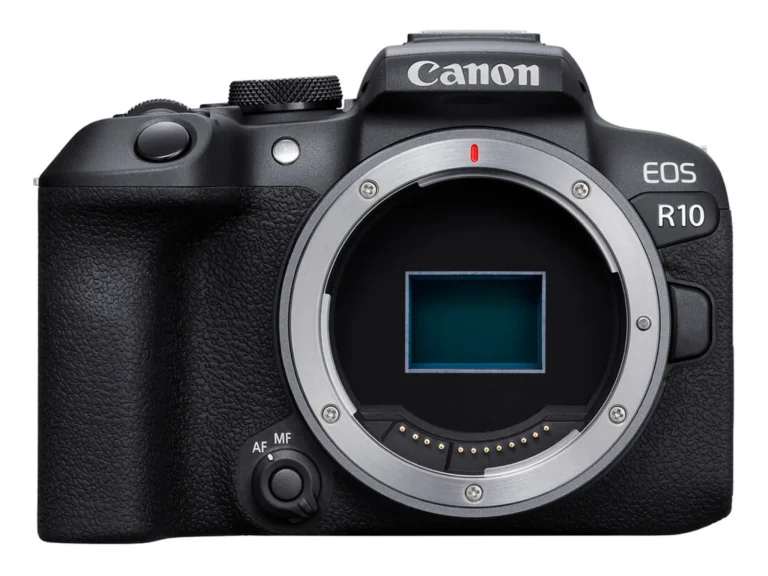
Canon EOS R10 (2022) is a mid-range APS-C mirrorless model. It also has a 24 MP sensor. It offers continuous shooting at up to 15 fps with the mechanical shutter and 23 fps with the electronic shutter. It can record 4K video at 60 fps with a 1.6x crop and oversampled 4K video at up to 30 fps without a crop, but video recording is limited to 8-bit. It has no IBIS and no weather-sealing.
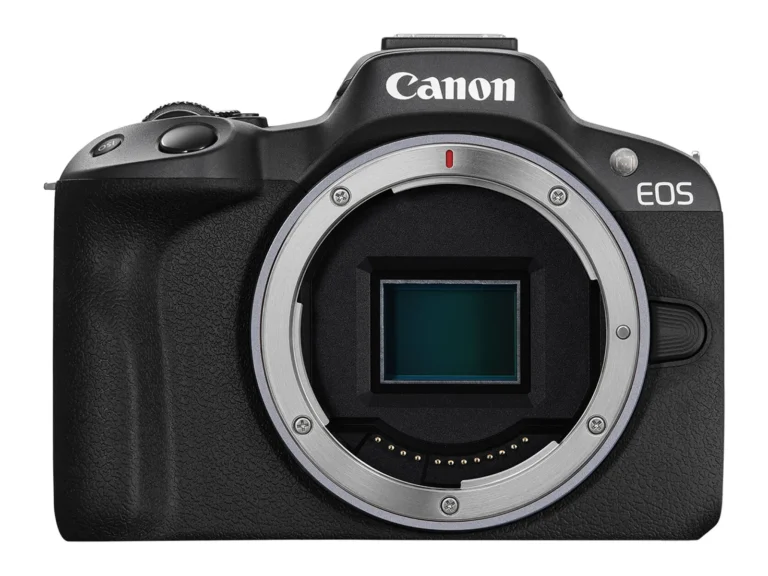
Canon EOS R50 (2023) is Canon’s entry-level APS-C mirrorless camera very similar to the R50 V. It has the same 24 MP sensor and also doesn’t have a mechanical shutter. It can record oversampled 4K video at 30 fps and video recording is limited to 8-bit. It can shoot up to 12 fps with the EFCS and 15 fps with the electronic shutter, but the buffer is very limited (only 7 RAW images) since the R50 accepts only slower UHS-I SD cards.
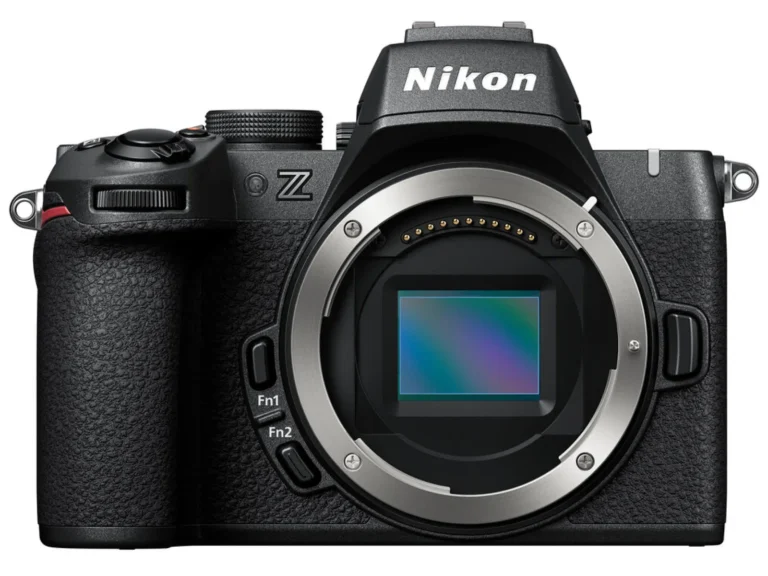
Nikon Z50 II
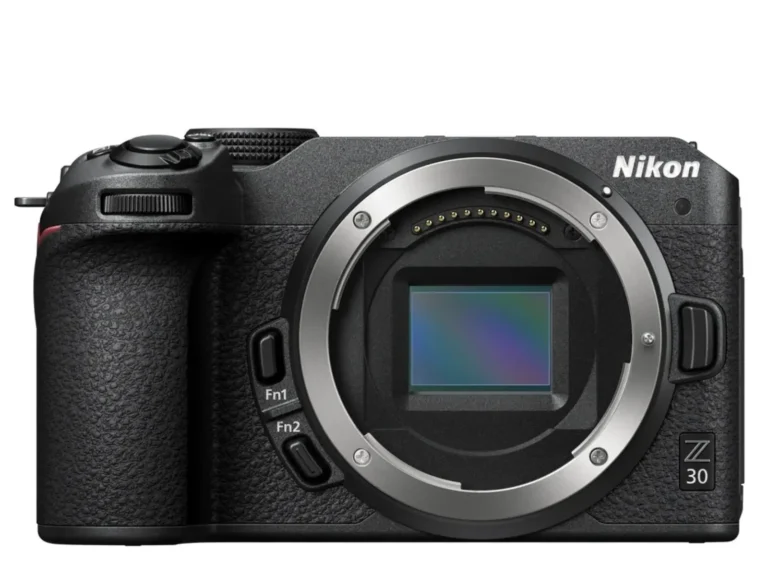
Nikon Z30
Nikon Z50 II (2024) is a direct competitor to the mid-range Canon R10. It has a 21 MP BSI sensor and uses a new version of Nikon’s hybrid AF system. It can record 4K video at up to 30 fps and at 60 fps with a 1.5x crop in 10-bit, but the footage is not oversampled. It can shoot at up to 11 fps with the mechanical shutter and up to 15 fps in RAW with the electronic shutter (30 fps in JPEG).
Nikon Z30 (2022) is essentially a simplified, more affordable version of the original Nikon Z50, designed for content creators and vloggers. It has the same 21 MP BSI sensor with all specifications remaining the same, but removes a few features, such as the electronic viewfinder (EVF), to streamline the experience and lower the price. With a fully articulating screen, a 125 min recording limit and simplified controls, it’s great for vlogging, streaming and social media content creation.
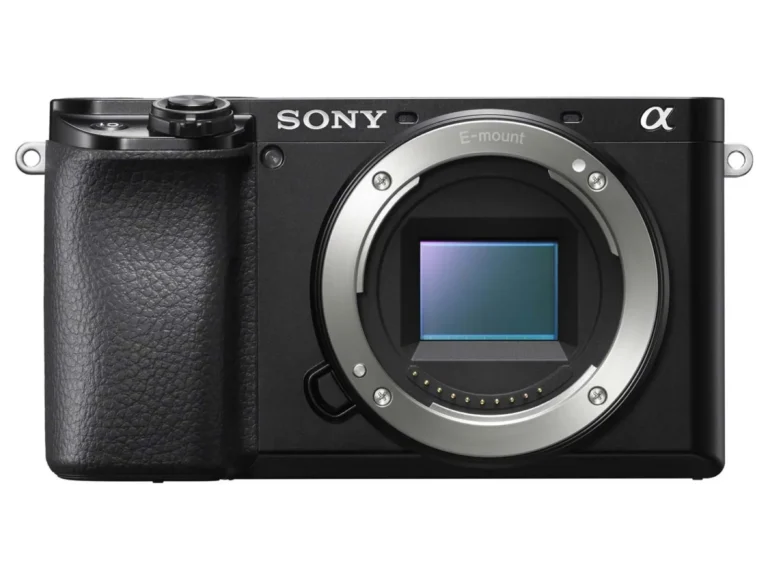
Sony a6100
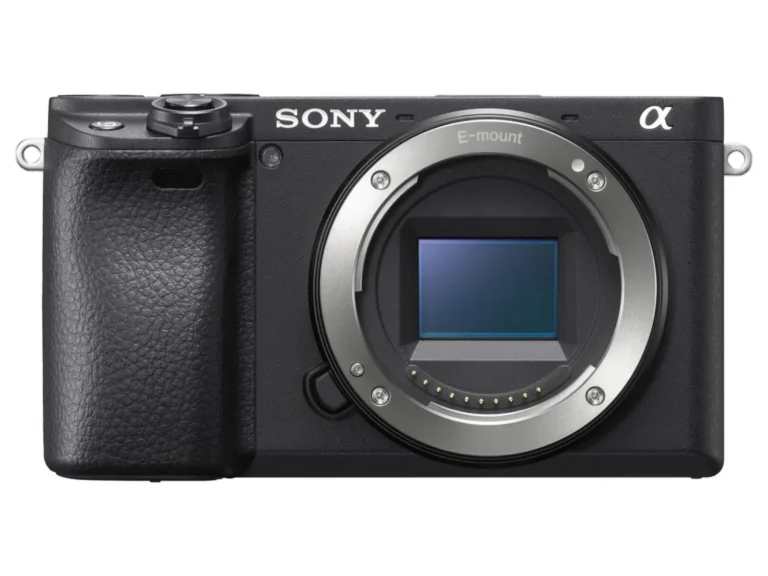
Sony a6400
Sony a6100 (2019) is Sony’s modern entry-level APS-C camera. It has a 24 MP sensor, it offers excellent autofocus performance, can shoot at 11 fps with the mechanical shutter and it can record oversampled 4K video at 25 fps and at 30 fps with a 1.2x crop. Video recording is limited to 8-bit and the maximum clip length is set to 13 hours.
Sony a6400 (2019) is Sony’s mid-range APS-C camera also featuring the same 24 MP sensor. Most specifications are similar to the a6100, but the a6400 uses a weather-sealed body and doesn’t apply a crop in 4K 30 fps recording. Video recording is still limited to 8-bit, but the a6400 includes Sony’s higher-quality S-Log 2 and S-Log 3 picture profiles.
Canon EOS R50 V Price
Final Verdict
Canon EOS R50 V is a compact and affordable mirrorless camera designed for vloggers, streamers and solo content creators. With the addition of 10-bit recording and 4K 60 fps video recording, it offers a much better video-focused feature set than the original R50.
That said, the camera does not include an electronic viewfinder, making it less suitable for photography. If you also plan to take photos regularly, similarly priced alternatives such as the Sony a6100 are worth considering, as are slightly more expensive mid-range APS-C models like the Canon EOS R10 and Nikon Z50 II.