
Canon Cameras
Canon EOS R3 Review
BothCanon EOS R3 served as Canon’s mirrorless flagship before the release of the EOS R1. R1 and R3 are cameras with fully-stacked 24 MP sensors designed for professionals who require speed, reliability and cutting-edge autofocus. Both feature an integrated vertical grip and rugged weather sealing.
Canon EOS R System
The release of the Canon EOS R in 2018 introduced the Canon RF-mount. With a larger mount diameter, shorter flange distance and a 12‑pin electronic interface, it allowed Canon to design faster, sharper lenses with better low-light performance. Compared to older DSLRs the system is smaller and lighter while also improving autofocus speed and overall image quality. After nearly a decade, the EOS R System now provides a wide selection of lenses. Canon EF-mount lenses (older DSLR lenses) remain fully compatible with Canon R System cameras via the EF-EOS R adapter.
Canon EOS R3 Price
Canon EOS R3 Specifications
General
Canon EOS R3 features a new 24.1 MP stacked CMOS sensor paired with Canon’s DIGIC X processor, delivering excellent image quality, fast and reliable autofocus and professional-grade video performance.
The EOS R3 automatically closes the shutter when you turn the camera off, protecting the sensor from dust and debris. The R3 also includes Canon’s integrated sensor cleaning system.
In-body 5-axis image stabilization (IBIS) provides up to approximately 8 stops of shake reduction, benefiting both handheld stills and video. If you attach a wide angle lens, there is still some of Canon’s signature “wobble” visible in the corners, especially when recording video while walking.
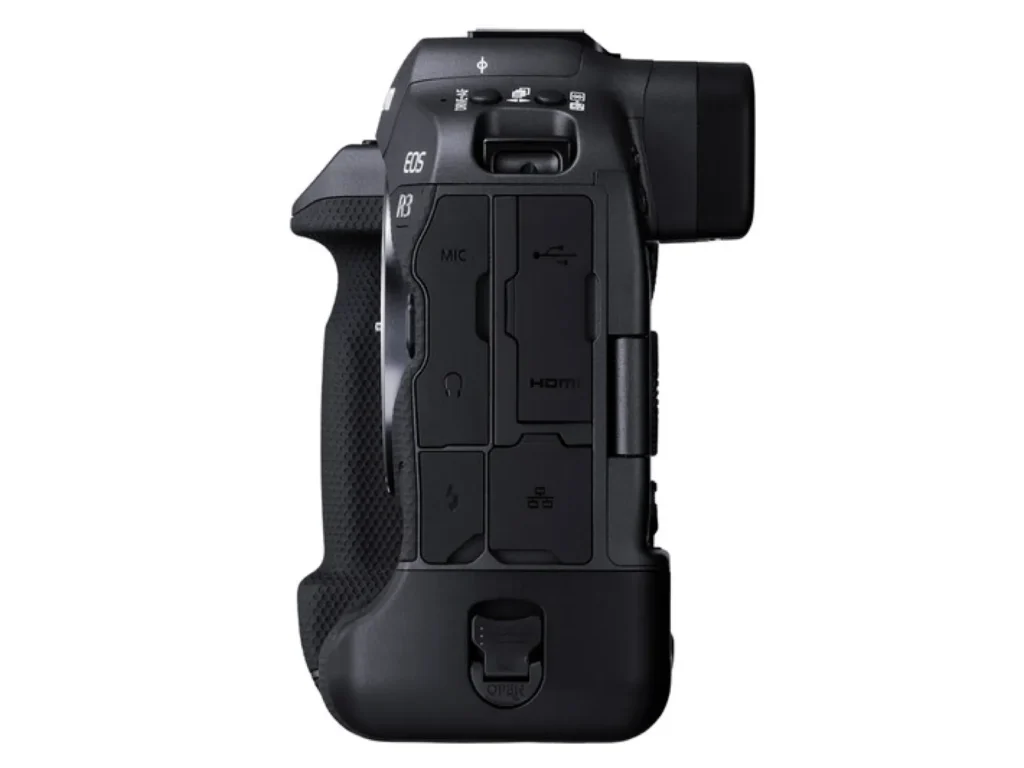
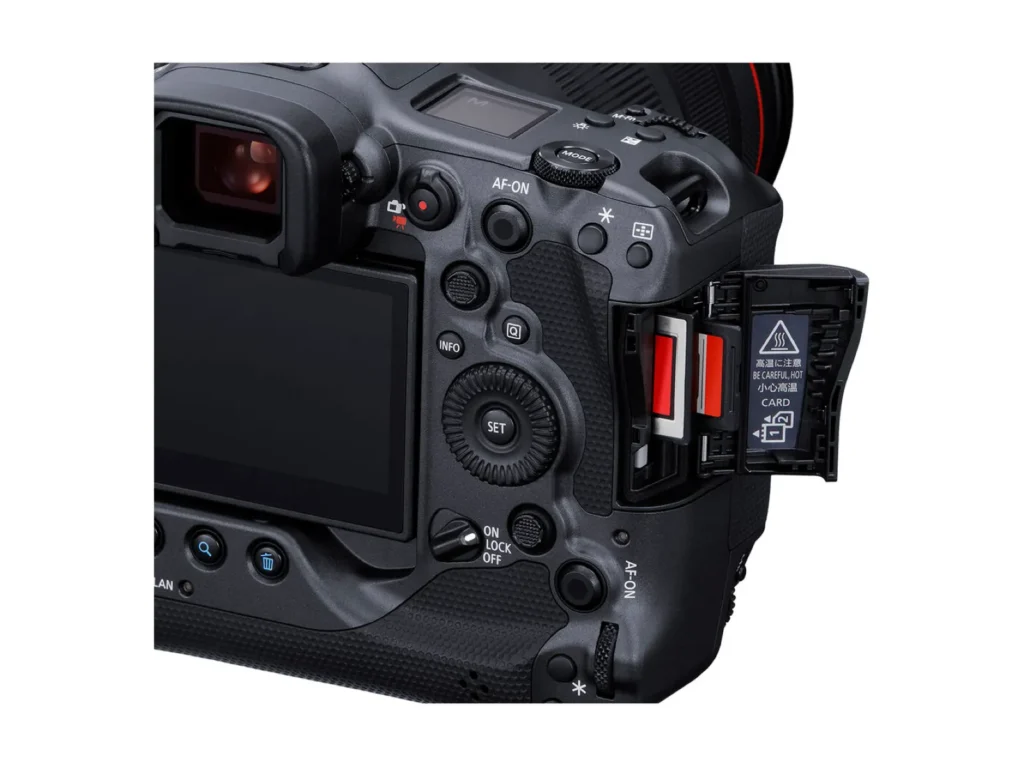
Canon EOS R3 features dual card slots: one SD and one CFexpress Type B. When you open the card slot door the camera automatically shuts off and charging over USB-C also instantly stops.
This was the first Canon R series camera with a built-in GPS.
Body and Ergonomics
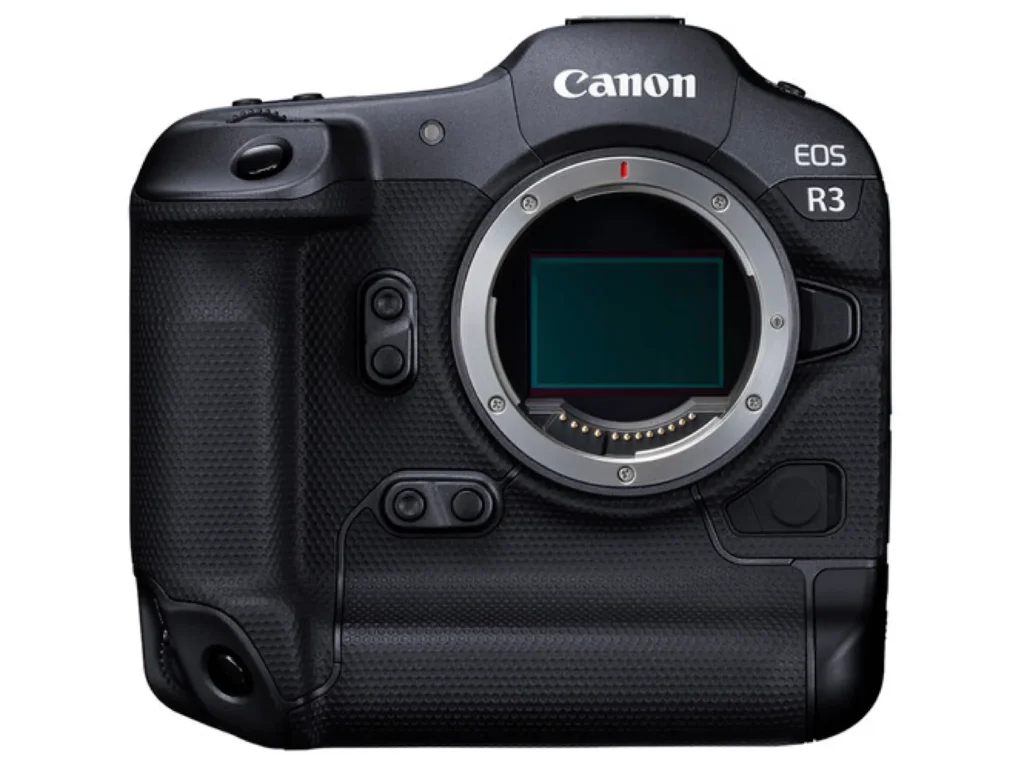
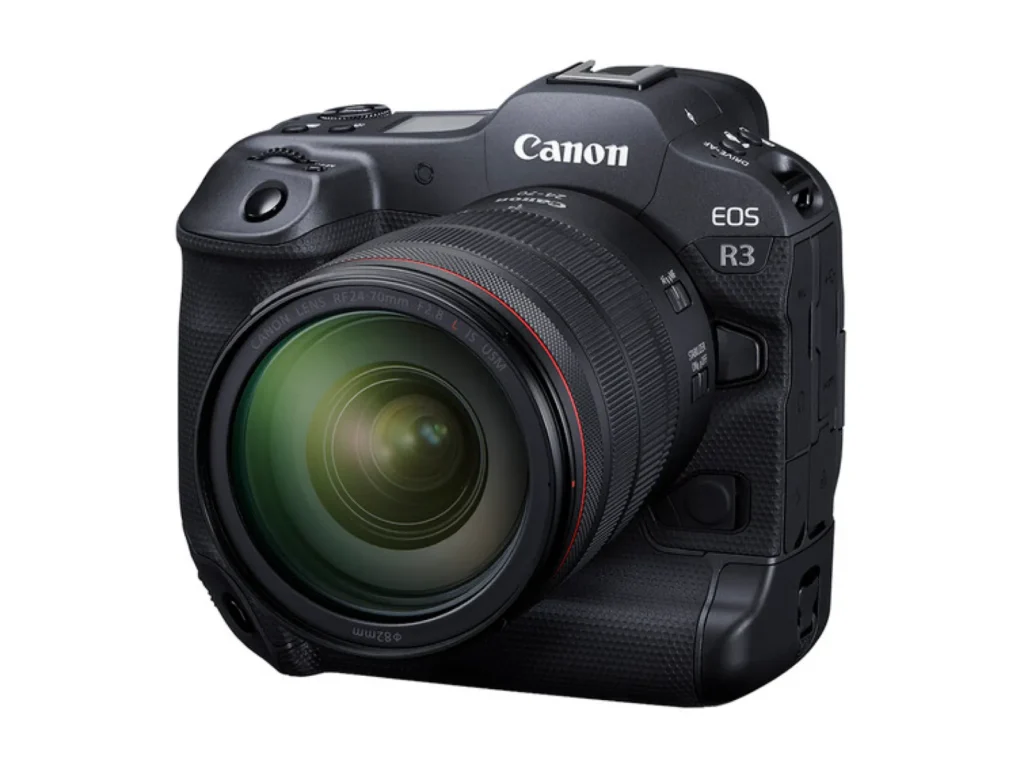
The body design of the EOS R3 feels very professional – it’s robust, durable and extremely well weather-sealed. It has a built-in vertical grip and uses larger LP-E19 batteries, offering significantly longer battery life than other Canon cameras.
The design is similar to the extremely popular 1DX series (older Canon DLSR flagship cameras). The R3 is lighter and slightly smaller than the 1DX Mark III.
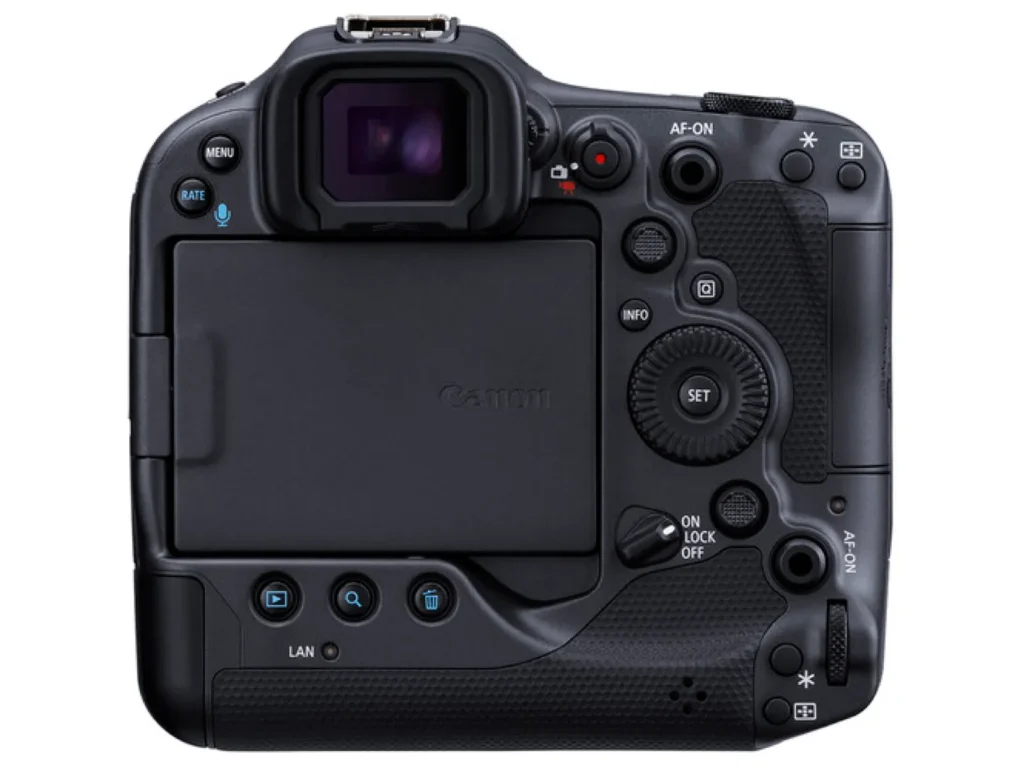
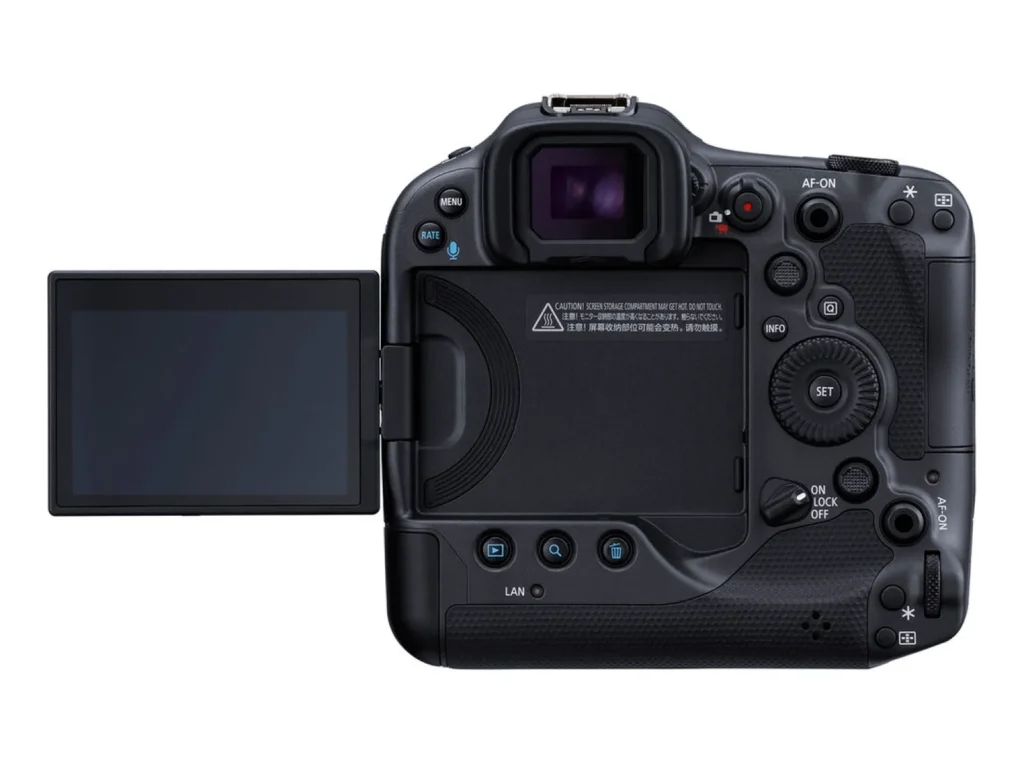
Controls enable easy switching between horizontal and vertical shooting, with extensive customization options to tailor the camera to your workflow. Some buttons are also backlit to help when shooting in low-light conditions.
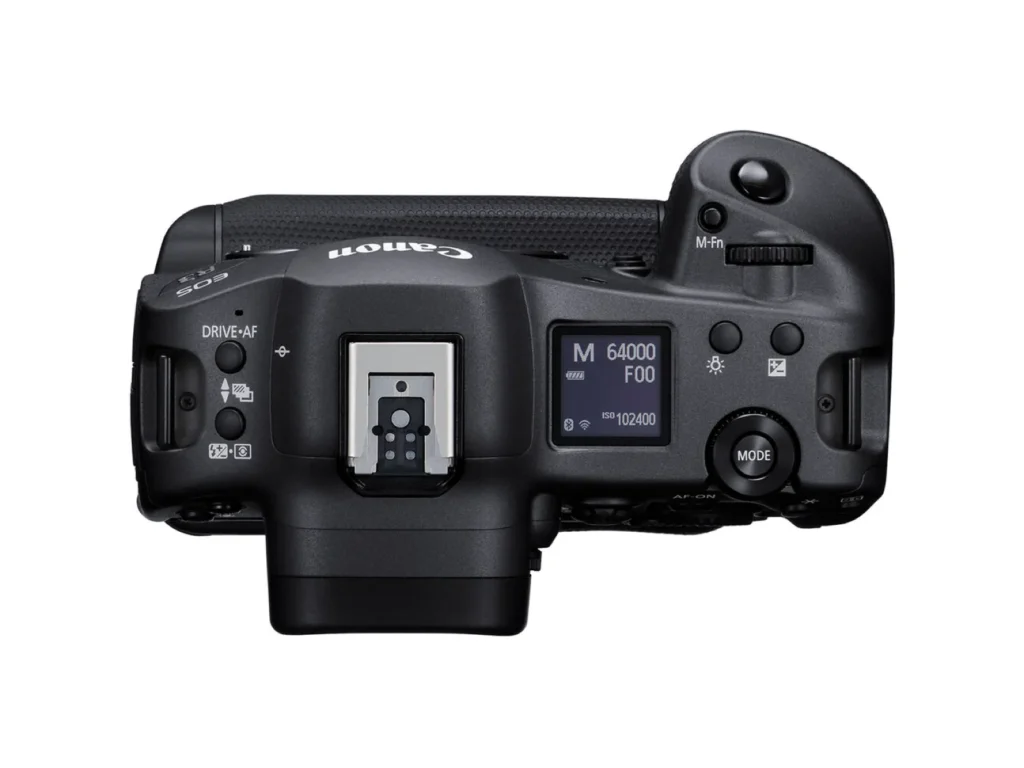
A top LCD screen displays the current settings. There is no dedicated mode dial with labeled shooting modes; instead, mode selection is controlled via the customizable dial on the top right, with the selected mode visible on the top screen.
The R3 includes a new multi-function digital hot shoe and an Ethernet port. Sadly the R3 still features an outdated micro HDMI port.
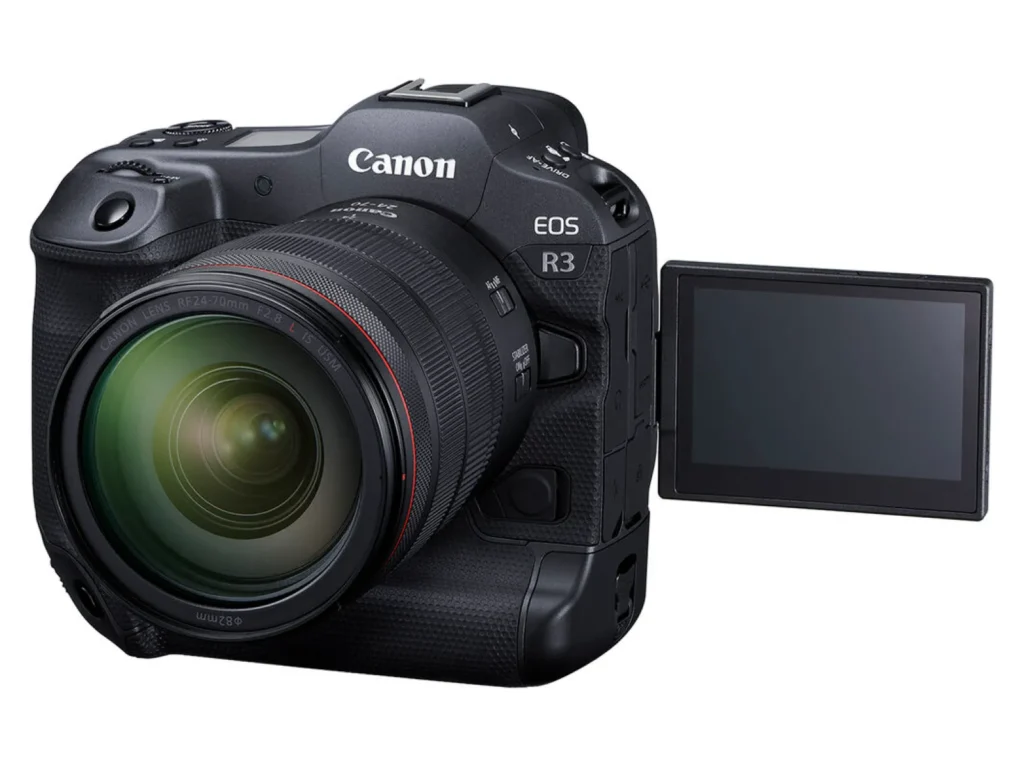
The camera has a fully articulating LCD screen. The EVF is large and bright and allows you to choose between 60 fps and 120 fps, with the latter negatively affecting battery life.
Autofocus
Canon’s autofocus is widely regarded as one of the strongest systems in the industry. The R3 uses Canon’s signature ‘Dual Pixel CMOS AF II’ system.
The camera can recognize and track a wide range of subjects, including people, animals (dogs, cats and birds) and various vehicles (racing cars and motorcycles). Eye-detection AF and tracking is available for both humans and animals. It performs well even when the subject is moving and maintains focus reliably even in low-light conditions. In video mode, the camera may occasionally shift focus to the background instead of the intended subject and adjusting autofocus settings is often necessary to achieve consistent results.
There is a classic AF joystick, as well as a similar Smart Controller located on the AF-ON button, first introduced on the Canon EOS‑1D X Mark III. It allows you to move the focus point by sliding your finger across the button in the desired direction.
Canon’s Eye Control AF is available in photo mode. It requires extensive calibration for each user in various different conditions and orientations (both vertical and horizontal) and in some cases calibration may not be possible. As a result, only some users will find it useful, since its effectiveness depends heavily on individual shooting style.
Using the touchscreen you can also define a custom-sized zone where the camera should search for subjects to focus on.
Autofocus performance of the Canon R3 is extremely reliable in virtually all situations and it is further improved with the EOS R1.
| Feature | Canon EOS R3 |
|---|---|
| Release Date | September 2021 |
| Megapixels | 24.1 MP |
| Image Resolution | 6000 × 4000 |
| Sensor Size | Full Frame |
| Sensor Type | Stacked CMOS |
| Image Processor | DIGIC X |
| IBIS | 5-axis, 8 stops |
| Weather Sealing | Yes |
| Lens Mount | Canon RF |
| Body Type | Mirrorless |
| PHOTO | |
| Native ISO | 100 – 102,400 |
| Expandable ISO | 50 – 204,800 |
| Shutter Speed | 1/64,000 – 30s |
| Burst Rate (Mechanical) | 12 fps RAW |
| Burst Rate (Electronic) | 30 fps RAW |
| Buffer | 150 - 1000 RAW |
| Shutter Types | Mechanical, Electronic, EFCS |
| Silent Shooting | Yes (Electronic Shutter) |
| Exposure Compensation | ±3 EV |
| High-Res (Sensor Shift) | No |
| Pre-Capture Mode | No |
| VIDEO | |
| 4K Video | 4K 60fps (oversampled from 6K) |
| Max Frame Rate | 6K 60fps / 4K 120fps / 1080p 240fps |
| Bit Depth | 12-bit |
| Recording Limit | 6 hours |
| Timelapse Recording | Yes |
| AUTOFOCUS | |
| AF System | 'Dual Pixel CMOS AF II' |
| AF Points | 1053 |
| AF Coverage | 100% Frame Coverage |
| AF Joystick | Yes |
| DISPLAY / VIEWFINDER | |
| Articulated Screen | Fully Articulating |
| Touch Screen | Yes |
| LCD Size | 3.2" |
| LCD Resolution | 4,150,000 |
| EVF Resolution | 5,760,000 |
| EVF Refresh Rate | 120 fps |
| EVF Coverage | 100% |
| EVF Magnification | 0.76× |
| MORE INFO | |
| Card Slot 1 | CFexpress Type B |
| Card Slot 2 | SD (UHS-II) |
| Sensor Protection System | Yes |
| USB | Type C 3.2 Gen 2 |
| USB Charging | Yes |
| HDMI | Type D (Micro HDMI) |
| Microphone Port | 3.5 mm |
| Headphone Port | 3.5 mm |
| Built-in Flash | No |
| Built-in Microphone | Yes |
| Battery | LP-E19 |
| Battery Life | ~ 800 frames |
| Wi-Fi / Bluetooth | Yes |
| Dimensions | 150 × 143 × 87 mm |
| Weight | 1015 g |
Photography
Image quality is excellent with great dynamic range and Canon’s natural color rendering. The level of detail is very impressive considering the 24 MP sensor.
Shutter options include mechanical, electronic front-curtain (EFCS) and fully electronic (silent) modes.
The R3 allows continuous shooting at up to 12 fps in 14-bit RAW when using the mechanical shutter. In this mode buffer is practicly unlimited (1000 RAW images according to Canon’s official EOS R3 Specifications). Using the electronic shutter, the R3 can shoot at up to 30 fps in 14-bit RAW, but in this mode, the buffer fills in approximately 5 seconds (around 150 frames).
Saving photos to an SD card instead or to both cards can negatively impact the buffer and waiting times for the buffer to clear.
Firmware version 1.2.0 added a new high-speed continuous shooting option with up to 195 fps in RAW. This works only for the first 50 frames (for the first 0.26 second) after you press the shutter.
When using the electronic shutter, rolling shutter distortion occurs when photographing very fast-moving subjects, but this is much less of a concern than in most cameras thanks to the fast-reading lower-resolution stacked sensor and fast processing.
Video
Canon EOS R3 can record 6K 60 fps video internally in 12-bit RAW and without a crop.
It can also record oversampled 4K at up to 60 fps without a crop. 4K footage is oversampled from 6K, delivering excellent detail, strong dynamic range and natural colors. Rolling shutter is rarely noticeable, even when tracking fast-moving subjects. You have the option of 4K ‘Fine’ recording or ‘Standard’, with ‘Standard’ offering less detail since the footage is not oversampled.
4K 120 fps recording is also available, but this mode is not oversampled.
Full HD (1080p) recording is available at up to 240 fps.
The use of Canon’s C-Log 3 profile allows you to set the color space to “Cinema Gamut,” which enables the use of Canon’s official C-Log 3 LUTs available on the official EOS R3 support page for vibrant and accurate color reproduction. C-Log 2 is not available.
The R3 allows simultaneous recording to both cards, but high-bitrate recordings can only be saved to a CFexpress card. This applies to RAW recording modes, some 6K recording modes, and some All-Intra recording modes, including All-Intra 4K 60 fps.
Overheating is rarely an issue, even when recording 6K 60 fps RAW video, especially if you use the camera in a controlled environment and keep it out of direct sunlight. The only mode with a notable overheating issue is 4K at 120 fps, where the camera can shut down in just 10 minutes (though you will rarely need to record in 120 fps continuously for that long).
The R3 finally removes the strict 30-minute recording limit, increasing the maximum clip length to six hours for most modes. Battery life allows for approximately 2 hours of 4K recording, but that time can be extended if you use USB-C for power delivery.
Canon EOS R3 Alternatives
Canon R1
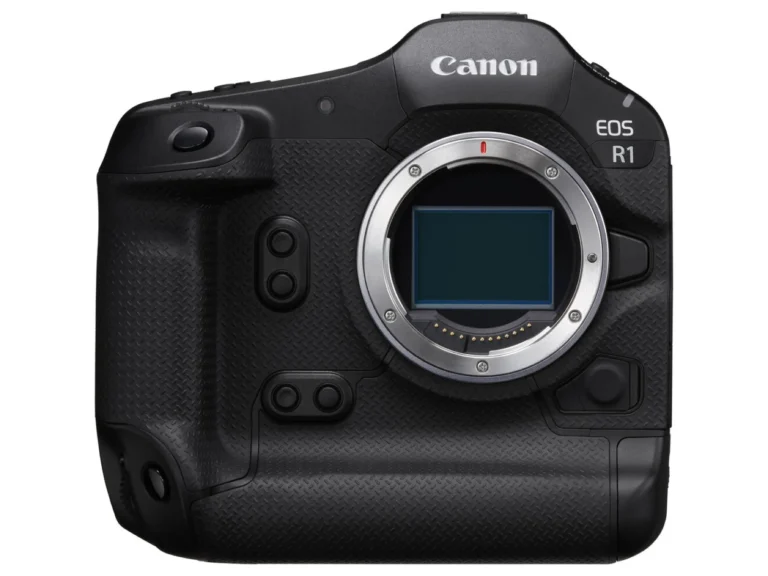
Canon EOS R1 (2024) is Canon’s flagship camera. It uses a similar 24.2 MP fully-stacked sensor, but introduces several notable upgrades. High-speed shooting is now available at up to 40 fps and there is an option of high-quality C-Log 2 video recording. It features a full size HDMI port and to dual CFexpress card slots. It also adds a Pre-Capture mode that can capture 20 RAW images before the shutter is fully pressed.
It includes a new DIGIC Accelerator alongside the DIGIC X processor for for enhanced processing power when it comes to AI-driven tasks. It uses the new ‘Dual Pixel Intelligent AF’ System – the most recent and most advanced AF system with an improved AI-based deep-learning engine for enhanced subject tracking with better stickiness. This is one of the best AF system in the industry, if the even the absolute best.
After the release of the R1, the price of the R3 dropped significantly and it’s currently about $2000 cheaper than the R1.
Sony A9 III
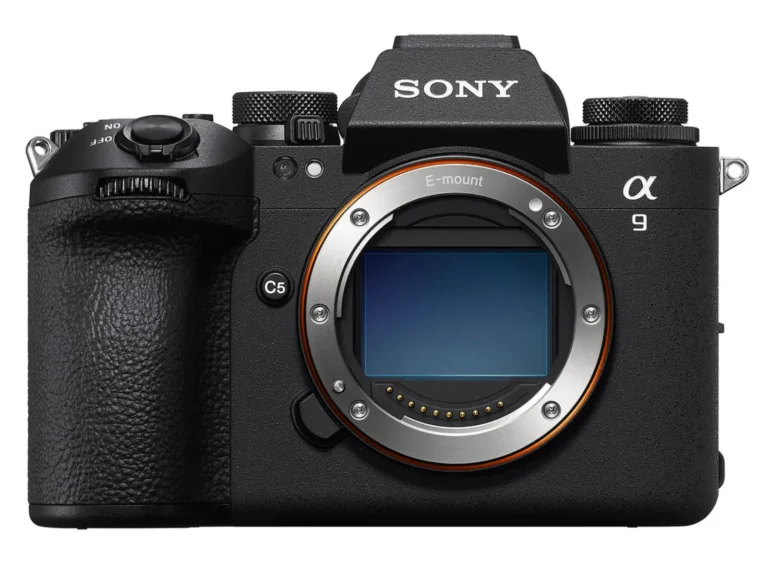
Sony A9 III (2024) is Sony’s flagship sports and action-focused camera and one of the closest rivals to the flagship Canon EOS R1. It uses a 24.6 MP stacked global shutter sensor paired with Sony’s BIONZ XR processor, delivering blackout-free shooting with virtually no rolling shutter distortion. The camera can shoot at up to 120 fps with continuous AF tracking, offers shutter speeds up to 1/80,000 sec and features Sony’s advanced AI-powered autofocus system. For video, it supports 4K recording at up to 120 fps and oversampled 4K 60 fps recording, making it an excellent hybrid option for professional sports, wildlife and event photographers. Keep in mind that global shutter sensors sacrifice some dynamic range and low-light performance compared to traditional stacked CMOS sensors, since global shutter technology is generally much less efficient at gathering light.
The price of the Sony A9 III is similar to the price of the Canon R1.
Canon EOS R3 Price
Final Verdict
Canon EOS R3 is an extremely capable camera designed for professionals who require speed, reliability and flagship-level autofocus performance. At its current price point, it faces little to no competition, with the only real alternatives being the Sony A9 III and the newer, improved Canon R1 – both of which are significantly more expensive.
With its reliable autofocus system, 30 fps continuous shooting and internal 6K 60 fps 12-bit recording, the R3 should meet the demands of most sports and action photographers and videographers.
Some professionals may find the lack of dual CFexpress card slots and a full-size HDMI port limiting. Others may also want features such as Pre-Capture to ensure they never miss a critical moment in fast-paced shooting situations. These very specific shortcomings are addressed by the new R1, but it is important to remember that it comes with a considerably higher price tag.