
Canon Cameras
Canon EOS R100 Review
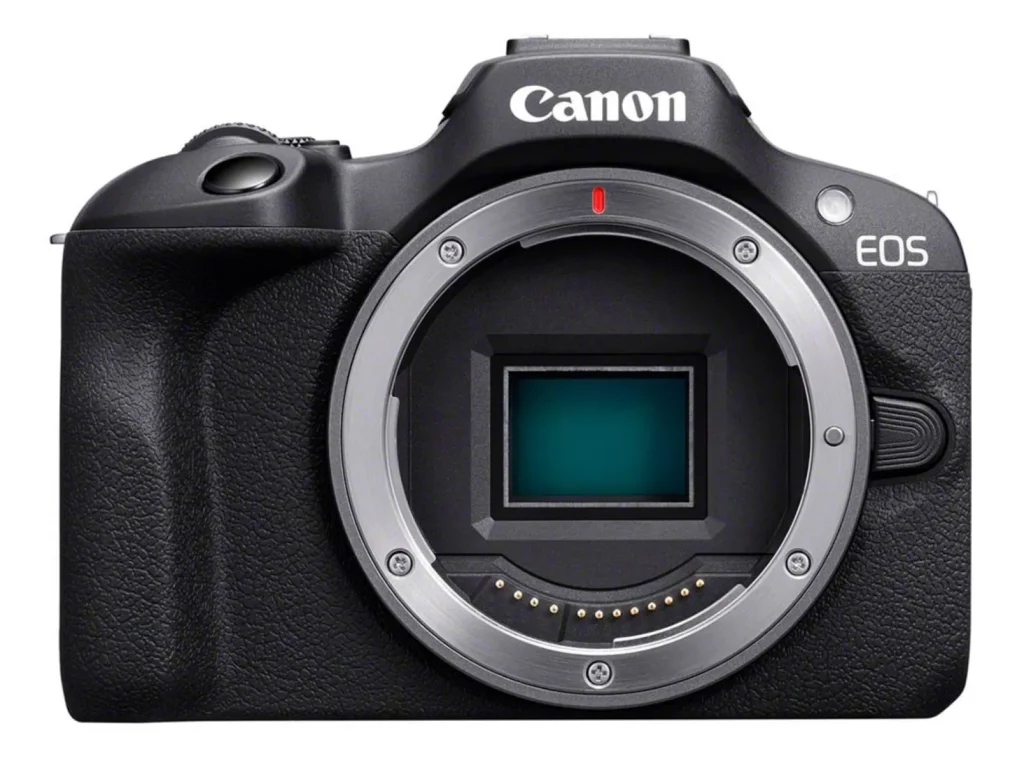
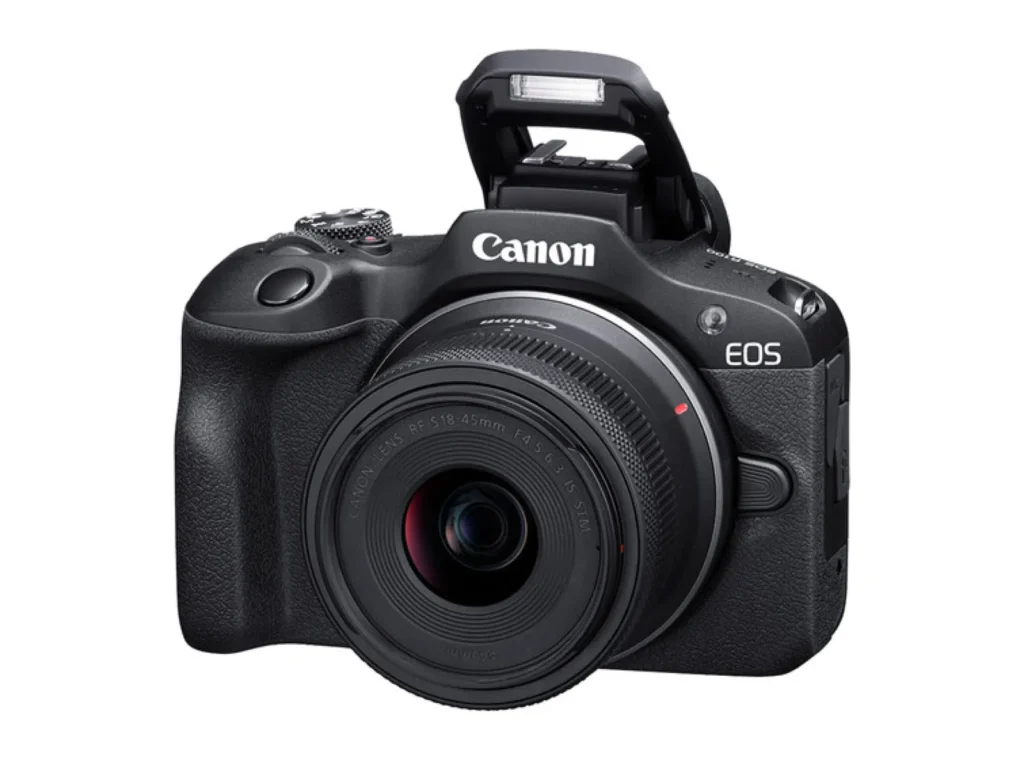
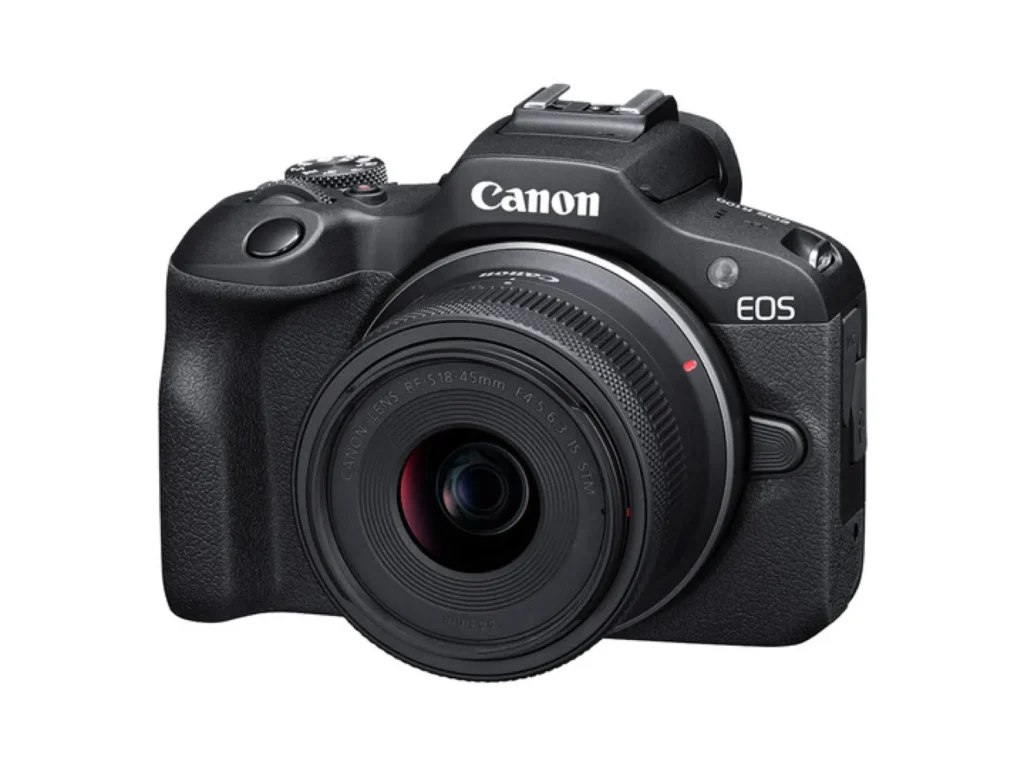
Canon EOS R100 is Canon’s most affordable camera. It strips away all the features found in other entry level APS-C cameras to simplify the design and make it more affordable.
Canon EOS R System
The release of the Canon EOS R in 2018 introduced the Canon RF-mount. With a larger mount diameter, shorter flange distance and a 12‑pin electronic interface, it allowed Canon to design faster, sharper lenses with better low-light performance. Compared to older DSLRs the system is smaller and lighter while also improving autofocus speed and overall image quality. After nearly a decade, the EOS R System now provides a wide selection of lenses. Canon EF-mount lenses (older DSLR lenses) remain fully compatible with Canon R System cameras via the EF-EOS R adapter.
Canon EOS R100 Price
Canon EOS R100 Specifications
General
All Canon’s R Series APS-C cameras (R10, R50, R50 V) feature a new 24.2 MP sensor, but the EOS R100 features an older 24.1 MP APS-C sensor that was used in Canon’s older EF series cameras. It is also paired with an older DIGIC 8 processor, while all other EOS R series cameras use a newer DIGIC X processor.
Canon’s APS-C sensors are slightly smaller than those used by competitors, effectively providing a 1.6x crop factor compared to the 1.5x crop found in many other camera brands.
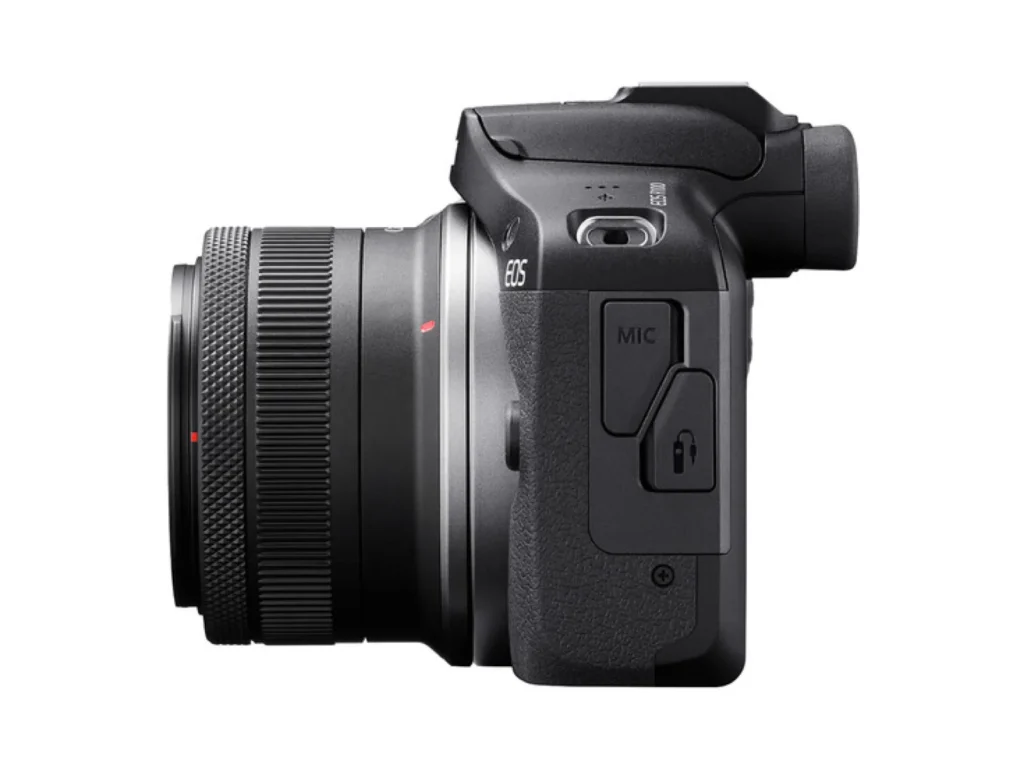
Canon R100 is not weather sealed and it has no built-in image stabilization (IBIS). There is only one SD card slot and only supports older and slower UHS-I SD cards.
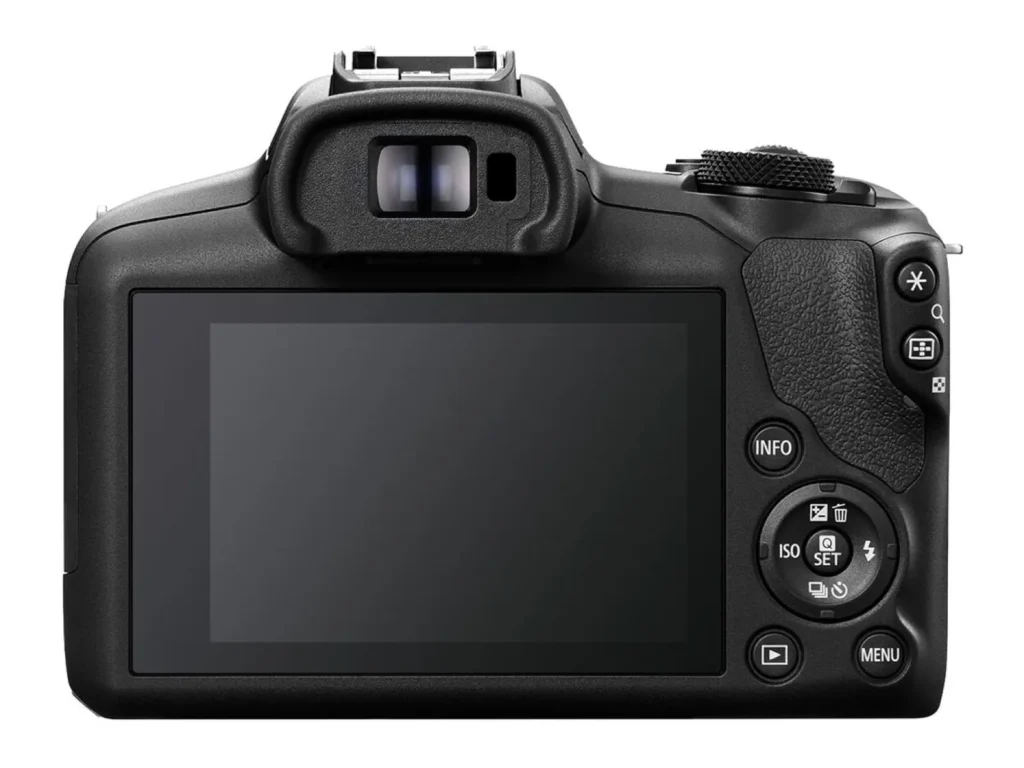
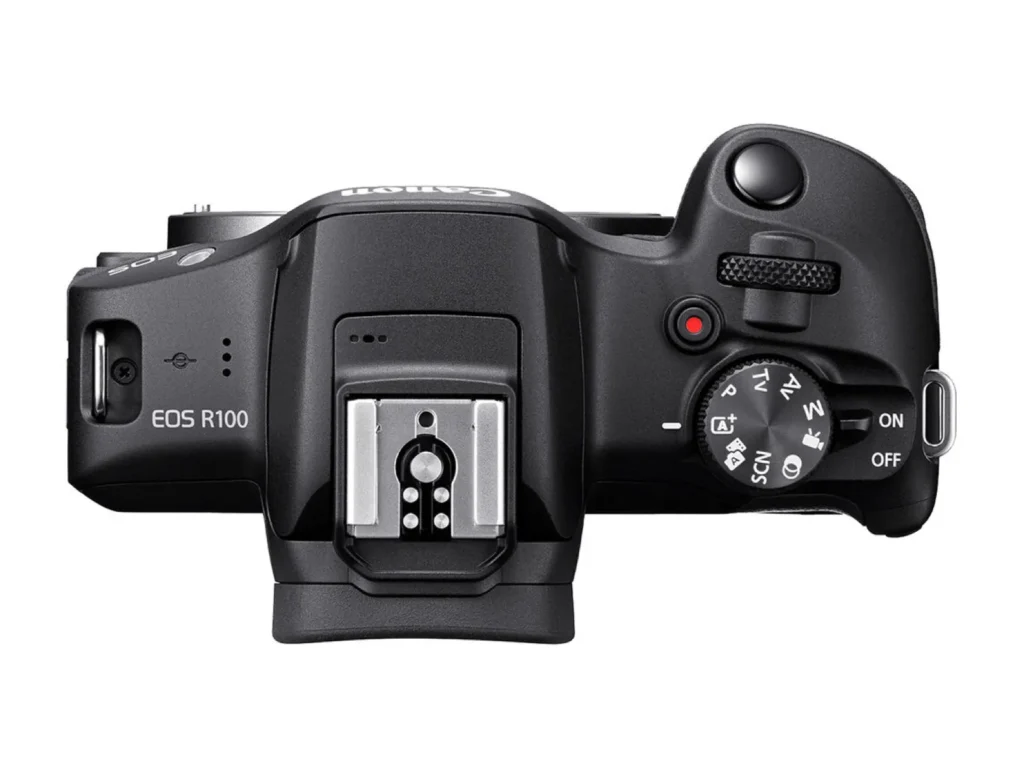
The body is relatively compact and light. There is a single customizable dial on the top of the camera. This is the only EOS R series camera with a fixed screen and no touch screen capability.
Batteries used in Canon APS-C cameras are smaller than those found in Canon’s full-frame models, so purchasing an additional battery is highly recommended. It is also worth noting that this is currently the only modern Canon camera that does not support USB charging.
Autofocus
Autofocus system in the R100 is extremely basic. Face detection and eye-detection AF are available and perform well in good lighting conditions. Other than that, there is no subject tracking available. Autofocus performance also degrades noticeably in low-light conditions.
This autofocus system is similar to what was used in older DSLRs, but it still delivers better performance than most older entry-level DSLR cameras. Overall, performance is acceptable for slower-moving subjects and casual photography.
Photography
Photography performance is noticeably behind Canon’s newer APS-C cameras due to the older sensor and processor. However, it is still capable of producing good results in the right hands. In good lighting conditions, images offer solid detail and the saturated yet natural colors Canon is known for.
Canon R100 does not feature a mechanical shutter, meaning users can only choose between electronic first-curtain shutter (EFCS) and fully electronic (silent) shutter modes.
The R100 can shoot at up to 6.5 fps in RAW, but only for a very limited burst. Because the camera relies on slower UHS-I SD cards instead of the faster UHS-II standard used in most modern APS-C cameras, the buffer fills quickly. In practice, you can capture roughly 6 RAW images before the shooting speed drops to about 1 fps or stops altogether.
Like other entry-level EOS R series cameras, the R100 is also believed to reduce sensor readout to 12-bit when using the fully electronic shutter, although Canon does not explicitly document this behavior in the official specifications.
Video
Video is one of the weakest areas of the EOS R100.
Canon EOS R100 offers 4K recording at 24 fps, but it comes with a heavy 1.5x crop. There is also no Dual Pixel autofocus in this mode. The footage is not sharp and rolling shutter distortion is a huge issue.
Full HD (1080p) recording is available at up to 60 fps.
The R100 does not include in-body image stabilization (IBIS). Electronic stabilization is available, but it applies an additional crop. While it can be usable for stationary handheld shots, it is much less effective when recording handheld video while walking.
The R100 has a 30-minute maximum clip length.
| Feature | Canon EOS R100 |
|---|---|
| Release Date | May 2023 |
| Megapixels | 24.1 MP |
| Image Resolution | 6000 × 4000 |
| Sensor Size | APS-C |
| Sensor Type | CMOS |
| Image Processor | DIGIC 8 |
| IBIS | No |
| Weather Sealing | No |
| Lens Mount | Canon RF |
| Body Type | Mirrorless |
| PHOTO | |
| Native ISO | 100 – 12,800 |
| Expandable ISO | 100 – 25,600 |
| Shutter Speed | 1/4000 – 30s |
| Burst Rate (Mechanical) | 6.5 fps RAW (EFCS) |
| Burst Rate (Electronic) | 6.5 fps RAW (12-bit) |
| Buffer | ~ 6 RAW |
| Shutter Types | Electronic, EFCS |
| Silent Shooting | Yes (Electronic Shutter) |
| Exposure Compensation | ±3 EV |
| High-Res (Sensor Shift) | No |
| Pre-Capture Mode | No |
| VIDEO | |
| 4K Video | 4K 25fps (1.5x crop) |
| Max Frame Rate | 4K 25fps (1.5x crop) / 1080p 60fps |
| Bit Depth | 8-bit |
| Recording Limit | 29min 59sec |
| Timelapse Recording | Yes |
| AUTOFOCUS | |
| AF System | 'Dual Pixel CMOS AF' |
| AF Points | 143 |
| AF Coverage | ~ 90% Frame Coverage |
| AF Joystick | No |
| DISPLAY / VIEWFINDER | |
| Articulated Screen | Fixed |
| Touch Screen | No |
| LCD Size | 3" |
| LCD Resolution | 1,040,000 |
| EVF Resolution | 2,360,000 |
| EVF Refresh Rate | 60 fps |
| EVF Coverage | 100% |
| EVF Magnification | 0.95× |
| MORE INFO | |
| Card Slot 1 | SD (UHS-I) |
| Card Slot 2 | / |
| Sensor Protection System | No |
| USB | Type C 2.0 |
| USB Charging | No |
| HDMI | Type D (Micro HDMI) |
| Microphone Port | 3.5 mm |
| Headphone Port | No |
| Built-in Flash | Yes |
| Built-in Microphone | Yes |
| Battery | LP-E17 |
| Battery Life | 300 ~ 500 frames |
| Wi-Fi / Bluetooth | Yes |
| Dimensions | 116 × 86 × 69 mm |
| Weight | 356 g |
Canon EOS R100 Alternatives
Canon R10
Canon R50
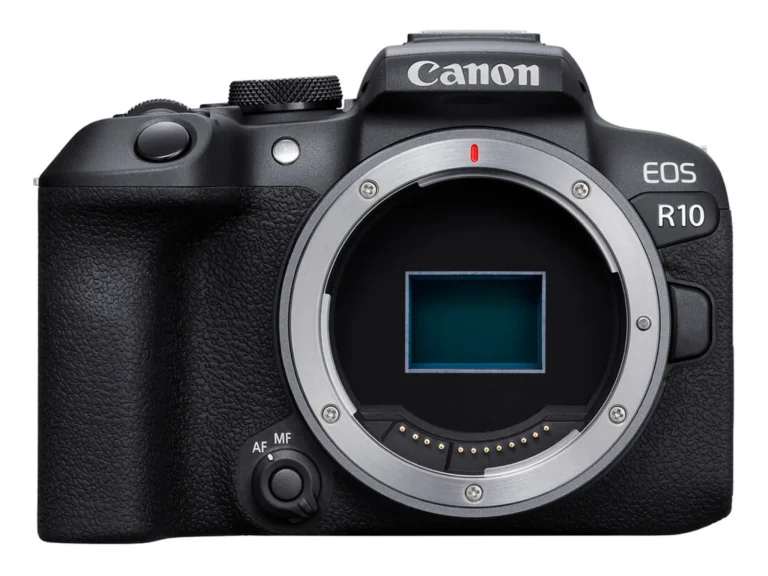
Canon EOS R10 (2022) is a mid-range APS-C mirrorless model in Canon’s EOS R Series. It has a new 24 MP sensor. It offers continuous shooting at up to 15 fps with the mechanical shutter and 23 fps with the electronic shutter. It can record 4K video at 60 fps with a 1.6x crop and oversampled 4K video at up to 30 fps without a crop, but video recording is limited to 8-bit. It has no IBIS and no weather-sealing.
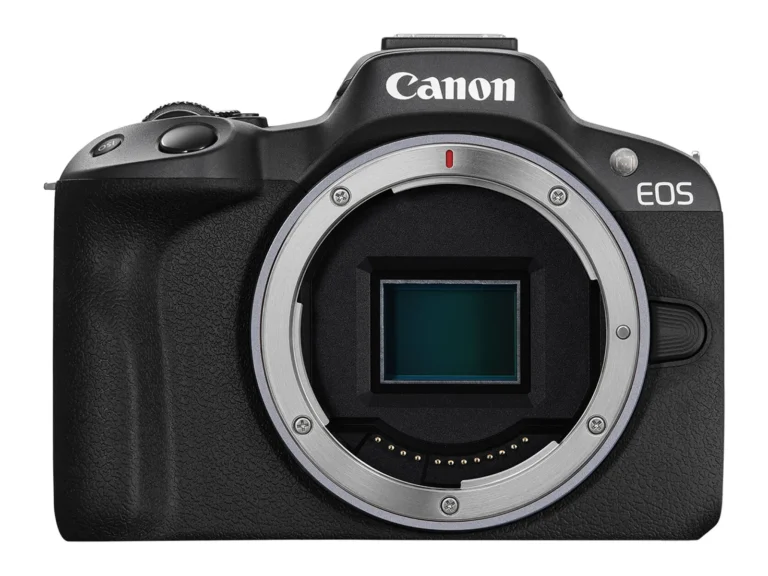
Canon EOS R50 (2023) is Canon’s entry-level APS-C mirrorless camera. It has the same 24 MP sensor and the same processor as the R10, but it has no mechanical shutter. It can record oversampled 4K video at 30 fps. It can shoot up to 12 fps with the EFCS and 15 fps with the electronic shutter, but the buffer is very limited (only 7 RAW images) since the R50 accepts only slower UHS-I SD cards.
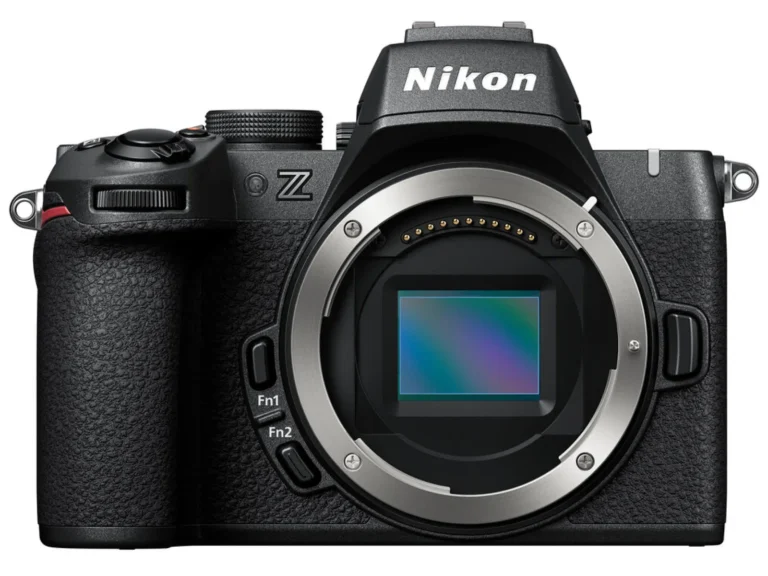
Nikon Z50 II
Nikon Z50 II (2024) is a direct competitor to the mid-range Canon R10. It has a 21 MP BSI sensor and uses a new version of Nikon’s hybrid AF system. It can record 4K video at up to 30 fps and at 60 fps with a 1.5x crop in 10-bit, but the footage is not oversampled. It can shoot at up to 11 fps with the mechanical shutter and up to 15 fps in RAW with the electronic shutter (30 fps in JPEG).
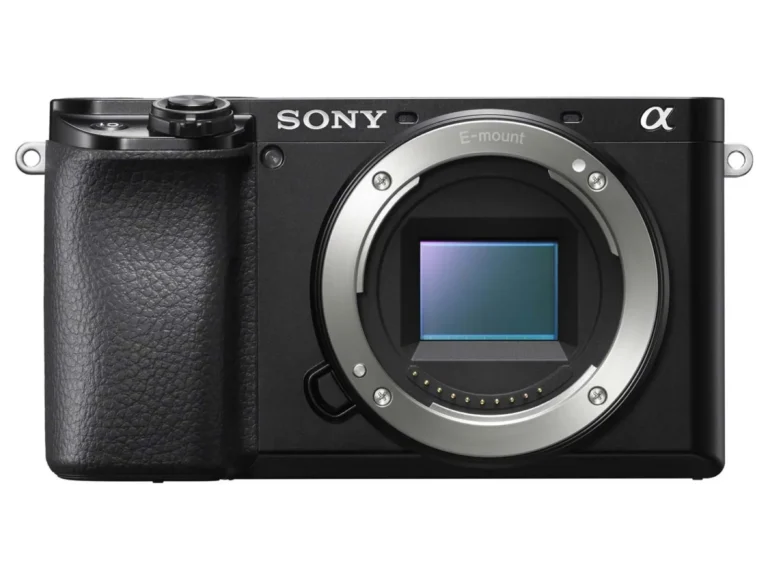
Sony a6100
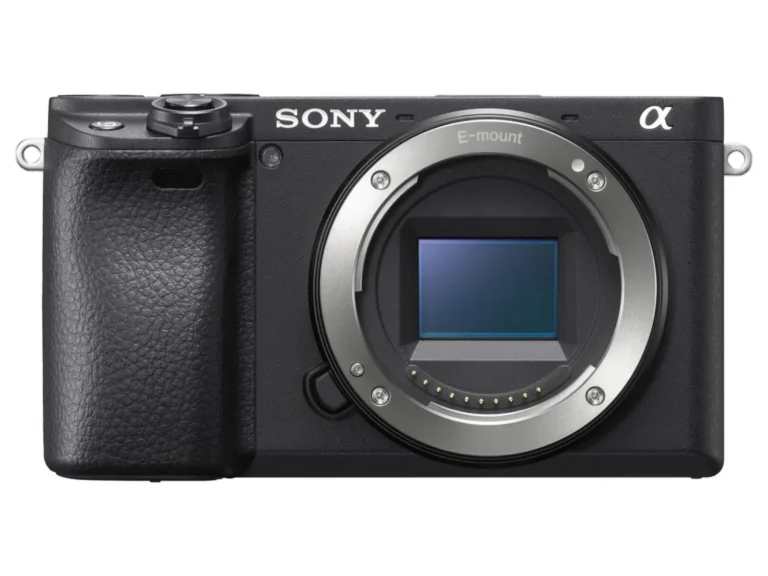
Sony a6400
Sony a6100 (2019) is Sony’s modern entry-level APS-C camera. It has a 24 MP sensor, it offers excellent autofocus performance, can shoot at 11 fps with the mechanical shutter and it can record oversampled 4K video at 25 fps and at 30 fps with a 1.2x crop. Video recording is limited to 8-bit and the maximum clip length is set to 13 hours. The a6100 does not have a weather-sealed body.
Sony a6400 (2019) is Sony’s mid-range APS-C camera also featuring the same 24 MP sensor. Most specifications are similar to the a6100, but the a6400 uses a weather-sealed body and doesn’t apply a crop in 4K 30 fps recording. Video recording is still limited to 8-bit, but the a6400 includes Sony’s higher-quality S-Log 2 and S-Log 3 picture profiles.
Canon EOS R100 Price
Final Verdict
Canon EOS R100 is Canon’s most affordable mirrorless camera. As already mentioned, Canon removed many of the features found in its other entry-level APS-C models to simplify the design and lower the price. However, these compromises also make the camera difficult to recommend when compared to competing models. The R100 lacks several features that are now standard in every entry-level camera, making it feel outdated despite being a relatively recent release.
Considering that it is often only slightly cheaper than more capable alternatives, its value is difficult to justify.
If you are looking for an affordable entry-level camera and are not yet committed to a particular system, the Sony a6100 is a strong alternative. Buyers willing to spend a bit more should also consider mid-range APS-C models such as the Canon EOS R10, Nikon Z50 II or Sony a6400, all of which offer a more complete feature set and better long-term value.